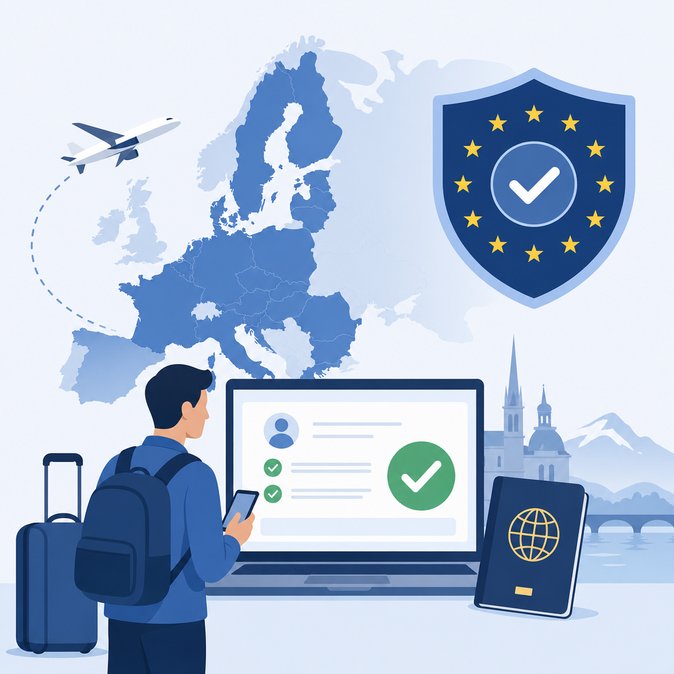
A day after fresh reports of three-hour queues at some European airports, travel-policy site VisasNews confirmed on 28 May 2026 that the European Commission still intends to switch on the European Travel Information and Authorisation System (ETIAS) in the fourth quarter of 2026. That decision matters to every Swiss-based company that moves staff in and out of the country, because Switzerland is part of both the Schengen Area and the future ETIAS zone. ETIAS is the EU’s answer to the US ESTA and the UK ETA: visa-exempt travellers will have to complete an online security pre-screening and pay a €20 fee before boarding a flight, coach or ferry to any of the 30 participating states, including Switzerland. Approvals should be instant for the vast majority, but carriers will have to verify the authorisation at check-in.
![ETIAS still on track for late-2026 launch despite bumpy EES rollout]()
If your organisation prefers a single, reliable partner to handle new ETIAS filings as well as traditional visa needs, VisaHQ can take the strain. Its platform already supports Swiss visas and residence documents, and it will add ETIAS once the system goes live—letting mobility managers track application status, receive deadline reminders and export data directly to duty-of-care tools. Learn more at https://www.visahq.com/switzerland/
Industry analyst Dr Nick Brown told VisasNews that, even with the current teething problems of the biometric Entry/Exit System (EES), Brussels is unlikely to push the date back again. Instead, the EU is expected to declare EES a qualified success, iron out airport-specific glitches over the summer and move straight on to ETIAS. A phased-in grace period of six months is foreseen, meaning ETIAS could become de facto mandatory around April 2027. For Swiss mobility managers the message is two-fold. First, prepare to add an ETIAS check to travel-approval workflows, booking tools and traveller briefings; most business visitors to Switzerland will need to hold one even if they never leave the country again during their Schengen stay. Second, factor in longer lead times for VIP movements: once carriers start enforcing ETIAS, passengers who forget to apply will be denied boarding. Travel-service providers are already updating API connections so that duty-of-care dashboards can flag missing authorisations. Corporate communicators should schedule awareness campaigns for Q2 2027 at the latest – or earlier if the EU confirms an autumn 2026 go-live date.

If your organisation prefers a single, reliable partner to handle new ETIAS filings as well as traditional visa needs, VisaHQ can take the strain. Its platform already supports Swiss visas and residence documents, and it will add ETIAS once the system goes live—letting mobility managers track application status, receive deadline reminders and export data directly to duty-of-care tools. Learn more at https://www.visahq.com/switzerland/
Industry analyst Dr Nick Brown told VisasNews that, even with the current teething problems of the biometric Entry/Exit System (EES), Brussels is unlikely to push the date back again. Instead, the EU is expected to declare EES a qualified success, iron out airport-specific glitches over the summer and move straight on to ETIAS. A phased-in grace period of six months is foreseen, meaning ETIAS could become de facto mandatory around April 2027. For Swiss mobility managers the message is two-fold. First, prepare to add an ETIAS check to travel-approval workflows, booking tools and traveller briefings; most business visitors to Switzerland will need to hold one even if they never leave the country again during their Schengen stay. Second, factor in longer lead times for VIP movements: once carriers start enforcing ETIAS, passengers who forget to apply will be denied boarding. Travel-service providers are already updating API connections so that duty-of-care dashboards can flag missing authorisations. Corporate communicators should schedule awareness campaigns for Q2 2027 at the latest – or earlier if the EU confirms an autumn 2026 go-live date.