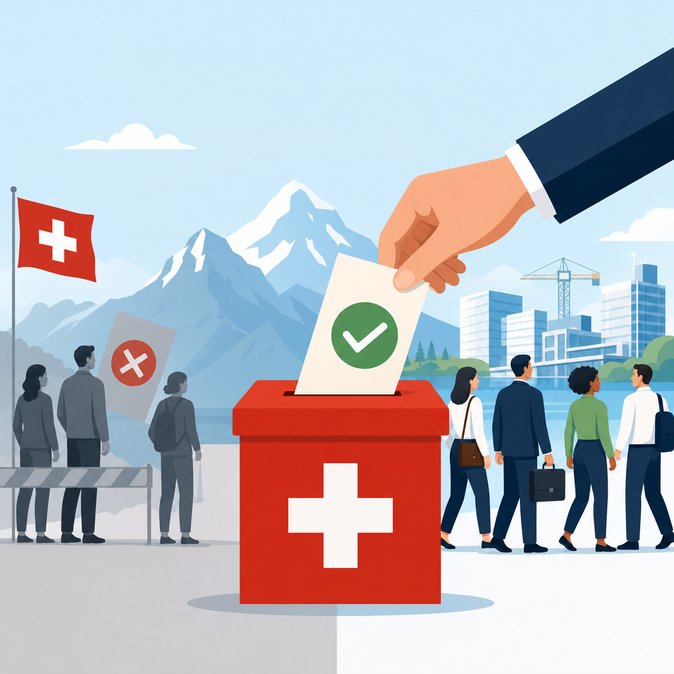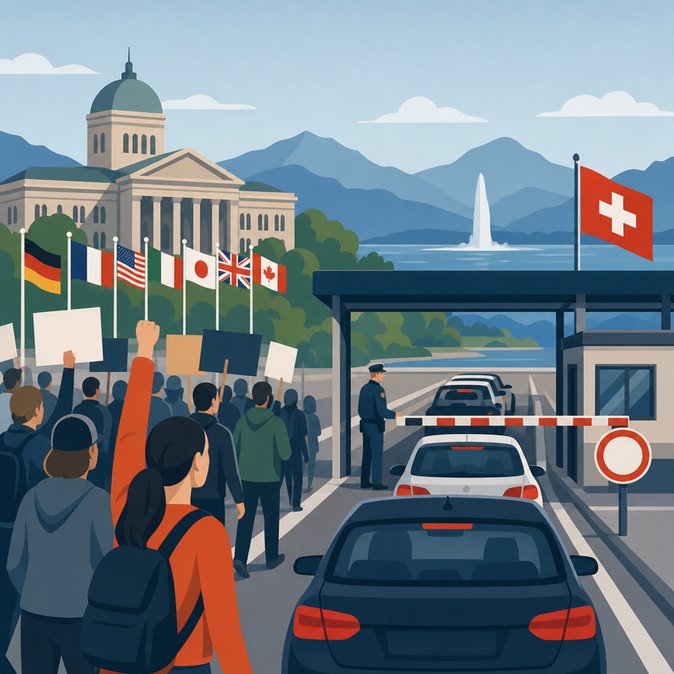
Meeting in an extraordinary late-night session on 28 May 2026, Geneva’s Grand Council voted 55-42 to reject a Liberal-proposed bill that would have banned all anti-G7 demonstrations in the city centre ahead of the 15–17 June summit in nearby Évian-les-Bains, France. The decision effectively green-lights a tightly managed march on 14 June, even as federal authorities prepare to re-introduce Schengen-internal border checks with France from 10-19 June. The Canton of Geneva is responsible for operational security on the Swiss side of the summit and had already asked the Federal Council for permission to conduct targeted checks at 34 road and rail crossings. Bern approved the request on 6 May, citing the need to screen potential violent protesters. Cross-border commuters—more than 90,000 a day—have been told to expect longer queues and advised to carry work certificates.
![Geneva lawmakers reject blanket protest ban ahead of G7 border clamp-down]()
If you or your colleagues need clarity on whether additional documentation is required to enter Switzerland during the temporary border checks, VisaHQ can help. Their Switzerland information page (https://www.visahq.com/switzerland/) lets travelers quickly verify visa obligations, fill out forms online, and arrange secure courier submission—valuable tools for both routine business travel and last-minute itinerary changes prompted by summit security measures.
By refusing a total protest ban, cantonal legislators signalled confidence in the authorities’ ability to balance security with fundamental rights. For mobility managers the message is mixed: staff travelling between Geneva and the French Haute-Savoie region in mid-June should plan for both demonstration-related traffic disruptions and passport inspections that no longer occur under normal Schengen rules. Event organisers are advising visiting business delegations to enter Switzerland via Geneva Airport, where border-police staffing is being increased, and to schedule meetings either before 13 June or after 18 June. Hotels on the Right Bank report occupancy rates above 90 % as NGOs, media and security contractors lock in rooms. The temporary controls underscore a broader EU trend: since 2023, Schengen states have used Article 25 of the Schengen Borders Code with growing frequency, meaning that even within Europe, mobility planners cannot assume frictionless travel around high-profile summits or sporting events.

If you or your colleagues need clarity on whether additional documentation is required to enter Switzerland during the temporary border checks, VisaHQ can help. Their Switzerland information page (https://www.visahq.com/switzerland/) lets travelers quickly verify visa obligations, fill out forms online, and arrange secure courier submission—valuable tools for both routine business travel and last-minute itinerary changes prompted by summit security measures.
By refusing a total protest ban, cantonal legislators signalled confidence in the authorities’ ability to balance security with fundamental rights. For mobility managers the message is mixed: staff travelling between Geneva and the French Haute-Savoie region in mid-June should plan for both demonstration-related traffic disruptions and passport inspections that no longer occur under normal Schengen rules. Event organisers are advising visiting business delegations to enter Switzerland via Geneva Airport, where border-police staffing is being increased, and to schedule meetings either before 13 June or after 18 June. Hotels on the Right Bank report occupancy rates above 90 % as NGOs, media and security contractors lock in rooms. The temporary controls underscore a broader EU trend: since 2023, Schengen states have used Article 25 of the Schengen Borders Code with growing frequency, meaning that even within Europe, mobility planners cannot assume frictionless travel around high-profile summits or sporting events.