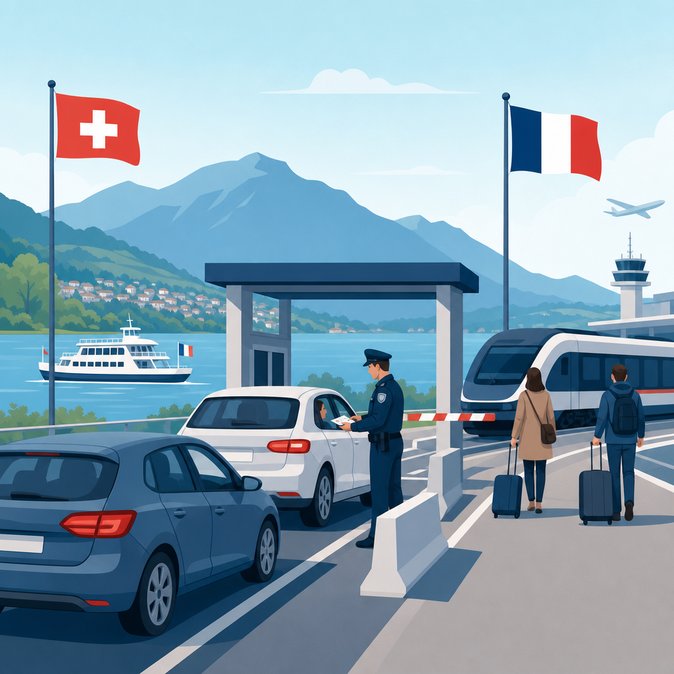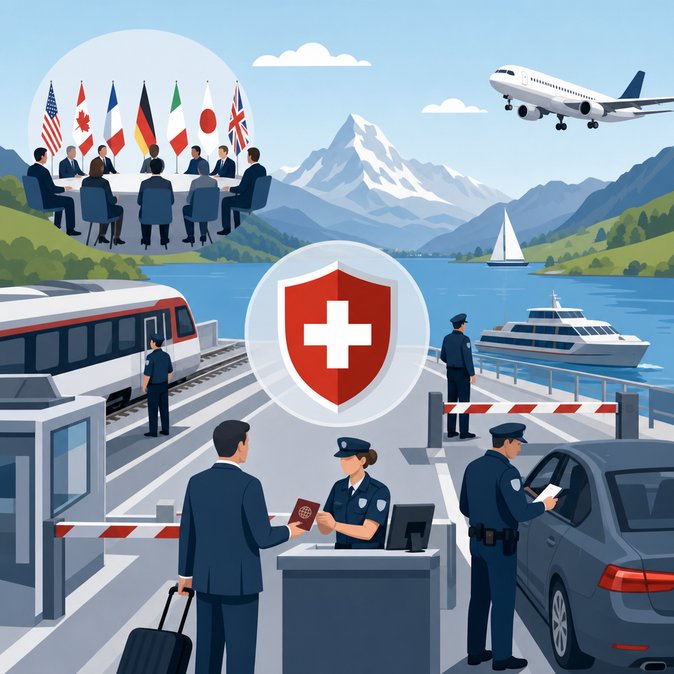
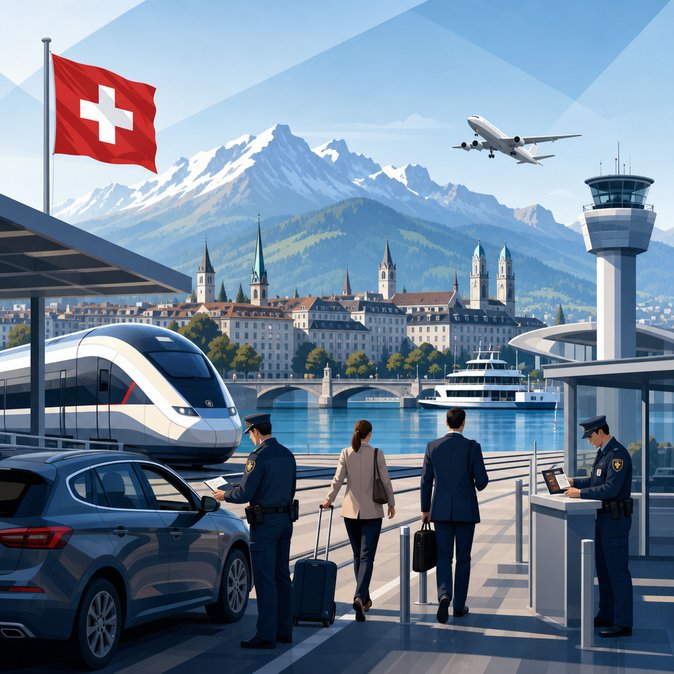
Travellers crossing Switzerland’s normally open frontiers with France will face temporary passport controls between 10 and 19 June 2026 after the Federal Customs and Border Security Office (BAZG) confirmed enhanced measures linked to the nearby G7 leaders’ summit in Évian-les-Bains. The decision, published on 27 May 2026, brings the Alpine nation in line with a growing number of Schengen states that rely on Article 25 of the Schengen Borders Code to respond to heightened security risks. Swiss officials stress that the controls will be “targeted, risk-based and proportionate”. In practice, motorists on the A1 and A40 motorways, regional commuters on Léman Express trains and pleasure boats on Lake Geneva should expect spot checks, vehicle searches and occasional queues, especially on summit days (15-17 June). Airlines and SBB rail services have been instructed to verify that all passengers carry valid ID, and freight forwarders moving just-in-time consignments across Geneva’s St-Julien and Bardonnex crossings are being advised to build buffer time into schedules. Businesses with cross-border staff—an estimated 94 000 French residents work in cantons Geneva and Vaud alone—will feel the disruption most acutely.
![Bern announces 10-day Schengen border checks ahead of G7 Évian summit]()
Travellers looking for clarity on what documents they now need can consult VisaHQ’s dedicated Switzerland portal (https://www.visahq.com/switzerland/), which aggregates the latest government advisories, provides step-by-step checklists and even facilitates express visa or travel authorisation processing. Whether you’re a daily commuter or an overseas executive heading to a side event, the service offers an easy way to confirm requirements and avoid surprises at the checkpoint.
HR and mobility managers are encouraging employees to keep Swiss residence permits or work cards on their person, use secondary crossings where feasible and allow up to 45 minutes extra for morning shifts. Multinationals are also reviewing emergency-response plans in case roadblocks coincide with political demonstrations, a scenario French authorities experienced during previous summits. The Swiss move mirrors longer-running checks in Italy and the Netherlands, which extended their own internal-border regimes until late 2026, citing migration pressure and hybrid threats. Critics argue the cascade of national measures chips away at Schengen’s core principle of free movement; Swiss diplomats counter that the June window is strictly time-bound and will be lifted once the summit security perimeter is dismantled. Still, the episode serves as a rehearsal for the new EU Entry/Exit System (EES)—already live in Switzerland—which will make systematic biometric verification the norm at external borders later this year. For now, travellers should carry passports or national ID cards, monitor live-traffic apps such as TCS and KeepCalmBorders, and consult employer briefings on document requirements. Visa-exempt third-country visitors attending the parallel CEO Forum in Geneva may board flights with only biometric passports, but should allot extra time at customs upon arrival in Cornavin station if connecting by train from Paris-CDG.
Travellers looking for clarity on what documents they now need can consult VisaHQ’s dedicated Switzerland portal (https://www.visahq.com/switzerland/), which aggregates the latest government advisories, provides step-by-step checklists and even facilitates express visa or travel authorisation processing. Whether you’re a daily commuter or an overseas executive heading to a side event, the service offers an easy way to confirm requirements and avoid surprises at the checkpoint.
HR and mobility managers are encouraging employees to keep Swiss residence permits or work cards on their person, use secondary crossings where feasible and allow up to 45 minutes extra for morning shifts. Multinationals are also reviewing emergency-response plans in case roadblocks coincide with political demonstrations, a scenario French authorities experienced during previous summits. The Swiss move mirrors longer-running checks in Italy and the Netherlands, which extended their own internal-border regimes until late 2026, citing migration pressure and hybrid threats. Critics argue the cascade of national measures chips away at Schengen’s core principle of free movement; Swiss diplomats counter that the June window is strictly time-bound and will be lifted once the summit security perimeter is dismantled. Still, the episode serves as a rehearsal for the new EU Entry/Exit System (EES)—already live in Switzerland—which will make systematic biometric verification the norm at external borders later this year. For now, travellers should carry passports or national ID cards, monitor live-traffic apps such as TCS and KeepCalmBorders, and consult employer briefings on document requirements. Visa-exempt third-country visitors attending the parallel CEO Forum in Geneva may board flights with only biometric passports, but should allot extra time at customs upon arrival in Cornavin station if connecting by train from Paris-CDG.