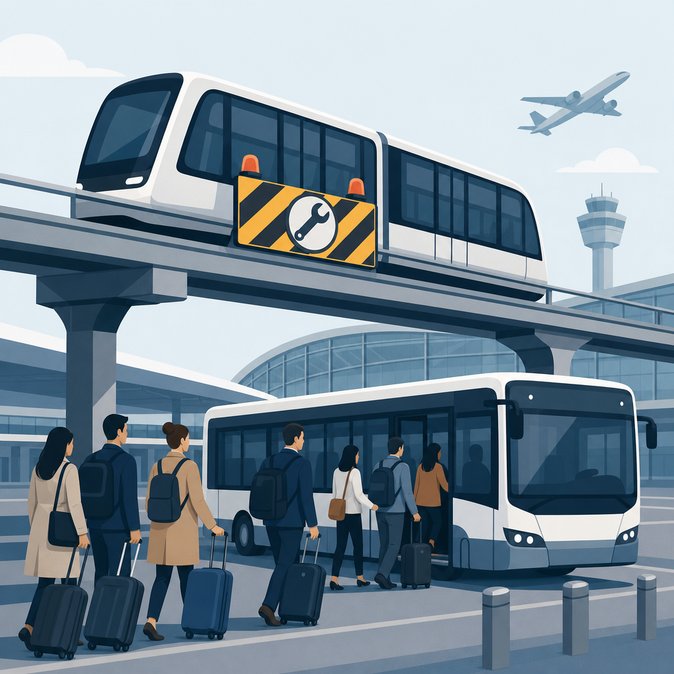
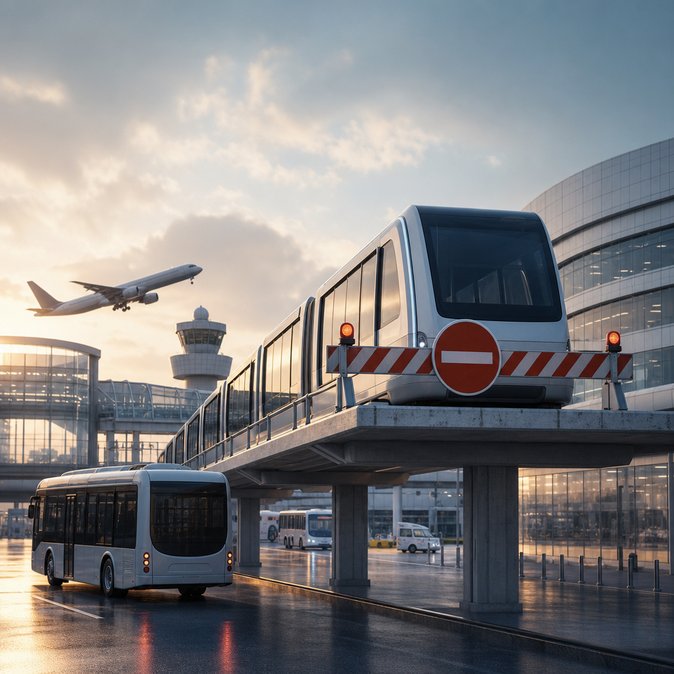
Just four weeks after celebrating the maiden run of its driver-less Sky Line (Line 2) shuttle, Frankfurt Airport (FRA) has had to pull the plug – at least temporarily. Operator Fraport confirmed early on 27 May that the automated people-mover, designed to whisk up to 4,000 passengers per hour between Terminals 1, 2 and the brand-new Terminal 3, is “out of service until further notice” pending technical inspections. The setback is a blow to Germany’s largest hub, which has invested roughly €4 billion in Terminal 3 and the landside/airside transport network that underpins it. The 5.6-kilometre elevated track was the centre-piece of a new passenger flow concept intended to cut transfer times to eight minutes and relieve pressure on the ageing Sky Line (Line 1). Twelve twin-car trains built by Siemens Mobility had been commissioned to run every two minutes during peaks. Fraport has reverted to a fleet of articulated shuttle buses on a 3- to 5-minute headway, but admits journey times now exceed 20 minutes during congestion.
![Frankfurt Airport’s New Sky Line Train Suspended Weeks After Launch]()
For travellers now facing longer intra-airport transfers, ensuring that visas, residency permits or other entry documents are in perfect order becomes even more critical. VisaHQ’s Germany portal (https://www.visahq.com/germany/) streamlines the application process for everything from short-stay Schengen visas to work permits, offering live status tracking and expert support that can prove invaluable when disruptions at hubs like FRA add extra complexity to itineraries.
Airlines operating from Terminal 3 – including Emirates, Singapore Airlines and Condor – have issued revised minimum-connection-time advisories to travel-management companies. Corporate travel buyers are being told to plan longer layovers for crew positioning and high-yield long-haul itineraries, while mobility managers with assignees transiting FRA should flag potential missed-connection costs. The incident revives questions about the robustness of large-scale airport automation projects. Frankfurt’s misfortune follows similar teething troubles at Dallas-Fort Worth and Heathrow Terminal 5 in previous years. With the official partial move-in to Terminal 3 still scheduled for 9 June, Fraport says engineers are working “around the clock”. No restart date has been given, and Germany’s Federal Railway Authority (EBA) must sign off on any software or hardware fixes before passengers can board again.
For travellers now facing longer intra-airport transfers, ensuring that visas, residency permits or other entry documents are in perfect order becomes even more critical. VisaHQ’s Germany portal (https://www.visahq.com/germany/) streamlines the application process for everything from short-stay Schengen visas to work permits, offering live status tracking and expert support that can prove invaluable when disruptions at hubs like FRA add extra complexity to itineraries.
Airlines operating from Terminal 3 – including Emirates, Singapore Airlines and Condor – have issued revised minimum-connection-time advisories to travel-management companies. Corporate travel buyers are being told to plan longer layovers for crew positioning and high-yield long-haul itineraries, while mobility managers with assignees transiting FRA should flag potential missed-connection costs. The incident revives questions about the robustness of large-scale airport automation projects. Frankfurt’s misfortune follows similar teething troubles at Dallas-Fort Worth and Heathrow Terminal 5 in previous years. With the official partial move-in to Terminal 3 still scheduled for 9 June, Fraport says engineers are working “around the clock”. No restart date has been given, and Germany’s Federal Railway Authority (EBA) must sign off on any software or hardware fixes before passengers can board again.