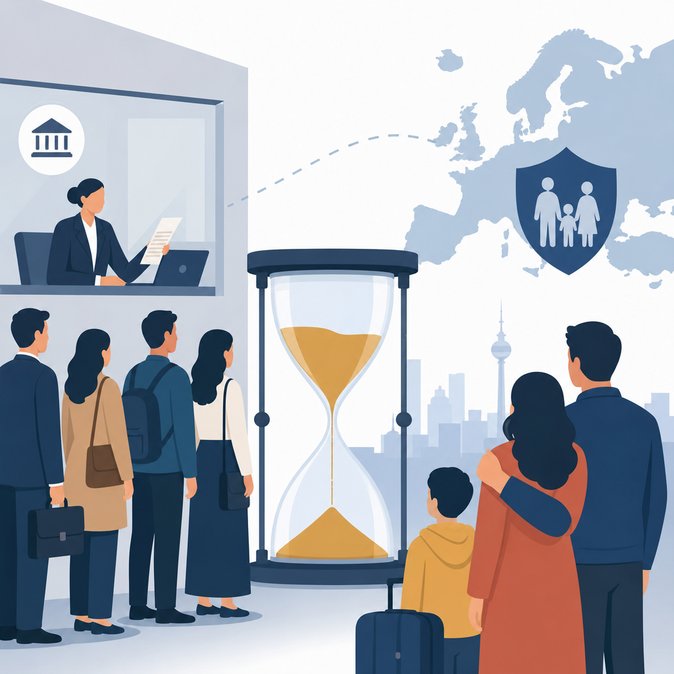
Answering a formal query from the Left Party, the German government released new data on 27 May showing that overseas applicants for family-reunification visas face wait-list times ranging from two weeks to “over 52 weeks”, depending on mission and case category. For reunification with beneficiaries of protection status, waits run 11–32 weeks. The figures, published in parliamentary bulletin hib 434/2026, shine a light on one of the least predictable segments of Germany’s visa system.
![Bundestag Reveals Family-Reunification Visa Waits of Up to a Year]()
At this juncture, many employers and families turn to specialist facilitators like VisaHQ, which monitors appointment availability across all German missions and assists applicants in compiling documentation, tracking status updates, and identifying faster-entry alternatives. Its Germany portal (https://www.visahq.com/germany/) provides up-to-date guidance on family-reunification, Schengen, and work-permit routes, enabling HR teams to compare pathways and book consular services in one place.
Unlike the EU Blue Card or Skilled-Worker categories, family visas are processed by embassies with widely varying staffing levels and manual appointment lists. Mobility advisers say delays increasingly hamper dual-career assignments, as spouses and children cannot accompany transferees in a timely manner. The disclosure comes as Germany prepares secondary legislation to implement the EU’s Pact on Migration and Asylum, which emphasises “reasonable deadlines” for family unity. Advocacy groups argue that year-long waits may violate that standard. Companies sponsoring key talent also warn that prolonged separation reduces assignment acceptance rates and raises duty-of-care concerns. HR and immigration teams should factor the newly published lead times into project timelines and consider parallel options, such as initial Schengen entries for eligible family members or remote-work arrangements until residence permits are issued. Stakeholders expect additional pressure on the Federal Foreign Office to digitalise appointment systems and re-allocate consular staff to high-demand posts.

At this juncture, many employers and families turn to specialist facilitators like VisaHQ, which monitors appointment availability across all German missions and assists applicants in compiling documentation, tracking status updates, and identifying faster-entry alternatives. Its Germany portal (https://www.visahq.com/germany/) provides up-to-date guidance on family-reunification, Schengen, and work-permit routes, enabling HR teams to compare pathways and book consular services in one place.
Unlike the EU Blue Card or Skilled-Worker categories, family visas are processed by embassies with widely varying staffing levels and manual appointment lists. Mobility advisers say delays increasingly hamper dual-career assignments, as spouses and children cannot accompany transferees in a timely manner. The disclosure comes as Germany prepares secondary legislation to implement the EU’s Pact on Migration and Asylum, which emphasises “reasonable deadlines” for family unity. Advocacy groups argue that year-long waits may violate that standard. Companies sponsoring key talent also warn that prolonged separation reduces assignment acceptance rates and raises duty-of-care concerns. HR and immigration teams should factor the newly published lead times into project timelines and consider parallel options, such as initial Schengen entries for eligible family members or remote-work arrangements until residence permits are issued. Stakeholders expect additional pressure on the Federal Foreign Office to digitalise appointment systems and re-allocate consular staff to high-demand posts.