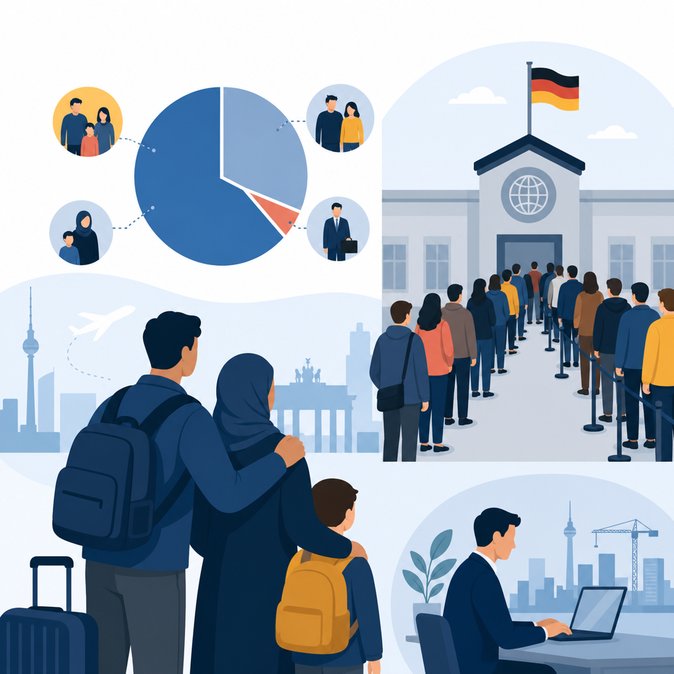
Fresh figures released in response to an opposition parliamentary enquiry reveal that between 1 January and 23 April 2026 German missions worldwide decided 177,382 national-visa cases for family reunification. Of these, just 23,273—or about 13 percent—involved the spouses or minor children of people with refugee, asylum or subsidiary-protection status. The bulk of approvals concerned families of German citizens (≈27,000) and of third-country nationals holding work-based residence titles, notably skilled workers recruited under the 2020 and 2023 reforms to the Skilled Immigration Act. The disclosure comes a year after the coalition government temporarily suspended reunification for holders of subsidiary protection, citing reception-centre saturation and housing shortages. Under the freeze, visas can still be issued in humanitarian hardship cases—yet by mid-May only seven such visas had been granted, with 285 files under review. Advocacy groups accuse Berlin of creating de-facto barriers, pointing to wait times of more than a year for appointments in high-volume posts such as New Delhi and Istanbul. For employers, the numbers underscore that most family-reunion demand now stems from economically active migrants. Indian and Turkish nationals accounted for roughly 9,000 and 9,800 spouse-visa decisions respectively among non-protection cases. HR teams relocating staff from these talent pools should anticipate variable lead-times: consulates prioritise Blue-Card and ICT transferee families but still face staff shortages. Proactive document collection—especially legalised marriage certificates—and early appointment booking remain critical to avoid assignment delays.
![Only 13 % of family-reunification visas go to relatives of refugees, new Interior Ministry data shows]()
For applicants who find the embassy maze overwhelming, specialist platforms such as VisaHQ can smooth the process by pre-checking documents, securing appointments and tracking applications in real time. Their Germany hub (https://www.visahq.com/germany/) consolidates the latest consular forms and requirements, allowing both HR teams and individual travellers to spot missing paperwork before it slows the file.
Policy analysts see a contradiction between Germany’s drive to attract global talent and its restrictive stance toward protection-based families. While the Opportunity Card and lower Blue-Card salary thresholds aim to make Germany more welcoming, the perception of a two-tier system could deter prospective hires who weigh destination attractiveness for the whole family. Business associations are therefore pressing the Interior Ministry to publish a roadmap for clearing embassy backlogs and to define service standards for family-visa processing similar to those in the Skilled-Worker Fast-Track (§81a AufenthG).

For applicants who find the embassy maze overwhelming, specialist platforms such as VisaHQ can smooth the process by pre-checking documents, securing appointments and tracking applications in real time. Their Germany hub (https://www.visahq.com/germany/) consolidates the latest consular forms and requirements, allowing both HR teams and individual travellers to spot missing paperwork before it slows the file.
Policy analysts see a contradiction between Germany’s drive to attract global talent and its restrictive stance toward protection-based families. While the Opportunity Card and lower Blue-Card salary thresholds aim to make Germany more welcoming, the perception of a two-tier system could deter prospective hires who weigh destination attractiveness for the whole family. Business associations are therefore pressing the Interior Ministry to publish a roadmap for clearing embassy backlogs and to define service standards for family-visa processing similar to those in the Skilled-Worker Fast-Track (§81a AufenthG).
More From Germany
View all
Berlin freezes new spots in federally funded integration courses, leaving up to 129,500 newcomers without language training

Lufthansa urges government to codify strike rules, warning of competitive drift to foreign hubs