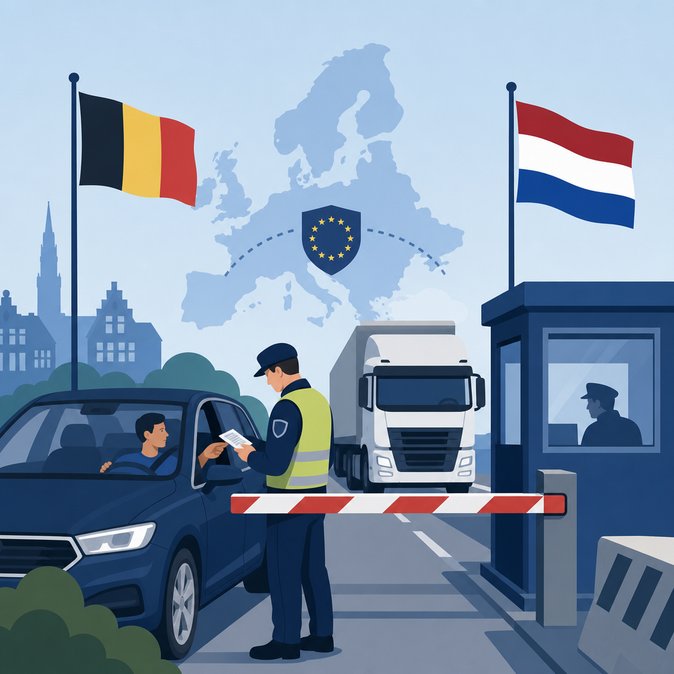
Meeting in Brussels on 26 May, the General Affairs Council—comprised of European affairs ministers—devoted a substantial portion of its agenda to migration governance, less than three weeks before the EU’s sweeping Pact on Migration and Asylum enters into force on 12 June 2026. Cypriot Deputy Minister Marilena Raouna, chairing the session under the rotating Council presidency, reported “steady but uneven” progress on the technical pillars that directly affect corporate mobility: the Entry/Exit System (EES), the ETIAS travel authorisation and upgraded Eurodac fingerprint database. Several delegations warned that staffing shortfalls at external-border posts could produce bottlenecks for non-EU travellers this summer, and called on the Commission to activate emergency funding to hire and train more border guards. Belgium, as the host of the Council meeting and home to EU-level IT agencies coordinating EES tests, underlined its own readiness at Brussels Airport and the Port of Zeebrugge but urged neighbouring member states to finalise interoperability checks “within weeks, not months”.
![EU ministers in Brussels review Schengen IT roll-out and migration pact ahead of June deadline]()
For companies and individual travellers navigating these new requirements, VisaHQ offers end-to-end assistance with Belgian Schengen visas, ETIAS pre-screening and real-time updates on EES implementation. Its dedicated portal (https://www.visahq.com/belgium/) streamlines paperwork, flags expiring passports and liaises with consular authorities—helping HR teams keep posted workers compliant and minimising airport delays.
The ministers also exchanged views on the external dimension of migration, with Belgium endorsing the 2026 solidarity pool mechanism that will finance relocations and returns—a potential relief valve for the country’s overstretched asylum reception system. From a corporate-travel perspective, the discussion signals that biometric exit controls will become unavoidable for all third-country nationals departing Belgium after 12 June. Employers should ensure posted workers from the UK, US and other visa-waiver countries are registered in HR systems with passport validity data so that last-minute renewals do not trigger ETIAS refusals. The Council’s call for a single help-desk to resolve EES glitches could also pave the way for a more predictable passenger-flow regime at Brussels-Zaventem. In parallel, ministers adopted new rules permitting EU citizens resident in another member state to vote and stand in municipal elections—an incremental but symbolic win for intra-European mobility. The directive must now be transposed into Belgian law within two years, further anchoring the rights of long-term expatriate staff based in the country.

For companies and individual travellers navigating these new requirements, VisaHQ offers end-to-end assistance with Belgian Schengen visas, ETIAS pre-screening and real-time updates on EES implementation. Its dedicated portal (https://www.visahq.com/belgium/) streamlines paperwork, flags expiring passports and liaises with consular authorities—helping HR teams keep posted workers compliant and minimising airport delays.
The ministers also exchanged views on the external dimension of migration, with Belgium endorsing the 2026 solidarity pool mechanism that will finance relocations and returns—a potential relief valve for the country’s overstretched asylum reception system. From a corporate-travel perspective, the discussion signals that biometric exit controls will become unavoidable for all third-country nationals departing Belgium after 12 June. Employers should ensure posted workers from the UK, US and other visa-waiver countries are registered in HR systems with passport validity data so that last-minute renewals do not trigger ETIAS refusals. The Council’s call for a single help-desk to resolve EES glitches could also pave the way for a more predictable passenger-flow regime at Brussels-Zaventem. In parallel, ministers adopted new rules permitting EU citizens resident in another member state to vote and stand in municipal elections—an incremental but symbolic win for intra-European mobility. The directive must now be transposed into Belgian law within two years, further anchoring the rights of long-term expatriate staff based in the country.