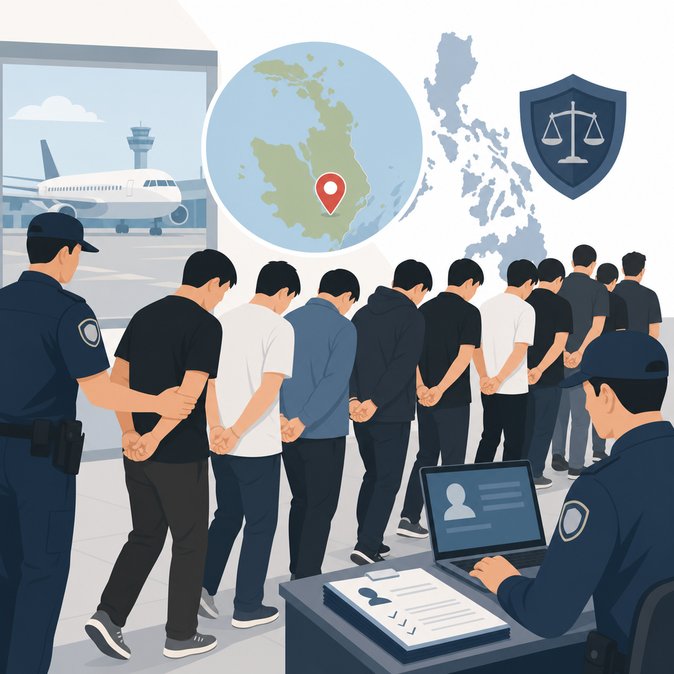
Immigration compliance risks around short-term assignments were thrust into the spotlight on 26 May when Philippine authorities confirmed the arrest of 24 Chinese citizens in Panabo City, Davao del Norte. The joint operation by the Bureau of Immigration and the Philippine Army’s 10th Infantry Division followed resident reports of foreigners working at a construction supply warehouse without the appropriate visas. Investigators allege several of those detained had entered on tourist visas and subsequently taken up paid employment, while others were found working for firms different from those that had sponsored their 9(g) pre-arranged employment visas. All 24 individuals face charges under the Philippine Immigration Act of 1940 for misrepresentation, unauthorized work and overstaying. They remain in BI custody pending deportation proceedings and blacklisting.
![Philippines detains 24 Chinese nationals for work-permit and overstay violations]()
Companies and individuals looking to navigate Philippine visa requirements more smoothly can turn to VisaHQ for comprehensive guidance. The platform’s China portal (https://www.visahq.com/china/) offers step-by-step information on work permits, tourist entries and short-term assignment rules, helping employers avoid the kind of oversights now under scrutiny.
The crackdown comes amid Manila’s wider effort to tighten oversight of foreign workers in Mindanao, where Chinese nationals are active in infrastructure and agro-industrial projects linked to the Davao Regional Development Plan. For Chinese companies seconding staff to the Philippines the incident is a reminder that even low-profile provincial deployments require full compliance with Alien Employment Permit rules and monthly visa reporting. Lawyers warn that violations can trigger corporate fines, reputational damage and personal detention of employees. Best practice now includes pre-deployment audits, host-entity visa sponsorship reviews and on-the-ground spot checks. The Bureau of Immigration said it will carry out further sweeps in regions where illegal labour by foreign nationals has been flagged, and urged local governments to report suspicious activities. Chinese consular officials in Davao have been notified and are providing consular assistance.

Companies and individuals looking to navigate Philippine visa requirements more smoothly can turn to VisaHQ for comprehensive guidance. The platform’s China portal (https://www.visahq.com/china/) offers step-by-step information on work permits, tourist entries and short-term assignment rules, helping employers avoid the kind of oversights now under scrutiny.
The crackdown comes amid Manila’s wider effort to tighten oversight of foreign workers in Mindanao, where Chinese nationals are active in infrastructure and agro-industrial projects linked to the Davao Regional Development Plan. For Chinese companies seconding staff to the Philippines the incident is a reminder that even low-profile provincial deployments require full compliance with Alien Employment Permit rules and monthly visa reporting. Lawyers warn that violations can trigger corporate fines, reputational damage and personal detention of employees. Best practice now includes pre-deployment audits, host-entity visa sponsorship reviews and on-the-ground spot checks. The Bureau of Immigration said it will carry out further sweeps in regions where illegal labour by foreign nationals has been flagged, and urged local governments to report suspicious activities. Chinese consular officials in Davao have been notified and are providing consular assistance.