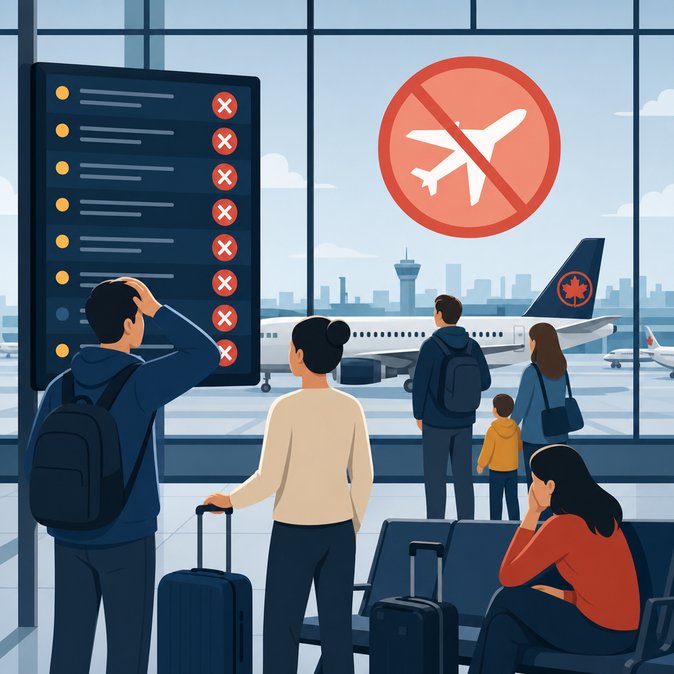
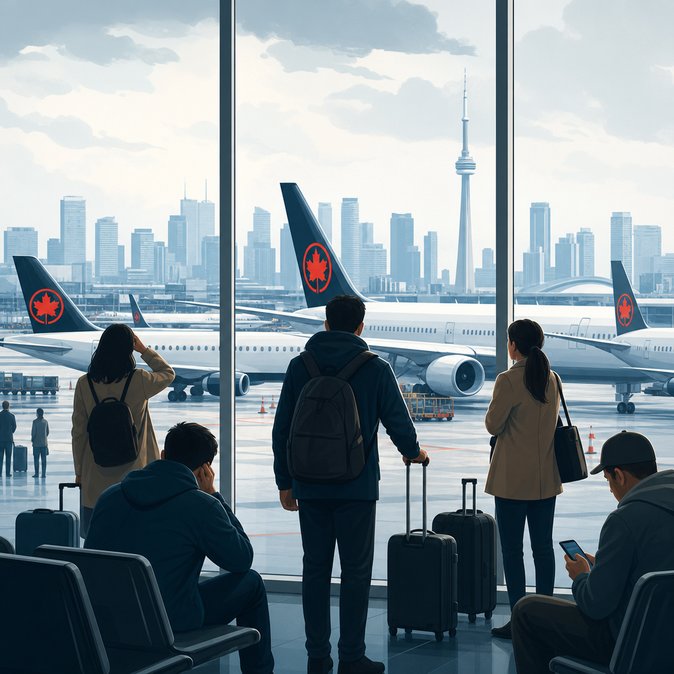
Travellers counting on the late-May long weekend were hit with a wave of disruption as Air Canada scrubbed at least 16 domestic and trans-border flights between 22 and 24 May 2026. The cancellations, confirmed by flight-tracking platforms and passenger reports, rippled through Halifax, Toronto Pearson, Ottawa and Vancouver, with knock-on delays compounding already heavy holiday traffic. Aviation analysts attribute the cuts to a cocktail of aircraft-availability issues, soaring jet-fuel prices and crew-scheduling pressures that have bedevilled carriers all spring. Although the affected departures represent only a fraction of Air Canada’s daily schedule, their concentration on peak travel days magnified the impact: stranded passengers reported missed connections, hotel losses and 24-hour re-routes via secondary airports. Business travellers felt the pain on cross-border services to U.S. cities such as Miami—key transit points for onward Latin-American trips.
![Sixteen Air Canada Cancellations Snarl Long-Weekend Travel Across Major Canadian Hubs]()
For those scrambling to reroute at short notice, VisaHQ can take at least one worry off the table: its online portal (https://www.visahq.com/canada/) quickly clarifies visa and e-travel authorisation requirements and can expedite applications, so an unexpected cancellation doesn’t snowball into a paperwork nightmare.
With summer demand heating up, the episode highlights the fragility of network resilience and the importance of agile travel-risk policies. Duty-of-care advisers urge corporates to monitor flight status daily, build wider connection windows, and ensure staff understand Canada’s Air Passenger Protection Regulations, which may entitle them to refunds or re-routing but not always monetary compensation. The disruption landed days after Air Canada announced further seasonal capacity trims on U.S. routes, a reminder that structural schedule changes can converge with day-of operational hiccups. Travel managers should therefore verify upcoming itineraries and maintain contingency budgets for accommodation and alternative transport if cancellations spike again during the busy summer peak.
For those scrambling to reroute at short notice, VisaHQ can take at least one worry off the table: its online portal (https://www.visahq.com/canada/) quickly clarifies visa and e-travel authorisation requirements and can expedite applications, so an unexpected cancellation doesn’t snowball into a paperwork nightmare.
With summer demand heating up, the episode highlights the fragility of network resilience and the importance of agile travel-risk policies. Duty-of-care advisers urge corporates to monitor flight status daily, build wider connection windows, and ensure staff understand Canada’s Air Passenger Protection Regulations, which may entitle them to refunds or re-routing but not always monetary compensation. The disruption landed days after Air Canada announced further seasonal capacity trims on U.S. routes, a reminder that structural schedule changes can converge with day-of operational hiccups. Travel managers should therefore verify upcoming itineraries and maintain contingency budgets for accommodation and alternative transport if cancellations spike again during the busy summer peak.