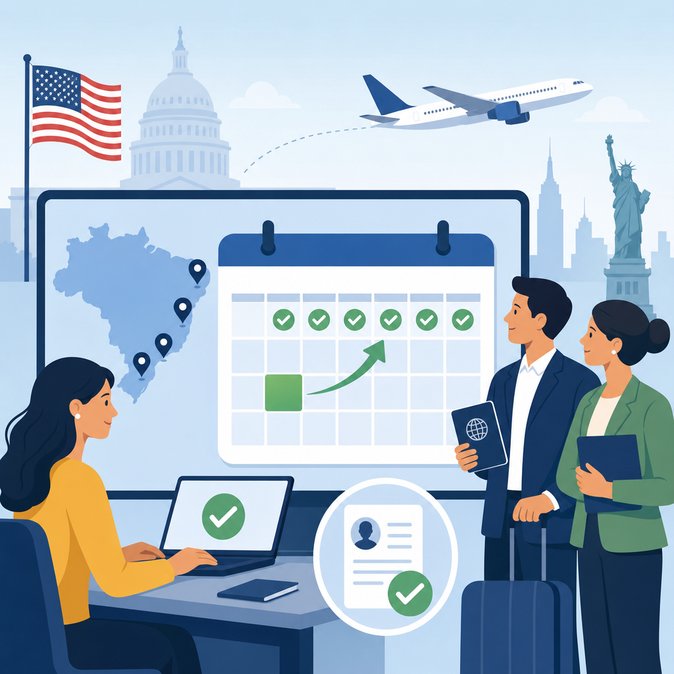
Brazilians seeking U.S. visitor or study visas received a pleasant surprise this morning: fresh appointment blocks have appeared at every U.S. consulate in the country, some as early as *next week*. According to Netvistos’ 09:00 update on 26 May 2026, São Paulo now shows B1/B2 renewal interviews on 7 June, while Rio de Janeiro and Recife have new F-1 student slots on 10 June. Brasília, long the wait-time outlier, posted first-available interview dates of 9 June—down from late July just two weeks ago. Consular sources attribute the improvement to a temporary surge-staffing programme that flew in 35 adjudication officers from posts in Mexico and Canada. The State Department confirmed to industry group ABRACORP that the officers will remain in Brazil until mid-June, with authority to schedule overtime interview windows outside normal hours. For business-traveller programmes, the change is significant. Average Brazilian wait-times for the standard B1/B2 visa peaked at 220 days in January; they now range between 14 and 45 days, depending on city and category.
![Same-month U.S. visa interview slots open across Brazil as wait-times fall sharply]()
At this juncture, many applicants discover that partnering with a specialized visa concierge can dramatically cut the time they spend refreshing the scheduling page. VisaHQ, for example, maintains a Brazil-based team that tracks consular openings in real time and can assemble the DS-160, payment receipts, and courier labels on your behalf; more details are available at https://www.visahq.com/brazil/ By outsourcing the logistics, HR departments and travelers alike regain time that would otherwise be lost to the appointment scramble.
Companies planning Q3 board meetings in the United States can therefore re-open travel requests that had been on hold, but mobility teams should still build in a two-week safety margin for passport return and potential administrative processing. Netvistos notes that supply remains volatile: when applicants reschedule, earlier slots are released back into the system and disappear within minutes. Corporate mobility managers are advised to monitor the portal multiple times per day or engage an authorised visa expediter. Remember that each traveller must still complete the DS-160 and pay the US$ 185 fee before an interview can be booked, and that sons and daughters under 14 can submit documents via drop-box without appearing in person. Looking ahead, American Citizen Services in São Paulo hinted at a pilot for remote video interviews for certain renewal categories in the fourth quarter—an innovation that, if successful, could make today’s gains permanent.

At this juncture, many applicants discover that partnering with a specialized visa concierge can dramatically cut the time they spend refreshing the scheduling page. VisaHQ, for example, maintains a Brazil-based team that tracks consular openings in real time and can assemble the DS-160, payment receipts, and courier labels on your behalf; more details are available at https://www.visahq.com/brazil/ By outsourcing the logistics, HR departments and travelers alike regain time that would otherwise be lost to the appointment scramble.
Companies planning Q3 board meetings in the United States can therefore re-open travel requests that had been on hold, but mobility teams should still build in a two-week safety margin for passport return and potential administrative processing. Netvistos notes that supply remains volatile: when applicants reschedule, earlier slots are released back into the system and disappear within minutes. Corporate mobility managers are advised to monitor the portal multiple times per day or engage an authorised visa expediter. Remember that each traveller must still complete the DS-160 and pay the US$ 185 fee before an interview can be booked, and that sons and daughters under 14 can submit documents via drop-box without appearing in person. Looking ahead, American Citizen Services in São Paulo hinted at a pilot for remote video interviews for certain renewal categories in the fourth quarter—an innovation that, if successful, could make today’s gains permanent.