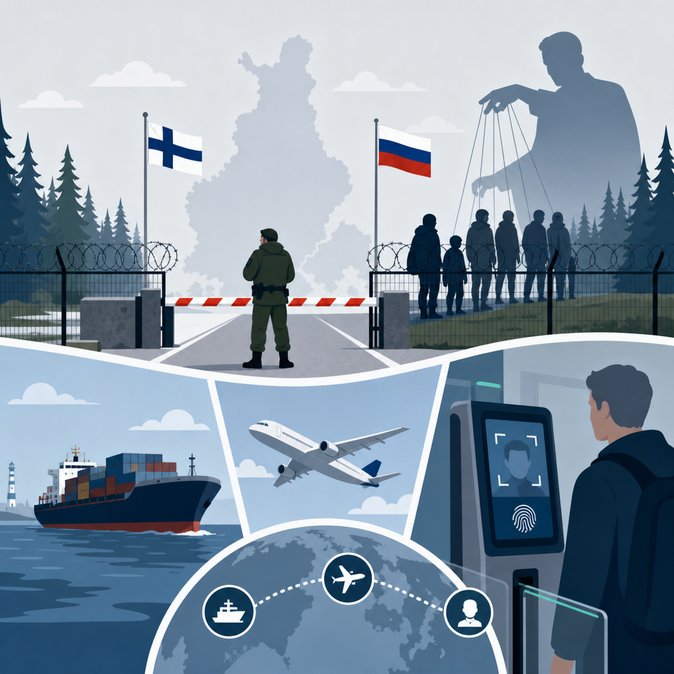
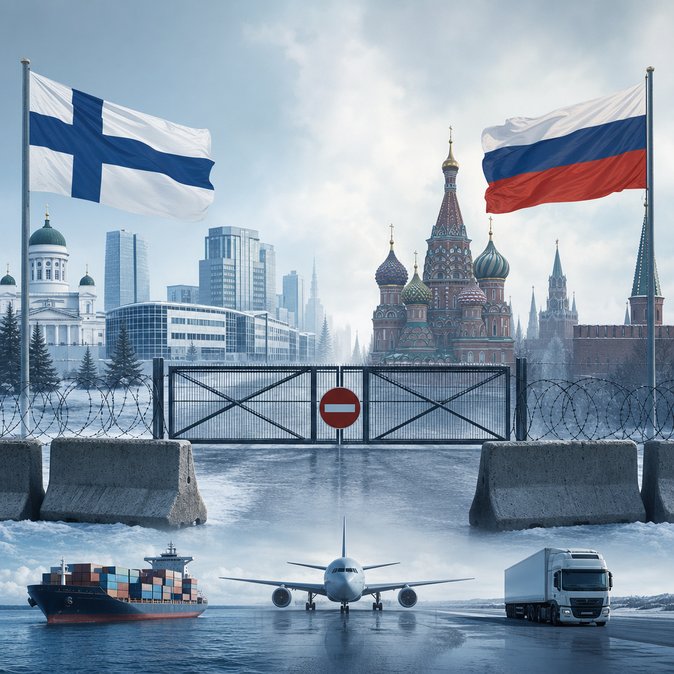
Finland’s 1,340-kilometre land border with Russia will remain closed “for as long as necessary”, President Alexander Stubb told listeners during a one-hour call-in programme on Yle Radio Suomi on Sunday, 24 May. Stubb said Helsinki needs explicit assurances from “the highest political level in Moscow” that Russia will not again channel third-country migrants toward Finnish checkpoints to put pressure on the EU’s newest NATO member. The frontier—once the busiest external Schengen land border—was shut in December 2023 after Finnish authorities recorded an unprecedented spike in asylum-seekers arriving from Africa and the Middle East via Russia. Trucks, business travellers and cross-border commuters have since been forced onto longer sea or air routes, adding costs and straining supply chains for companies with factories in eastern Finland.
Stubb contrasted Finland’s stance with Estonia’s, pointing out that Tallinn has kept limited crossings open “because it has not faced the same orchestrated flows.”
The prolonged closure is disrupting regional economies. According to the East Finland Chamber of Commerce, exports that once moved overland now incur 15–25 percent higher logistics bills, while tourism operators in North Karelia report a 40 percent drop in overnight stays by Russian visitors since 2023.
Multinationals with Finnish plants are rerouting components through Baltic ports or Helsinki-Vantaa Airport, increasing demand for air-freight capacity.
Mobility managers for Nordic forestry and clean-tech firms say they are revisiting rotation schedules and hardship allowances for staff posted near the border.
![Finland Keeps Land Border With Russia Closed Until Moscow Gives Security Guarantees]()
For companies and individual travelers trying to navigate these shifting requirements, VisaHQ can help simplify the process of obtaining the necessary documentation. The service’s Finland page (https://www.visahq.com/finland/) offers real-time visa guidance, document checklists, and courier options, ensuring that business trips and crew changes proceed smoothly despite the extended land-border closure.
Finnish border authorities have used the pause to accelerate construction of a 200-kilometre smart fence and to integrate the EU’s new biometric Entry/Exit System at remaining airports and seaports.
Businesses should therefore expect more automated checks—facial recognition and four-finger scans—when the land crossings eventually reopen.
Stubb would not speculate on timing, but diplomats in Helsinki note that any guarantees must be “verifiable and sustainable”, meaning corporate travel planners should budget for continued detours well into 2027.
Companies moving personnel between Finland and Russia are advised to:
1) shift crew-change points to Helsinki Airport or Tallinn–Helsinki ferries;
2) allow an extra two weeks for Schengen visa processing as Finnish missions tighten scrutiny of Russian applicants ahead of a June 2026 ban on non-biometric passports;
3) review duty-of-care protocols, especially for workers near the eastern frontier where drone incursions have been reported.
While the political rhetoric underscores security concerns, officials stress that legitimate business travel through airports and seaports continues, and Finland remains committed to “friction-free mobility” for compliant travellers once the geopolitical situation stabilises.
Stubb contrasted Finland’s stance with Estonia’s, pointing out that Tallinn has kept limited crossings open “because it has not faced the same orchestrated flows.”
The prolonged closure is disrupting regional economies. According to the East Finland Chamber of Commerce, exports that once moved overland now incur 15–25 percent higher logistics bills, while tourism operators in North Karelia report a 40 percent drop in overnight stays by Russian visitors since 2023.
Multinationals with Finnish plants are rerouting components through Baltic ports or Helsinki-Vantaa Airport, increasing demand for air-freight capacity.
Mobility managers for Nordic forestry and clean-tech firms say they are revisiting rotation schedules and hardship allowances for staff posted near the border.
For companies and individual travelers trying to navigate these shifting requirements, VisaHQ can help simplify the process of obtaining the necessary documentation. The service’s Finland page (https://www.visahq.com/finland/) offers real-time visa guidance, document checklists, and courier options, ensuring that business trips and crew changes proceed smoothly despite the extended land-border closure.
Finnish border authorities have used the pause to accelerate construction of a 200-kilometre smart fence and to integrate the EU’s new biometric Entry/Exit System at remaining airports and seaports.
Businesses should therefore expect more automated checks—facial recognition and four-finger scans—when the land crossings eventually reopen.
Stubb would not speculate on timing, but diplomats in Helsinki note that any guarantees must be “verifiable and sustainable”, meaning corporate travel planners should budget for continued detours well into 2027.
Companies moving personnel between Finland and Russia are advised to:
1) shift crew-change points to Helsinki Airport or Tallinn–Helsinki ferries;
2) allow an extra two weeks for Schengen visa processing as Finnish missions tighten scrutiny of Russian applicants ahead of a June 2026 ban on non-biometric passports;
3) review duty-of-care protocols, especially for workers near the eastern frontier where drone incursions have been reported.
While the political rhetoric underscores security concerns, officials stress that legitimate business travel through airports and seaports continues, and Finland remains committed to “friction-free mobility” for compliant travellers once the geopolitical situation stabilises.
More From Finland
View all
Finnish president: Border with Russia will not reopen without top-level security guarantees
Wärtsilä signs 10-year lifecycle agreement to keep Finnish Border Guard vessels mission-ready