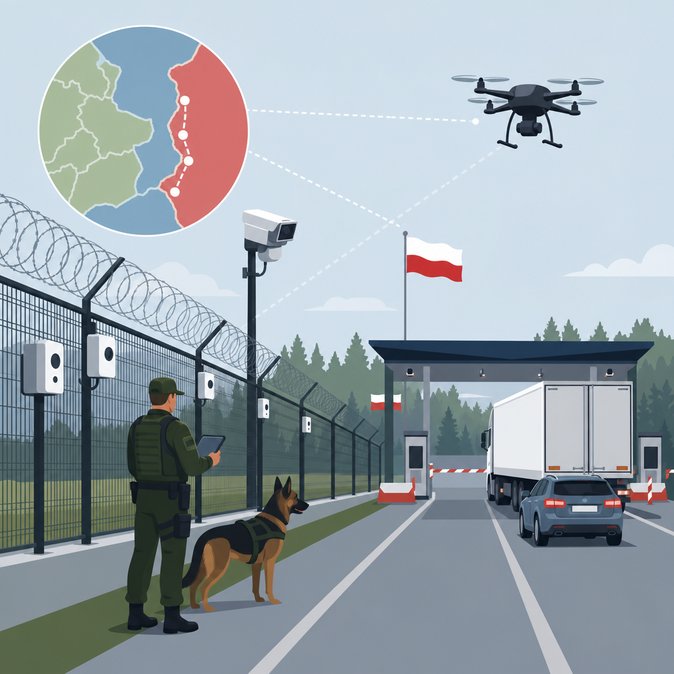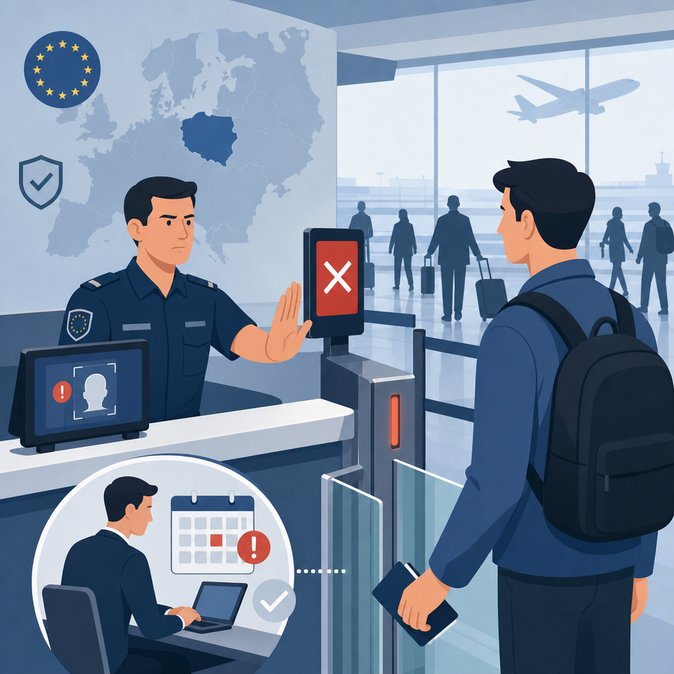
Poland’s Border Guard confirmed on 22 May 2026 that patrols near Rutka-Tartak, supported by Territorial Defence Force soldiers, stopped a group of ten Pakistani and four Afghan nationals who had slipped across the densely forested Polish-Lithuanian frontier the previous night. Officers say the migrants, none of whom carried travel documents or valid Polish visas, were detected by a mix of mobile thermal cameras and foot patrols that sweep the so-called ‘green border’—the stretches between official crossing points that are particularly vulnerable to clandestine entries. The incident highlights a route that has grown in popularity since Warsaw finished a steel-and-electronic barrier on the Belarusian border and tightened visa issuance in 2025. Smuggling networks now shepherd asylum-seekers through Belarus to Lithuania and then south into Poland, hoping to avoid the heavily protected Polish-Belarusian line. According to the Podlaskie division of the Border Guard, more than 330 people have been caught attempting the manoeuvre since January—already double the figure for the same period last year.
![Poland returns 14 irregular migrants intercepted on the green border with Lithuania]()
For travelers who prefer to stay on the right side of the rules, VisaHQ can simplify obtaining the necessary paperwork. Its Poland portal (https://www.visahq.com/poland/) offers clear, step-by-step instructions for Polish and wider Schengen visas, application tracking, and expert support—services that help ensure documents are in order and reduce the risk of delays or complications at the border.
Under bilateral readmission rules, the fourteen migrants were transferred back to Lithuanian authorities within hours. Polish officials stress that fast returns are crucial to deterrence: every successful hand-back, they argue, sends a signal that the corridor will not deliver onward passage to Germany or other Schengen states. Frontex liaison officers stationed in the region told Global Mobility News that joint Polish-Lithuanian patrols and intelligence-sharing have “substantially shortened response times” along the corridor. For multinational employers the episode is a reminder that ad-hoc internal Schengen controls remain a reality on Poland’s northern and western flanks, even though the borders are technically ‘internal’. Business travellers moving staff or equipment by road between Poland and the Baltics should continue to carry passports, contracts and accommodation proofs, and build extra time into itineraries in case of spot checks. Looking ahead, Warsaw has budgeted a further PLN 120 million to extend sensor coverage across the entire 104-km Polish-Lithuanian line by 2027. Once complete, authorities believe they will be able to detect and interdict virtually all attempts at illegal entry in real time—further tightening the compliance environment for any cross-border movement that is not properly documented.

For travelers who prefer to stay on the right side of the rules, VisaHQ can simplify obtaining the necessary paperwork. Its Poland portal (https://www.visahq.com/poland/) offers clear, step-by-step instructions for Polish and wider Schengen visas, application tracking, and expert support—services that help ensure documents are in order and reduce the risk of delays or complications at the border.
Under bilateral readmission rules, the fourteen migrants were transferred back to Lithuanian authorities within hours. Polish officials stress that fast returns are crucial to deterrence: every successful hand-back, they argue, sends a signal that the corridor will not deliver onward passage to Germany or other Schengen states. Frontex liaison officers stationed in the region told Global Mobility News that joint Polish-Lithuanian patrols and intelligence-sharing have “substantially shortened response times” along the corridor. For multinational employers the episode is a reminder that ad-hoc internal Schengen controls remain a reality on Poland’s northern and western flanks, even though the borders are technically ‘internal’. Business travellers moving staff or equipment by road between Poland and the Baltics should continue to carry passports, contracts and accommodation proofs, and build extra time into itineraries in case of spot checks. Looking ahead, Warsaw has budgeted a further PLN 120 million to extend sensor coverage across the entire 104-km Polish-Lithuanian line by 2027. Once complete, authorities believe they will be able to detect and interdict virtually all attempts at illegal entry in real time—further tightening the compliance environment for any cross-border movement that is not properly documented.