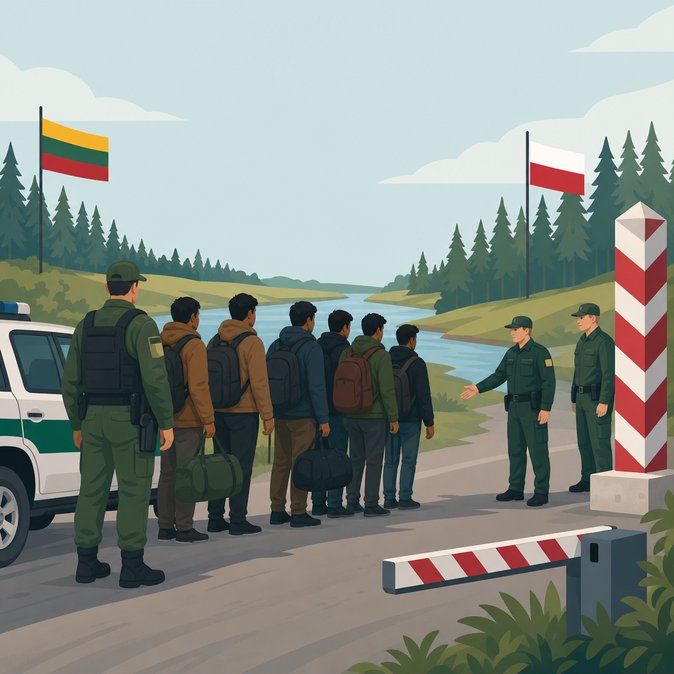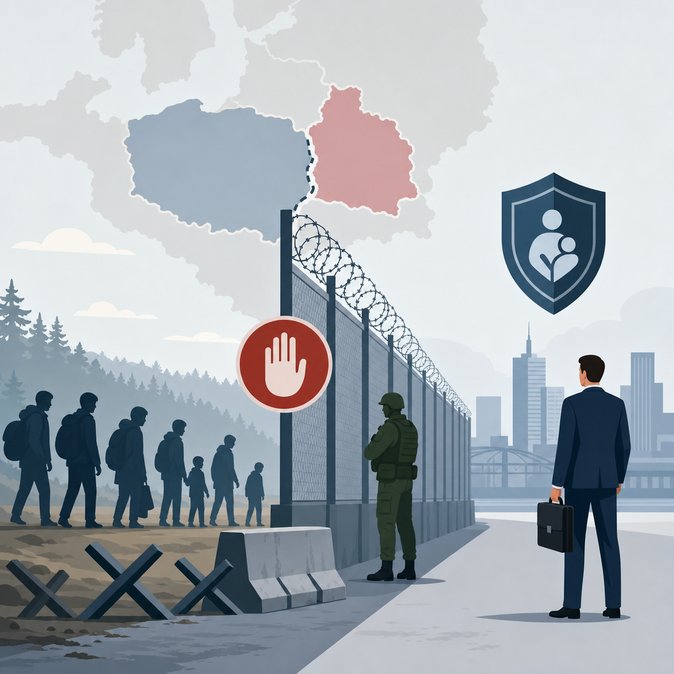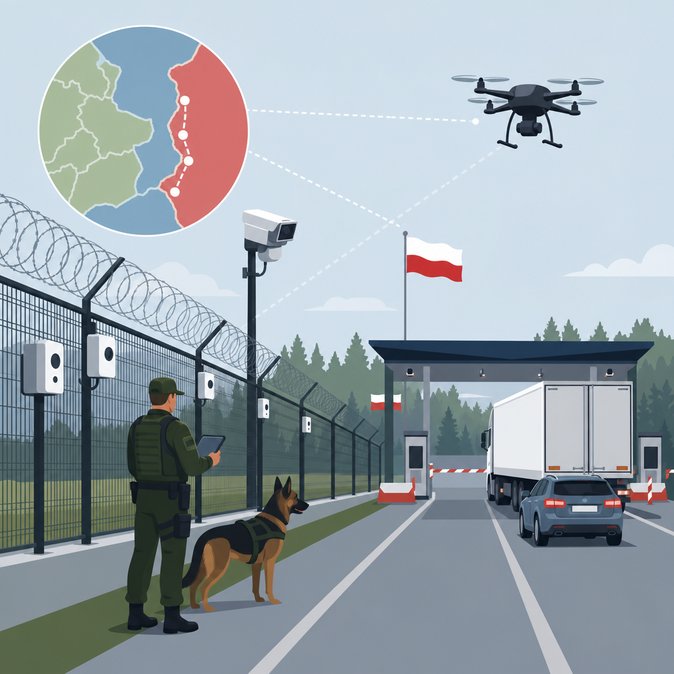
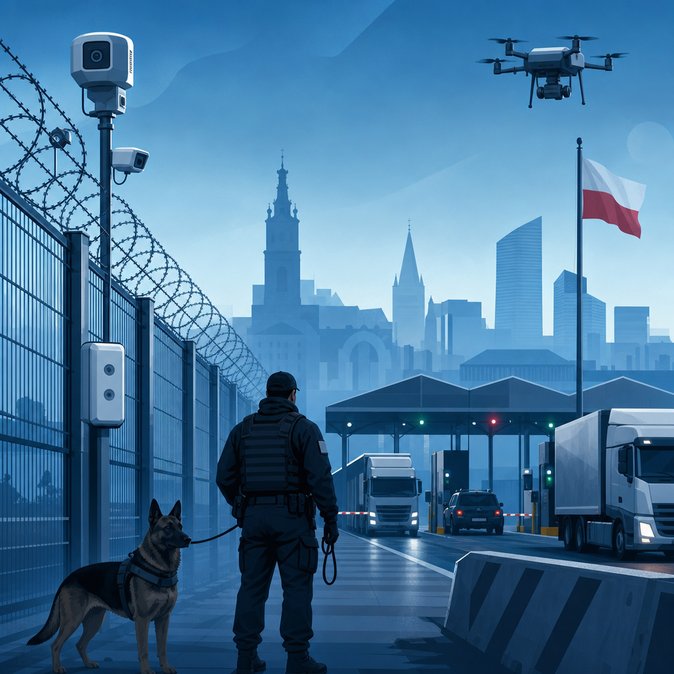
A field report published by the daily Fakt on 22 May 2026 offered a rare inside look at day-to-day operations along Poland’s border with the Kaliningrad exclave of the Russian Federation. Journalists embedded with the Warmia-Masuria Border Guard watched patrol teams deploy thermal drones, motion-sensor towers and patrol dogs to monitor the 201-kilometre stretch that forms part of the EU’s external frontier. Since Russia’s 2022 invasion of Ukraine, Warsaw has poured more than PLN 600 million into modernising surveillance infrastructure on the northern line. The old barbed-wire fence has largely been replaced by a smart barrier that feeds real-time images and vibration data to an operations centre in Kętrzyn, allowing officers to pinpoint incursions to within metres and dispatch rapid-response squads in minutes. Only two official road crossings—Grzechotki and Bezledy—remain open, and commercial traffic must pre-book slots and submit electronic manifests 24 hours in advance. Border-guard spokesperson Lt.-Col. Mirosława Aleksandrowicz told the paper that the combination of sensors and canine units has cut illegal crossings to “near zero” in 2026, down from 289 in 2024. Smugglers have shifted tactics toward small-scale contraband runs by kayak over the Vistula Lagoon, forcing authorities to expand maritime patrols and invest in radar coverage of shallow waterways. For international companies with staff commuting between Polish factories and suppliers in Kaliningrad, the upgrades translate into stricter documentation checks and a heavier compliance burden.
![High-tech cameras, sensor fences and sniffer dogs secure Poland’s 200 km frontier with Russia]()
To help navigate this tightening regime, VisaHQ provides corporations and individual travelers with tailored visa and permit solutions; its Poland portal (https://www.visahq.com/poland/) lists the latest entry rules, compiles necessary forms, and can lodge applications electronically, ensuring personnel cross the frontier with the correct documentation.
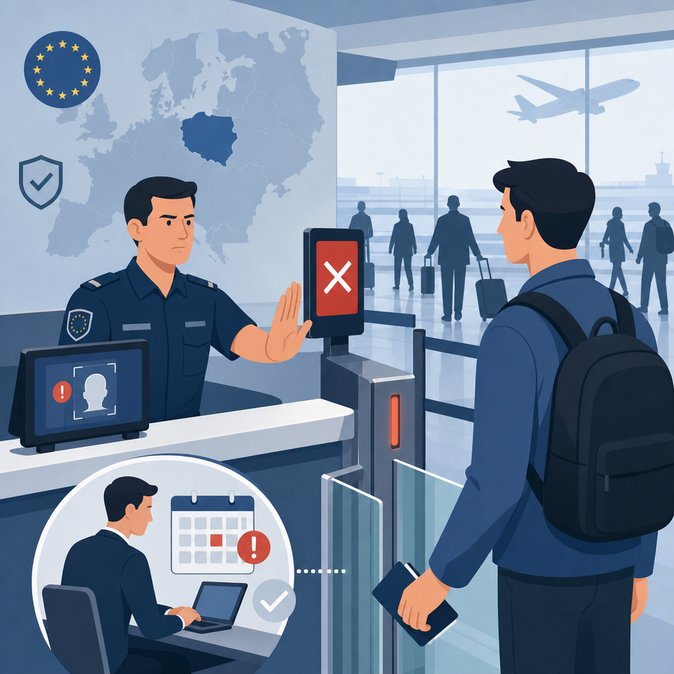
Drivers now undergo biometric verification on exit and re-entry, and cargo scanners cross-reference shipment data with the EU’s Import Control System 2. Logistics managers are advised to schedule buffers of at least two hours at the Russian border and to ensure drivers carry invitation letters, lodging confirmations and any required work permits. The high-visibility technology push also carries a geopolitical message. By showcasing cutting-edge surveillance on the EU’s northeastern edge, Poland positions itself as a security provider within Schengen—strengthening its case for continued EU co-financing of border projects and for keeping temporary controls on its western frontier until Germany drops its own checks on travellers from Poland.
To help navigate this tightening regime, VisaHQ provides corporations and individual travelers with tailored visa and permit solutions; its Poland portal (https://www.visahq.com/poland/) lists the latest entry rules, compiles necessary forms, and can lodge applications electronically, ensuring personnel cross the frontier with the correct documentation.
Drivers now undergo biometric verification on exit and re-entry, and cargo scanners cross-reference shipment data with the EU’s Import Control System 2. Logistics managers are advised to schedule buffers of at least two hours at the Russian border and to ensure drivers carry invitation letters, lodging confirmations and any required work permits. The high-visibility technology push also carries a geopolitical message. By showcasing cutting-edge surveillance on the EU’s northeastern edge, Poland positions itself as a security provider within Schengen—strengthening its case for continued EU co-financing of border projects and for keeping temporary controls on its western frontier until Germany drops its own checks on travellers from Poland.