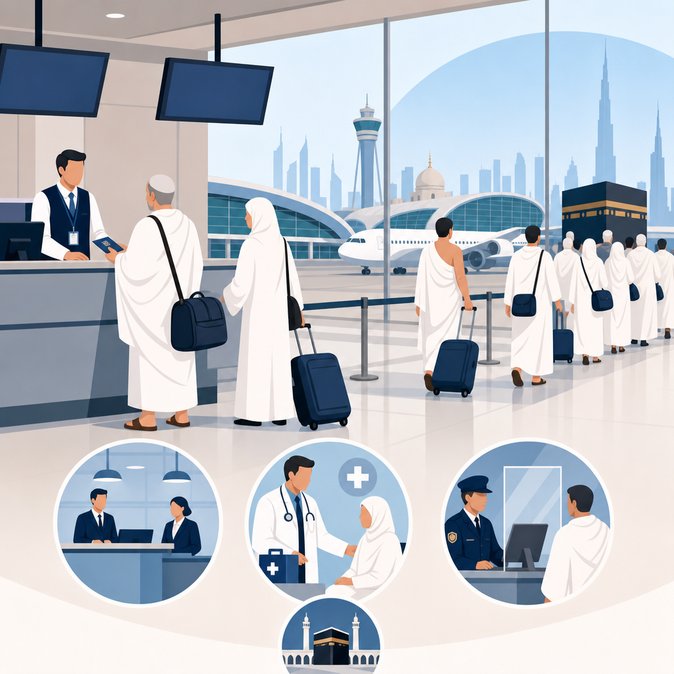
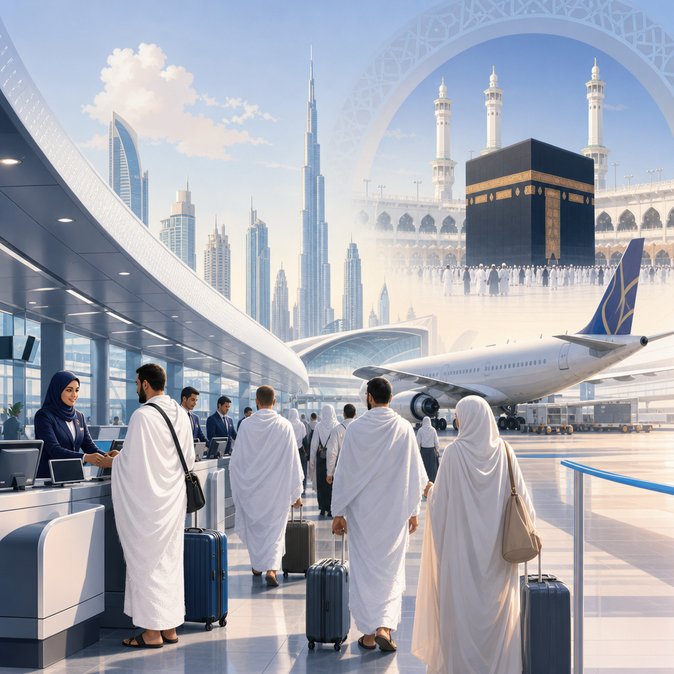
Dubai Airports confirmed on 21 May 2026 that it expects to process more than 3,600 Hajj pilgrims—representing almost 59 percent of all UAE pilgrims—through Dubai International (DXB) between 21 and 23 May. The operator has coordinated with Emirates, Saudia, flydubai and flynas to allocate gates nearest to prayer rooms, provide Ihram-changing facilities and deploy multilingual guest-experience staff.
![Dubai Airports Activates Peak-Season Plan to Move 3,600 Hajj Pilgrims Through DXB]()
For any last-minute visa needs, VisaHQ can step in: its specialised Saudi Arabia and UAE teams can fast-track Hajj, transit or business permits online, with smart forms and real-time status alerts that spare mobility managers from paperwork headaches—details are at https://www.visahq.com/united-arab-emirates/
The operational blueprint was drawn up with an extensive roster of government partners: the General Directorate of Residency & Foreigners Affairs (GDRFA) to expedite immigration clearance; Dubai Customs to fast-track Zamzam-water allowances; and the Roads & Transport Authority (RTA) to manage kerbside traffic. Elderly passengers will receive extra wheelchairs, on-site health checks from the Dubai Corporation for Ambulance Services and dedicated meet-and-assist escorts from dnata. For employers whose staff are performing Hajj on company-approved leave, the message is to instruct travellers to arrive at least four hours before departure and to carry vaccination and Hajj-permit documents in hard copy and digital form. Mobility teams should also note that return flights are scheduled between 30 May and 2 June, with separate baggage belts earmarked for Zamzam containers—information that can be shared with travel-booking desks to avoid excess-baggage disputes. This year’s plan marks DXB’s first Hajj season since passenger throughput surpassed its pre-2020 record, topping 95.2 million in 2025. Lessons learned from biometric e-gates and ‘Red Carpet’ fast-track corridors are being applied to crowd-management for chartered pilgrim flights, hinting at permanent queue-bypass products that corporates may soon be able to purchase for VIP travellers. For the wider travel ecosystem, a smooth Hajj operation protects DXB’s reputation as a high-volume yet efficient hub—a critical factor for multinational project teams who rely on tight connection windows through Dubai en route to Africa, South Asia and Latin America.
For any last-minute visa needs, VisaHQ can step in: its specialised Saudi Arabia and UAE teams can fast-track Hajj, transit or business permits online, with smart forms and real-time status alerts that spare mobility managers from paperwork headaches—details are at https://www.visahq.com/united-arab-emirates/
The operational blueprint was drawn up with an extensive roster of government partners: the General Directorate of Residency & Foreigners Affairs (GDRFA) to expedite immigration clearance; Dubai Customs to fast-track Zamzam-water allowances; and the Roads & Transport Authority (RTA) to manage kerbside traffic. Elderly passengers will receive extra wheelchairs, on-site health checks from the Dubai Corporation for Ambulance Services and dedicated meet-and-assist escorts from dnata. For employers whose staff are performing Hajj on company-approved leave, the message is to instruct travellers to arrive at least four hours before departure and to carry vaccination and Hajj-permit documents in hard copy and digital form. Mobility teams should also note that return flights are scheduled between 30 May and 2 June, with separate baggage belts earmarked for Zamzam containers—information that can be shared with travel-booking desks to avoid excess-baggage disputes. This year’s plan marks DXB’s first Hajj season since passenger throughput surpassed its pre-2020 record, topping 95.2 million in 2025. Lessons learned from biometric e-gates and ‘Red Carpet’ fast-track corridors are being applied to crowd-management for chartered pilgrim flights, hinting at permanent queue-bypass products that corporates may soon be able to purchase for VIP travellers. For the wider travel ecosystem, a smooth Hajj operation protects DXB’s reputation as a high-volume yet efficient hub—a critical factor for multinational project teams who rely on tight connection windows through Dubai en route to Africa, South Asia and Latin America.