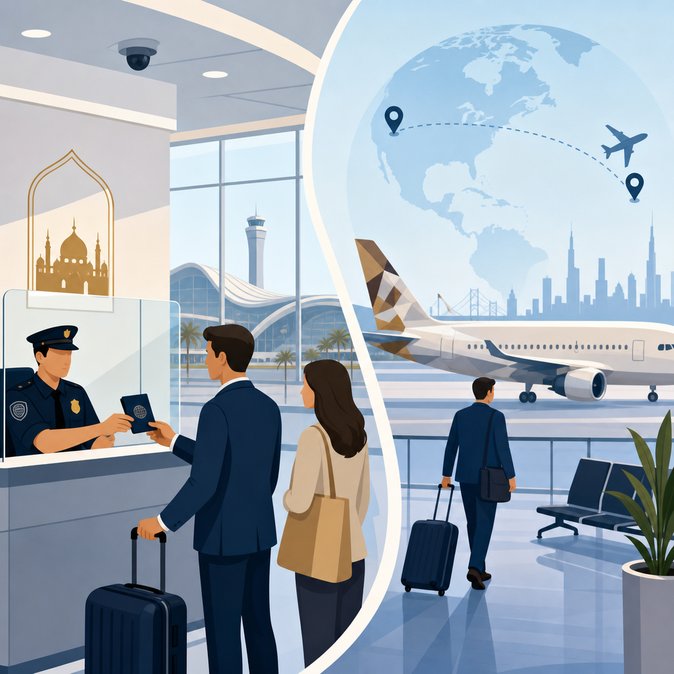
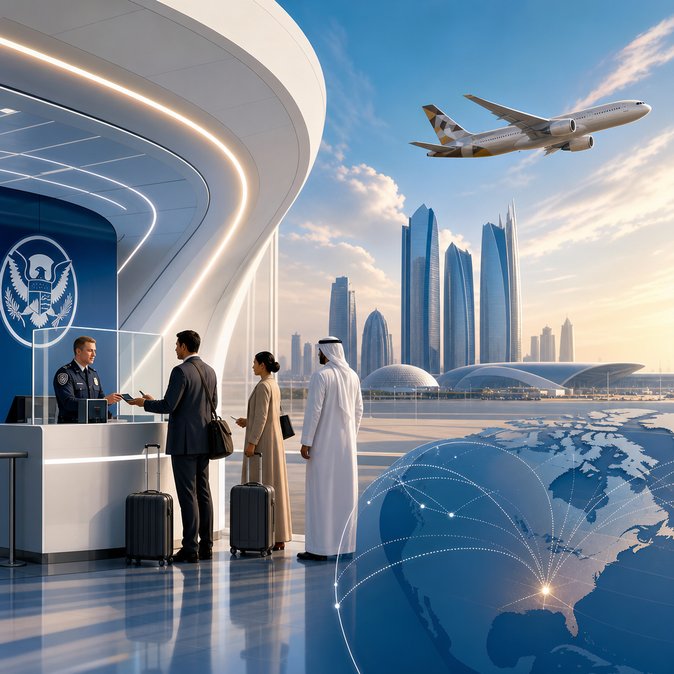
Business travellers flying from Abu Dhabi to the United States can now complete every element of US immigration, customs and agriculture inspection before they even board the aircraft. On 18 May 2026, Abu Dhabi Airports confirmed that the United States Customs and Border Protection (US CBP) operation has fully transitioned from the former Midfield terminal to a purpose-built facility inside the new Zayed International Airport (AUH). The move follows months of joint testing and certification by Emirati regulators and US CBP, culminating in a final systems “go-live” drill over the weekend.
![Abu Dhabi’s New US Pre-Clearance Facility Goes Live at Zayed International Airport]()
For travellers who still need to secure the correct U.S. visa—or any other travel document—before taking advantage of the new pre-clearance, VisaHQ can streamline the paperwork online. The company’s UAE portal (https://www.visahq.com/united-arab-emirates/) offers step-by-step guidance, digital application tools and courier services, so busy executives can sort visas for the United States and dozens of other countries without leaving their desk.
Pre-clearance means that passengers who clear US formalities in Abu Dhabi are treated as domestic arrivals when they land—shaving an hour or more off typical connection times at busy hubs such as New York JFK, Chicago O’Hare or Washington Dulles. Etihad Airways, the airport’s largest tenant, says it can now publish 50-minute minimum connection windows for onward US domestic flights, a major improvement that lets corporate mobility managers route staff through Abu Dhabi with fewer overnight layovers. From a technology perspective, the new facility is a showcase for next-generation border management. Travellers’ biometrics are captured once, at a single touch-point, and then referenced throughout the sterile area right up to the gate. US CBP officers have access to live risk-profiling dashboards, while Abu Dhabi Airports has integrated the system with its oneAUH passenger-flow software to predict queue times and redeploy staff in real time. The UAE is the only country in the Middle East to host a US pre-clearance post, underscoring the two nations’ deep security and trade ties. For the Emirates, the facility is also a competitive play: Dubai International (DXB) may still be the region’s busiest hub, but Abu Dhabi hopes that friction-free access to the world’s largest corporate travel market will lure high-yield traffic, multinational headquarters and conferences to the capital. Practical tips: travellers must present themselves at the pre-clearance zone no later than 60 minutes before departure; Global Entry holders enjoy an expedited lane, but everyone should have their ESTA or US visa printed or readily accessible on a smart device. Duty-free liquids bought air-side are permitted because passengers arrive into the US as domestic fliers. Mobility teams should also update staff profiles in their travel-management systems to reflect the shorter minimum connection times that now apply to Etihad’s US network.
For travellers who still need to secure the correct U.S. visa—or any other travel document—before taking advantage of the new pre-clearance, VisaHQ can streamline the paperwork online. The company’s UAE portal (https://www.visahq.com/united-arab-emirates/) offers step-by-step guidance, digital application tools and courier services, so busy executives can sort visas for the United States and dozens of other countries without leaving their desk.
Pre-clearance means that passengers who clear US formalities in Abu Dhabi are treated as domestic arrivals when they land—shaving an hour or more off typical connection times at busy hubs such as New York JFK, Chicago O’Hare or Washington Dulles. Etihad Airways, the airport’s largest tenant, says it can now publish 50-minute minimum connection windows for onward US domestic flights, a major improvement that lets corporate mobility managers route staff through Abu Dhabi with fewer overnight layovers. From a technology perspective, the new facility is a showcase for next-generation border management. Travellers’ biometrics are captured once, at a single touch-point, and then referenced throughout the sterile area right up to the gate. US CBP officers have access to live risk-profiling dashboards, while Abu Dhabi Airports has integrated the system with its oneAUH passenger-flow software to predict queue times and redeploy staff in real time. The UAE is the only country in the Middle East to host a US pre-clearance post, underscoring the two nations’ deep security and trade ties. For the Emirates, the facility is also a competitive play: Dubai International (DXB) may still be the region’s busiest hub, but Abu Dhabi hopes that friction-free access to the world’s largest corporate travel market will lure high-yield traffic, multinational headquarters and conferences to the capital. Practical tips: travellers must present themselves at the pre-clearance zone no later than 60 minutes before departure; Global Entry holders enjoy an expedited lane, but everyone should have their ESTA or US visa printed or readily accessible on a smart device. Duty-free liquids bought air-side are permitted because passengers arrive into the US as domestic fliers. Mobility teams should also update staff profiles in their travel-management systems to reflect the shorter minimum connection times that now apply to Etihad’s US network.