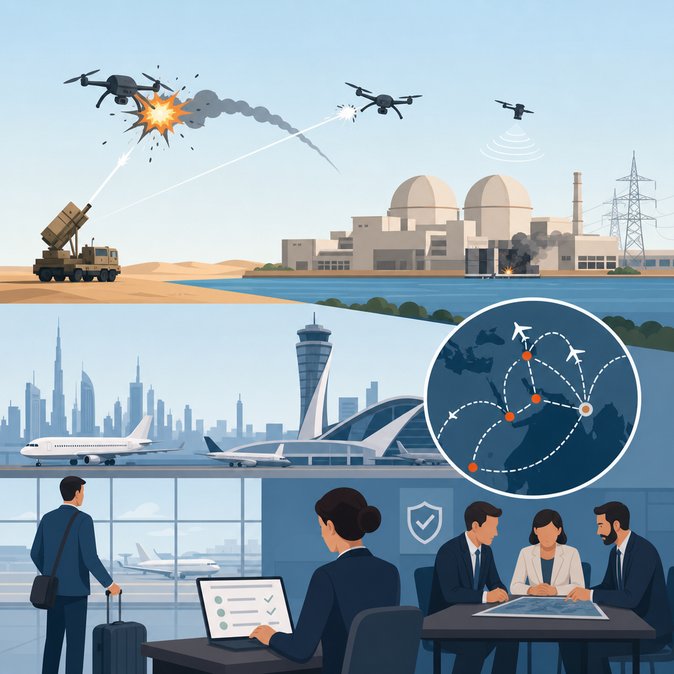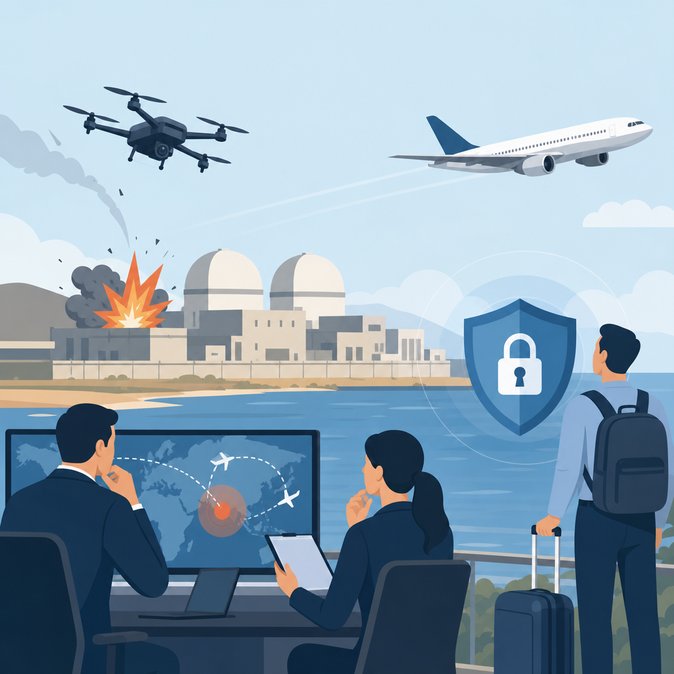
International mobility planners awoke on 18 May 2026 to a fresh security variable in the Gulf: a drone attack that ignited an external generator at Abu Dhabi’s Barakah nuclear power station the previous day. While no radiation leak occurred, the incident drew swift condemnation from the UN Secretary-General, Canada, Saudi Arabia and others, and prompted the UAE to pledge a thorough investigation and “measured response.” For airlines and travel-risk managers the question is whether hostile drones could again penetrate Emirati airspace, which only reopened fully on 2 May after months of war-related restrictions. The General Civil Aviation Authority has not re-imposed route closures, but carriers are performing additional threat assessments on western-approach flight paths and may file contingency routings that lengthen block times into Abu Dhabi and Dubai.
![Global Condemnation and Heightened Security After Drone Strike Near UAE’s Barakah Nuclear Plant]()
Those recalculating travel plans should also verify that their documentation is in order. VisaHQ’s UAE portal (https://www.visahq.com/united-arab-emirates/) offers an up-to-date snapshot of entry requirements, processing times and renewal options, and can expedite e-visas or residence-permit extensions for employees who may need to adjust itineraries at short notice.
Corporate security advisors are meanwhile revising staff-movement guidelines. Many are raising internal travel-approval levels for discretionary trips to Western Region energy sites and advising expatriate residents to keep Emirates ID cards and emergency contact details handy. Insurance underwriters say that the incident could trigger premium surcharges on ‘war risk’ cover for aircraft operating within 200 nautical miles of the Barakah facility. At border-control level, the Federal Authority for Identity, Citizenship, Customs and Port Security has stepped-up random vehicle inspections at the country’s western land crossings and intensified cargo screening at Zayed International Airport. Officials emphasise that passenger processing times remain within normal parameters but have asked travellers to arrive earlier. Although no group has claimed responsibility, the episode underscores the importance of dynamic travel-risk monitoring for assignees and frequent flyers in the Gulf. Mobility teams should ensure their emergency-notification apps are up to date and remind employees to register itineraries so that real-time alerts can be disseminated if airspace or border procedures change again.

Those recalculating travel plans should also verify that their documentation is in order. VisaHQ’s UAE portal (https://www.visahq.com/united-arab-emirates/) offers an up-to-date snapshot of entry requirements, processing times and renewal options, and can expedite e-visas or residence-permit extensions for employees who may need to adjust itineraries at short notice.
Corporate security advisors are meanwhile revising staff-movement guidelines. Many are raising internal travel-approval levels for discretionary trips to Western Region energy sites and advising expatriate residents to keep Emirates ID cards and emergency contact details handy. Insurance underwriters say that the incident could trigger premium surcharges on ‘war risk’ cover for aircraft operating within 200 nautical miles of the Barakah facility. At border-control level, the Federal Authority for Identity, Citizenship, Customs and Port Security has stepped-up random vehicle inspections at the country’s western land crossings and intensified cargo screening at Zayed International Airport. Officials emphasise that passenger processing times remain within normal parameters but have asked travellers to arrive earlier. Although no group has claimed responsibility, the episode underscores the importance of dynamic travel-risk monitoring for assignees and frequent flyers in the Gulf. Mobility teams should ensure their emergency-notification apps are up to date and remind employees to register itineraries so that real-time alerts can be disseminated if airspace or border procedures change again.