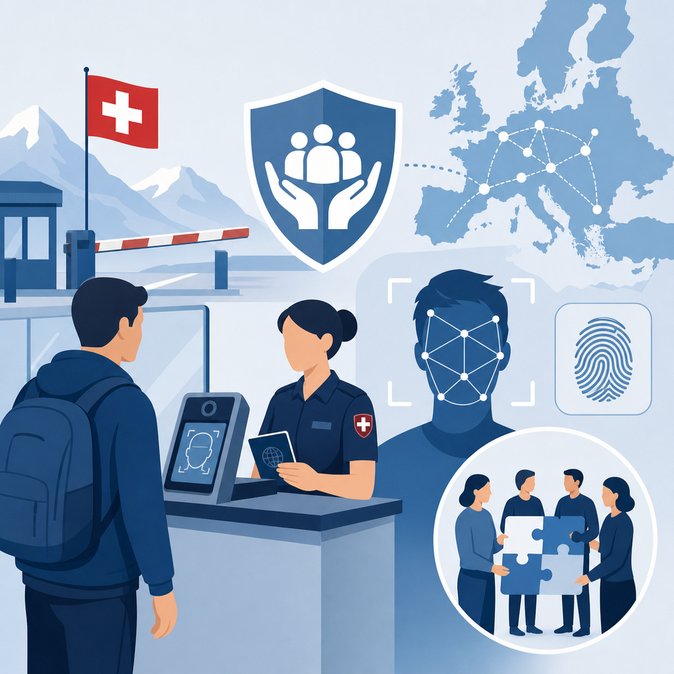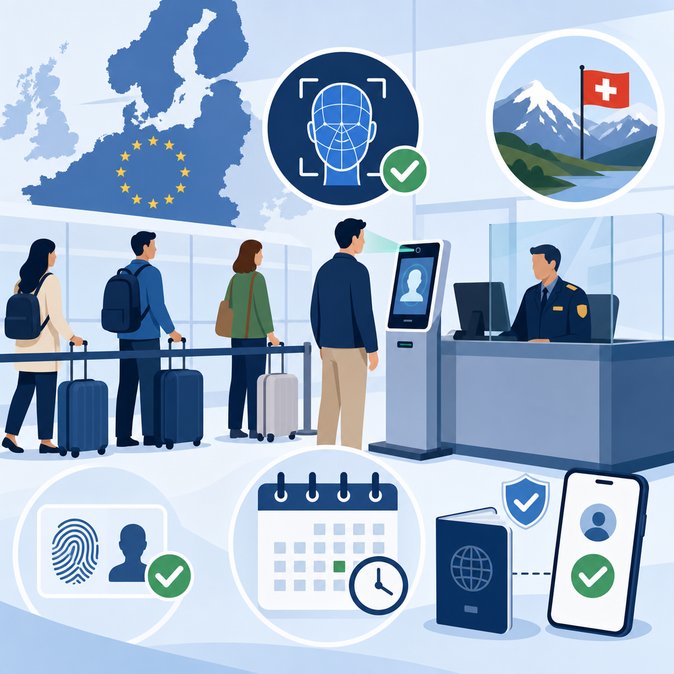
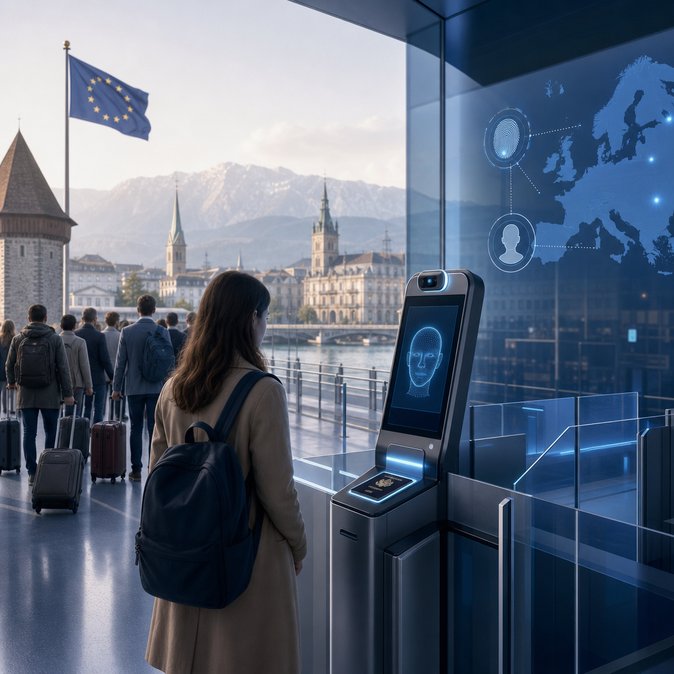
The European Commission confirmed on 19 May 2026 that the Entry/Exit System (EES) is now fully operational across all Schengen borders, ending the era of ink passport stamps for short-stay non-EU visitors. Switzerland, which activated the system on 10 April 2026, is already recording the biometric fingerprints and facial images of every visa-required and visa-exempt third-country national who enters or leaves. For Swiss airports and land crossings the first month of live operation has been a learning curve. Zurich Airport reports average immigration-hall wait times up 26 percent, with peaks of two hours when multiple wide-body flights arrive simultaneously. Border guards can no longer wave travellers through with a cursory glance; each crossing must be logged, and the system automatically flags potential overstays, lost passports or security alerts. Business-travellers and assignees should take three immediate steps. First, factor extra time into itineraries—especially when connecting to onward flights inside Schengen—until processing speeds stabilise. Second, keep track of days spent in the bloc: EES makes 90/180-day calculations automatic, and overstays will be irrefutable. Third, ensure passports are in good physical condition; damaged chips or unreadable fingerprints will force manual handling and longer queues.
![EU Entry/Exit System Now Fully Operational – What It Means for Travellers Entering Switzerland]()
For travellers who prefer expert assistance navigating these new requirements, VisaHQ can help. Its dedicated Switzerland portal (https://www.visahq.com/switzerland/) provides real-time guidance on EES procedures, upcoming ETIAS registration and traditional Schengen visa applications, allowing both individuals and corporate mobility teams to streamline the paperwork and avoid surprises at the border.
The Commission also reiterated that ETIAS—the pre-travel authorisation for visa-exempt nationals—remains scheduled for launch in the last quarter of 2026, with a standard €20 fee. Once ETIAS is live, travellers heading to Switzerland without a Schengen visa will need an approved authorisation before boarding. Companies should therefore audit staff travel patterns and begin budgeting for the new fee and lead times. While the technology promises long-term security and efficiency gains, the transitional pain is real. Swiss authorities have discretion to suspend biometric capture temporarily during extreme peaks, but airlines and corporates are advised not to count on exemptions. Investing in traveller education now will avoid costly delays later.
For travellers who prefer expert assistance navigating these new requirements, VisaHQ can help. Its dedicated Switzerland portal (https://www.visahq.com/switzerland/) provides real-time guidance on EES procedures, upcoming ETIAS registration and traditional Schengen visa applications, allowing both individuals and corporate mobility teams to streamline the paperwork and avoid surprises at the border.
The Commission also reiterated that ETIAS—the pre-travel authorisation for visa-exempt nationals—remains scheduled for launch in the last quarter of 2026, with a standard €20 fee. Once ETIAS is live, travellers heading to Switzerland without a Schengen visa will need an approved authorisation before boarding. Companies should therefore audit staff travel patterns and begin budgeting for the new fee and lead times. While the technology promises long-term security and efficiency gains, the transitional pain is real. Swiss authorities have discretion to suspend biometric capture temporarily during extreme peaks, but airlines and corporates are advised not to count on exemptions. Investing in traveller education now will avoid costly delays later.