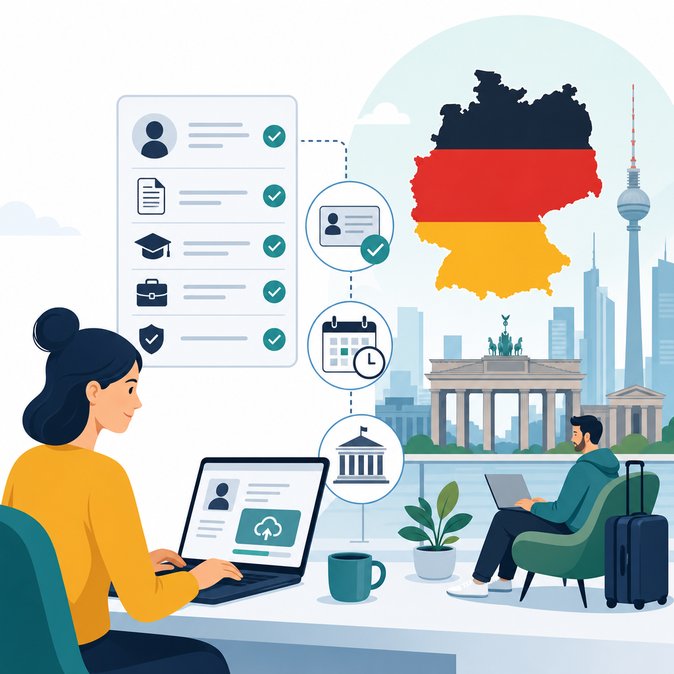
Germany still lacks a dedicated “digital-nomad visa”, but effective 16 May 2026 two existing pathways—the freelance residence permit and the year-old Opportunity Card (Chancenkarte)—became noticeably easier to use thanks to nationwide rollout of the Federal Foreign Office’s Visa Navigator and new digital submission portals in many Ausländerbehörden. An in-depth guide published on 16 May by migration resource German Online Tests summarises the changes: applicants for freelance permits can now upload supporting documents and pay fees online in 11 pilot cities, trimming in-person appointments to a biometric check.
![Germany Updates Freelance and Opportunity-Card Processes in 2026—What Digital Nomads Need to Know]()
For prospective applicants who want professional assistance navigating these updated procedures, VisaHQ offers step-by-step support for German visas—from document preparation to appointment scheduling—through its dedicated portal (https://www.visahq.com/germany/), helping freelancers and Chancenkarte seekers avoid costly mistakes.
Meanwhile, the Chancenkarte—Germany’s points-based job-seeker visa—accepts either basic A1 German or B2 English for language points and allows part-time work up to 20 hours a week. Processing-time targets have been set at four to eight weeks for national D-visas, though the article notes wide local variation. For location-independent professionals, the main decision remains whether to apply for a freelance permit (which requires letters of intent from German clients and proof of sustainable income) or enter on a Chancenkarte to look for employment. Tax advisors warn that anyone spending more than 183 days in Germany becomes tax-resident on worldwide income. The abolition of the informal “remonstration” process last July raises the stakes for submitting a complete application first time. Employers using Germany as a remote-work hub see benefits too: the digital workflow provides earlier visibility of document status, enabling HR teams to schedule onboarding more confidently. The Federal Ministry of the Interior says feedback from the pilots will inform a national “Aufenthalt Digital” platform planned for 2027. While some EU countries court nomads with low-tax schemes, Germany banks on its central location, extensive rail links and a pathway from temporary residence to permanent settlement and, ultimately, citizenship. The latest digital upgrades remove some of the bureaucratic friction that has long tarnished that value proposition.
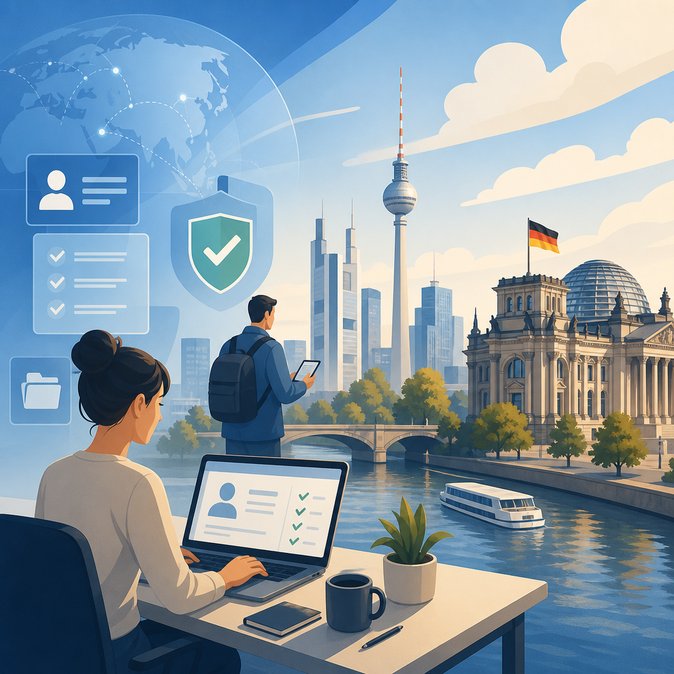
For prospective applicants who want professional assistance navigating these updated procedures, VisaHQ offers step-by-step support for German visas—from document preparation to appointment scheduling—through its dedicated portal (https://www.visahq.com/germany/), helping freelancers and Chancenkarte seekers avoid costly mistakes.
Meanwhile, the Chancenkarte—Germany’s points-based job-seeker visa—accepts either basic A1 German or B2 English for language points and allows part-time work up to 20 hours a week. Processing-time targets have been set at four to eight weeks for national D-visas, though the article notes wide local variation. For location-independent professionals, the main decision remains whether to apply for a freelance permit (which requires letters of intent from German clients and proof of sustainable income) or enter on a Chancenkarte to look for employment. Tax advisors warn that anyone spending more than 183 days in Germany becomes tax-resident on worldwide income. The abolition of the informal “remonstration” process last July raises the stakes for submitting a complete application first time. Employers using Germany as a remote-work hub see benefits too: the digital workflow provides earlier visibility of document status, enabling HR teams to schedule onboarding more confidently. The Federal Ministry of the Interior says feedback from the pilots will inform a national “Aufenthalt Digital” platform planned for 2027. While some EU countries court nomads with low-tax schemes, Germany banks on its central location, extensive rail links and a pathway from temporary residence to permanent settlement and, ultimately, citizenship. The latest digital upgrades remove some of the bureaucratic friction that has long tarnished that value proposition.