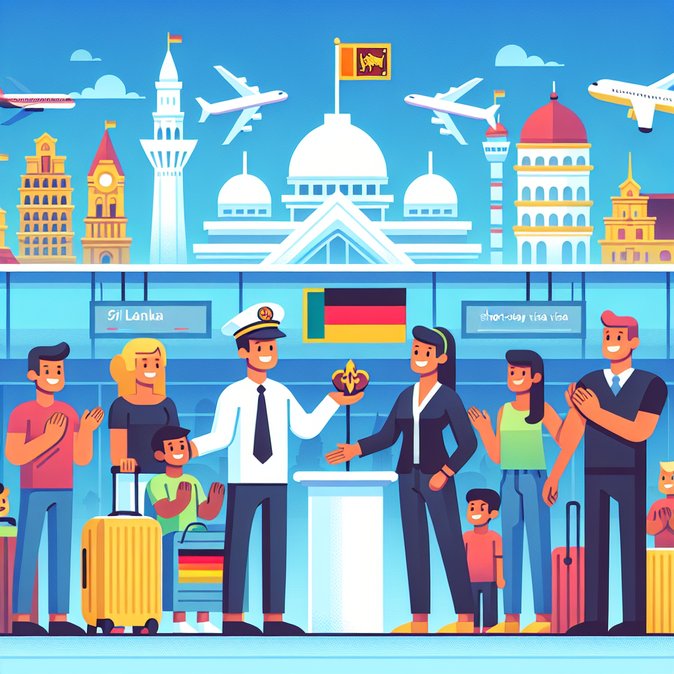
Sri Lanka has moved to turbo-charge its post-pandemic tourism recovery by abolishing short-stay visa fees for visitors from 40 key markets – including Germany – with immediate effect from 8 May 2026. The regulation, adopted in an overwhelming parliamentary vote late on Thursday night, amends the country’s Immigration and Emigration Act to allow nationals of the listed countries to enter for up to 60 days on a simple arrival stamp rather than an electronic travel authorisation (ETA) or paid visa. Germany has long been Sri Lanka’s largest source market in continental Europe, supplying around 180,000 leisure arrivals in the record year 2018 and just under 120,000 in 2025. Industry analysts expect the fee waiver – worth US $50 per person – to lift demand by 15-20 percent this winter, helped by the addition of Lufthansa’s new thrice-weekly Munich–Colombo service and Condor’s planned capacity increase from Frankfurt. Tour operators TUI and FTI told the trade press they would pass the saving straight on to clients and build more round-trip packages that combine Sri Lanka with the Maldives and southern India.
For German business-travel and mobility managers, the change removes a small but persistent administrative hurdle. Corporate travellers attending the ever-growing Colombo Port City fintech hub or Hambantota industrial zone can now finalise itineraries at much shorter notice without having to navigate Sri Lanka’s ETA portal or arrange cash on arrival. Human-resources departments should, however, remind staff that the visa-free stay is capped at 60 days within any 180-day period and that work activities still require a separate residence or employment permit.
![Sri Lanka grants German travellers visa-free entry in major tourism push]()
For companies or individual travellers who still need guidance on longer stays, work permits or onward visas to nearby destinations, VisaHQ’s Germany portal (https://www.visahq.com/germany/) provides an up-to-the-minute checklist and step-by-step application support. The platform’s courier submission and tracking tools help both holidaymakers and corporate mobility managers stay compliant without wasting time on shifting bureaucratic requirements.
Sri Lankan officials argue the measure will be fiscally neutral, pointing to modelling that shows the average German tourist spends €1,350 on hotels, excursions and domestic flights – revenue that flows into a sector employing more than 400,000 people. The Tourism Development Authority estimates that every percentage-point increase in arrivals generates an additional 1,100 direct jobs and €4.2 million in tax receipts. The government has earmarked part of those proceeds for airport upgrades and the introduction of an e-gate system compatible with the EU’s Entry/Exit System, easing future connectivity with Schengen airports. In the wider geopolitical context, Sri Lanka joins a growing list of destinations – among them Thailand, Malaysia and Kenya – that have scrapped or simplified visa requirements to stay competitive in the global contest for long-haul travellers. For Germany’s outbound market, which is expected to surpass its 2019 volume this year, the latest change offers yet another hassle-free winter-sun option and underscores a broader trend towards frictionless travel that mobility professionals will need to monitor closely.
For German business-travel and mobility managers, the change removes a small but persistent administrative hurdle. Corporate travellers attending the ever-growing Colombo Port City fintech hub or Hambantota industrial zone can now finalise itineraries at much shorter notice without having to navigate Sri Lanka’s ETA portal or arrange cash on arrival. Human-resources departments should, however, remind staff that the visa-free stay is capped at 60 days within any 180-day period and that work activities still require a separate residence or employment permit.

For companies or individual travellers who still need guidance on longer stays, work permits or onward visas to nearby destinations, VisaHQ’s Germany portal (https://www.visahq.com/germany/) provides an up-to-the-minute checklist and step-by-step application support. The platform’s courier submission and tracking tools help both holidaymakers and corporate mobility managers stay compliant without wasting time on shifting bureaucratic requirements.
Sri Lankan officials argue the measure will be fiscally neutral, pointing to modelling that shows the average German tourist spends €1,350 on hotels, excursions and domestic flights – revenue that flows into a sector employing more than 400,000 people. The Tourism Development Authority estimates that every percentage-point increase in arrivals generates an additional 1,100 direct jobs and €4.2 million in tax receipts. The government has earmarked part of those proceeds for airport upgrades and the introduction of an e-gate system compatible with the EU’s Entry/Exit System, easing future connectivity with Schengen airports. In the wider geopolitical context, Sri Lanka joins a growing list of destinations – among them Thailand, Malaysia and Kenya – that have scrapped or simplified visa requirements to stay competitive in the global contest for long-haul travellers. For Germany’s outbound market, which is expected to surpass its 2019 volume this year, the latest change offers yet another hassle-free winter-sun option and underscores a broader trend towards frictionless travel that mobility professionals will need to monitor closely.