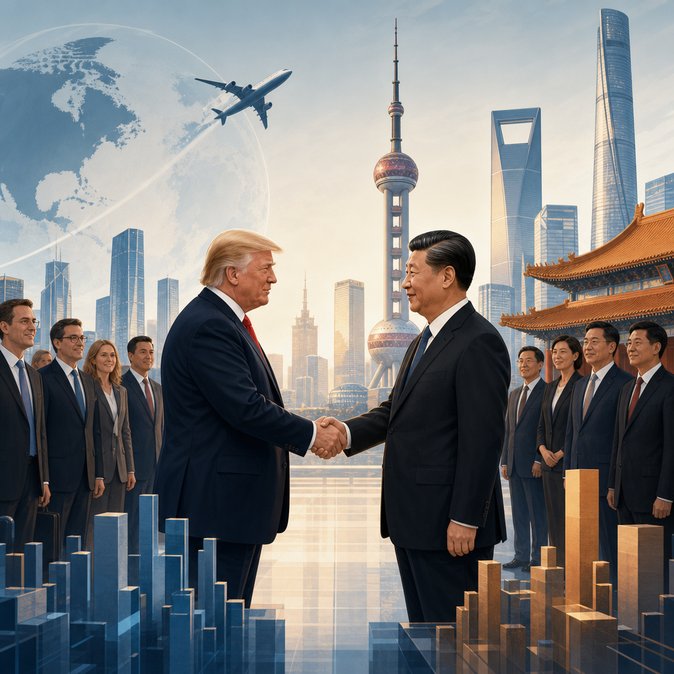
Beijing’s Chang’an Avenue turned into a rolling investor roadshow on 14 May 2026 as U.S. President Donald Trump arrived with what Chinese media called ‘the largest ever CEO entourage’ to visit China. The delegation included the heads of Apple, Tesla, Nvidia and payments giants Mastercard and Visa—firms whose China strategies depend on the ease with which executives, technicians and auditors can shuttle between the two countries. China Daily highlighted the presence of Visa and Mastercard bosses as proof that ‘commercial ties remain too deep to sever’.
![Xi–Trump summit spotlights business mobility as 200-strong U.S. delegation lands in Beijing]()
Amid these shifting mobility dynamics, travelers can streamline the bureaucratic maze by using VisaHQ’s dedicated China service (https://www.visahq.com/china/). The platform tracks the latest visa policies in real time, offers step-by-step guidance for business (M), work (Z) or tourist (L) visas, and provides secure courier options—helping executives and support staff secure the right documents quickly and reliably.
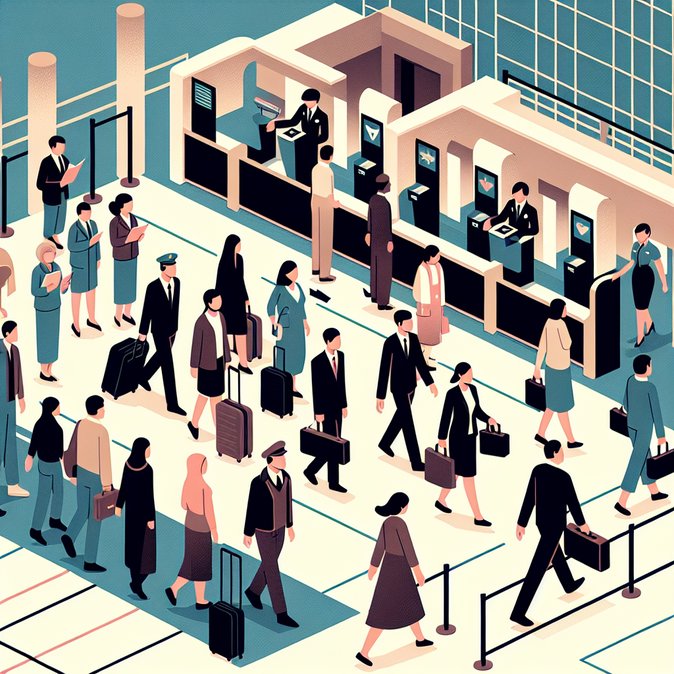
Although the summit’s public agenda focused on trade balances and semiconductor supply chains, mobility issues were threaded through side meetings. According to people briefed on the talks, U.S. executives pressed Chinese ministries to restore pre-pandemic 10-year multiple-entry M visas for their staff and to expand the 24-hour border-inspection exemption pilot now used at Beijing, Shanghai and Guangzhou airports. Chinese officials, for their part, reiterated that the unilateral 30-day visa-free program—recently extended to the UK and Canada—could be opened to more U.S. passport-holders if bilateral relations continue to stabilise. Travel data published by the National Immigration Administration ahead of the visit show why both sides have an interest in smoother entry. First-quarter cross-border movements between China and the U.S. reached 1.9 million, still 40 percent below 2019 levels. Airlines say that a return to 10-year visas could unlock a ‘dormant’ premium-cabin market and justify additional frequencies on the Beijing-New York and Shanghai-San Francisco routes for the winter timetable. Mobility teams should monitor the joint working group reportedly set up during the summit to draft a ‘business-mobility facilitation roadmap’ by October 2026. Early ideas include reciprocal trusted-traveller lanes using facial-recognition e-gates, harmonised vaccination-certificate formats and mutual recognition of professional-equipment carnets. Even without immediate breakthroughs, the symbolism of hundreds of senior U.S. executives clearing Chinese immigration on a single day sends a potent signal that large-scale corporate travel to China is back on the agenda—and that both governments are under pressure to make the next trips faster and simpler.
Amid these shifting mobility dynamics, travelers can streamline the bureaucratic maze by using VisaHQ’s dedicated China service (https://www.visahq.com/china/). The platform tracks the latest visa policies in real time, offers step-by-step guidance for business (M), work (Z) or tourist (L) visas, and provides secure courier options—helping executives and support staff secure the right documents quickly and reliably.
Although the summit’s public agenda focused on trade balances and semiconductor supply chains, mobility issues were threaded through side meetings. According to people briefed on the talks, U.S. executives pressed Chinese ministries to restore pre-pandemic 10-year multiple-entry M visas for their staff and to expand the 24-hour border-inspection exemption pilot now used at Beijing, Shanghai and Guangzhou airports. Chinese officials, for their part, reiterated that the unilateral 30-day visa-free program—recently extended to the UK and Canada—could be opened to more U.S. passport-holders if bilateral relations continue to stabilise. Travel data published by the National Immigration Administration ahead of the visit show why both sides have an interest in smoother entry. First-quarter cross-border movements between China and the U.S. reached 1.9 million, still 40 percent below 2019 levels. Airlines say that a return to 10-year visas could unlock a ‘dormant’ premium-cabin market and justify additional frequencies on the Beijing-New York and Shanghai-San Francisco routes for the winter timetable. Mobility teams should monitor the joint working group reportedly set up during the summit to draft a ‘business-mobility facilitation roadmap’ by October 2026. Early ideas include reciprocal trusted-traveller lanes using facial-recognition e-gates, harmonised vaccination-certificate formats and mutual recognition of professional-equipment carnets. Even without immediate breakthroughs, the symbolism of hundreds of senior U.S. executives clearing Chinese immigration on a single day sends a potent signal that large-scale corporate travel to China is back on the agenda—and that both governments are under pressure to make the next trips faster and simpler.