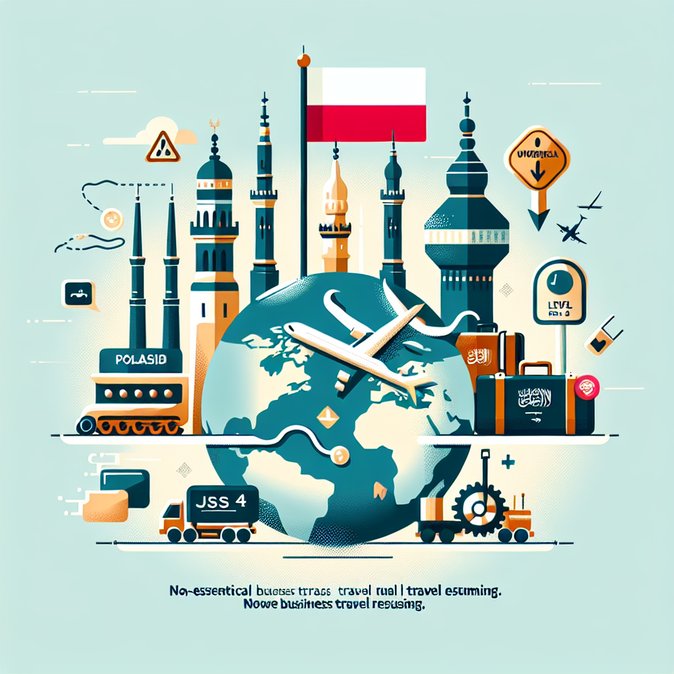
Poland’s Ministry of Foreign Affairs (MSZ) has upgraded its travel advisory for Bolivia from level 2 (‘exercise increased caution’) to level 3, a status that effectively tells Polish citizens to cancel all non-essential trips. The decision, announced on 12 May 2026, follows a surge in anti-government demonstrations that have paralysed highways and key urban centres across the Andean country.
![Polish Foreign Ministry raises travel alert for Bolivia amid nationwide protests]()
Should any Polish national still have to proceed with an essential journey, VisaHQ can streamline the process of obtaining or amending Bolivian travel documents, offering online applications, up-to-date entry guidance and emergency support services; more information is available at https://www.visahq.com/poland/
According to the MSZ, road blockades are expected to intensify between 12 and 18 May, making internal movement — and even access to international airports — unpredictable. The Polish Embassy in Lima, which provides consular cover for Bolivia, warns that protesters have already obstructed fuel deliveries and attacked private vehicles that attempted to bypass barricades. The ministry’s “Polak za granicą” X account urged travellers already in Bolivia to register in the Odyseusz system, carry extra food and water, and monitor local media for safe corridors out of La Paz and Santa Cruz. The heightened alert is part of a broader pattern: over the past year Polish consular services have issued more than 30 emergency messages related to civil unrest in Latin America. Companies with rotational staff in Bolivia’s mining and energy sectors now face insurance surcharges and may have to activate evacuation clauses in expatriate contracts. Travel-risk consultants note that many European carriers route through airports that could soon be cut off by road. For global-mobility managers this shift means reassessing duty-of-care obligations. Organisations with personnel in Bolivia should verify that medical-evacuation providers can land at high-altitude airports such as El Alto. HR teams were also reminded to brief Polish nationals on proof-of-life call-in protocols and to prepare contingency funds for overland transport to Peru or Chile should El Alto close.

Should any Polish national still have to proceed with an essential journey, VisaHQ can streamline the process of obtaining or amending Bolivian travel documents, offering online applications, up-to-date entry guidance and emergency support services; more information is available at https://www.visahq.com/poland/
According to the MSZ, road blockades are expected to intensify between 12 and 18 May, making internal movement — and even access to international airports — unpredictable. The Polish Embassy in Lima, which provides consular cover for Bolivia, warns that protesters have already obstructed fuel deliveries and attacked private vehicles that attempted to bypass barricades. The ministry’s “Polak za granicą” X account urged travellers already in Bolivia to register in the Odyseusz system, carry extra food and water, and monitor local media for safe corridors out of La Paz and Santa Cruz. The heightened alert is part of a broader pattern: over the past year Polish consular services have issued more than 30 emergency messages related to civil unrest in Latin America. Companies with rotational staff in Bolivia’s mining and energy sectors now face insurance surcharges and may have to activate evacuation clauses in expatriate contracts. Travel-risk consultants note that many European carriers route through airports that could soon be cut off by road. For global-mobility managers this shift means reassessing duty-of-care obligations. Organisations with personnel in Bolivia should verify that medical-evacuation providers can land at high-altitude airports such as El Alto. HR teams were also reminded to brief Polish nationals on proof-of-life call-in protocols and to prepare contingency funds for overland transport to Peru or Chile should El Alto close.