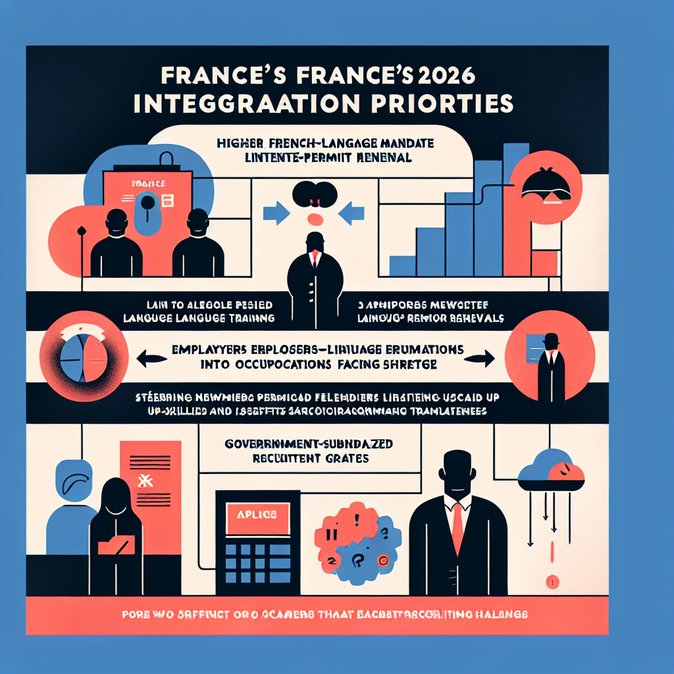
The French Labour and Interior Ministries issued a joint instruction in April 2026, publicly detailed on 12 May by Centre Inffo, that re-calibrates the integration pathway for newly arrived third-country nationals. The circular mandates that, from 2026 onward, holders of multi-year residence permits must reach at least A2 level in French, while applicants for the ten-year resident card must attain B1—and prefectures must verify certificates before issuance. To meet the higher bar, the instruction tasks the OFII (French Office for Immigration and Integration) with expanding its language-training network through partnerships with regional authorities, OPCOs and employer groups. A new funding envelope will prioritise classes scheduled outside standard working hours so that employees on shift patterns can attend without losing pay.
![New Government Instruction Puts Language Skills and Job Placement at Heart of France’s 2026 Integration Policy]()
For migrants or employers navigating these new residency and language requirements, VisaHQ’s France portal (https://www.visahq.com/france/) offers step-by-step checklists, document-tracking tools and expert support that streamline everything from visa applications to permit renewals, ensuring that certificates and deadlines are in order long before prefectural reviews.
The second pillar links integration to labour-market needs. Local employment committees must align training offers with “métiers en tension”—shortage occupations such as construction, logistics and care services. An experimental apprenticeship track for refugees and first-time migrants has already launched in five regions, enabling candidates up to age 29 to earn a wage while gaining a French qualification. For businesses, the policy creates both obligations and opportunities. Employers must grant allophone workers a right to language training during working hours, partly financed by vocational levies, but they also gain a clearer route to up-skilling staff and addressing skills gaps. Mobility teams should map which employees will need language certification before future permit renewals and budget course costs accordingly. The instruction also presages stricter enforcement: prefectures have been told to refuse renewals where language evidence is missing and to fast-track expulsions for non-compliant temporary workers once legal remedies are exhausted. Companies hosting secondees should therefore schedule language assessment early in an assignment to avoid last-minute surprises.

For migrants or employers navigating these new residency and language requirements, VisaHQ’s France portal (https://www.visahq.com/france/) offers step-by-step checklists, document-tracking tools and expert support that streamline everything from visa applications to permit renewals, ensuring that certificates and deadlines are in order long before prefectural reviews.
The second pillar links integration to labour-market needs. Local employment committees must align training offers with “métiers en tension”—shortage occupations such as construction, logistics and care services. An experimental apprenticeship track for refugees and first-time migrants has already launched in five regions, enabling candidates up to age 29 to earn a wage while gaining a French qualification. For businesses, the policy creates both obligations and opportunities. Employers must grant allophone workers a right to language training during working hours, partly financed by vocational levies, but they also gain a clearer route to up-skilling staff and addressing skills gaps. Mobility teams should map which employees will need language certification before future permit renewals and budget course costs accordingly. The instruction also presages stricter enforcement: prefectures have been told to refuse renewals where language evidence is missing and to fast-track expulsions for non-compliant temporary workers once legal remedies are exhausted. Companies hosting secondees should therefore schedule language assessment early in an assignment to avoid last-minute surprises.
More From France
View all
Schengen Border Checks Extended: Switzerland to Reinstate Controls on French Frontier Ahead of G7 Summit
French Bee Pilots File 13-18 May Strike Notice, Escalating Labour Unrest in France’s Long-Haul Sector