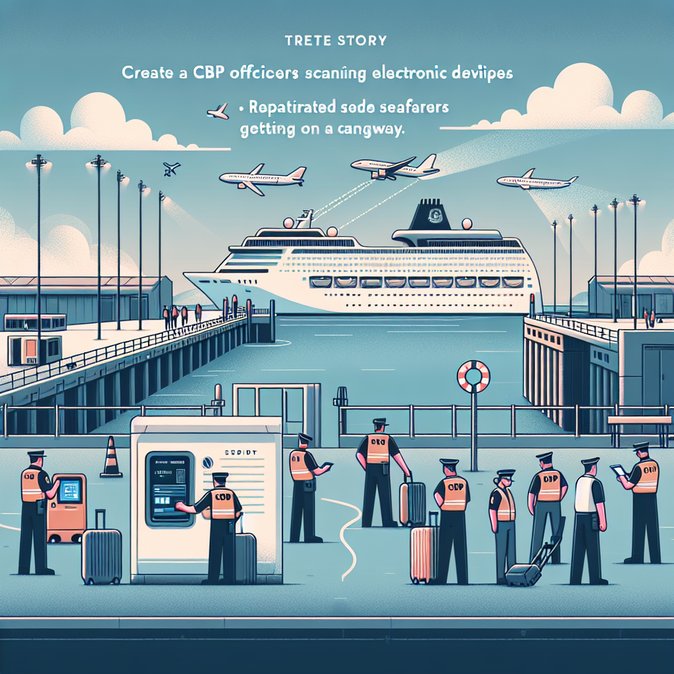
U.S. Customs and Border Protection (CBP) quietly carried out one of its largest seaborne visa-enforcement actions of the year when agents boarded eight cruise ships docked in San Diego between 23 and 27 April and cancelled the C-1/D crew visas of 27 foreign seafarers. According to a CBP statement obtained by Asatu News, the workers—26 Filipinos and one citizen each of Portugal and Indonesia—were questioned after digital-forensics teams allegedly linked them to exchanges of child-sexual-abuse images. None of the crew members has been criminally charged, but CBP emphasised that a conviction is not required for visa revocation when an individual is deemed “inadmissible” under section 212(a) of the Immigration and Nationality Act. The seafarers were summarily placed on the next outbound flights to their home countries. Disney Cruise Line confirmed several of its employees were among those detained and said they have been terminated. Labour-rights group Unión del Barrio is pressing CBP for greater transparency, arguing that the speed of the removals raises due-process concerns and could discourage future whistle-blowers on board. Maritime-immigration lawyers note that C-1/D crew-member visas provide limited procedural protections compared with long-term work visas; holders may be removed without an immigration-court hearing if CBP finds them inadmissible. Companies that employ large multinational crews—including Disney, Carnival and Royal Caribbean—are reassessing digital-monitoring policies and advising crewmembers that personal devices may be inspected at any U.S. port call.
![U.S. revokes visas of 27 cruise-ship crew members after child-exploitation probe]()
For employers and seafarers aiming to head off such last-minute visa complications, VisaHQ offers streamlined services that include document audits, real-time application tracking and expedited processing for C-1/D and other U.S. travel categories—tools that can help cruise operators keep crew complements intact before reaching American ports (https://www.visahq.com/united-states/).
For corporate travel and mobility managers, the incident is a reminder that crew visas can be revoked instantly, creating cascading staffing gaps. Cruise lines must now pivot to emergency crewing plans just as the peak Alaska and Caribbean seasons begin. International manning agencies sending workers to U.S. home-port itineraries can expect more aggressive secondary inspections and should budget extra time for shipboard clearance in Los Angeles, Miami and Port Canaveral. The case also underscores CBP’s broader use of INA § 222(g), which allows the agency to cancel visas outside criminal proceedings if officers believe the holder has violated visa terms or U.S. law. Practically, business travelers with C-1/D or B-1 maritime and offshore assignments should anticipate heightened scrutiny of electronic devices at U.S. seaports. Companies should brief crews on their digital-privacy expectations, ensure rapid access to legal counsel and confirm that collective-bargaining agreements address sudden removals. Cruise lines, meanwhile, face reputational pressures: U.S. family-vacation brands cannot afford public outrage, so compliance departments are moving to zero-tolerance messaging and mandatory training on illicit-content reporting. Longer term, immigration practitioners expect CBP to publish new guidance on crew-member visa ineligibilities tied to online activity—a policy that could extend to airlines and cargo vessels. Firms relying on short-cycle, high-turnover maritime labour may need to revisit recruitment pipelines, diversify nationalities to mitigate concentrated risk and build redundancy into crew complements to absorb late-stage visa cancellations.

For employers and seafarers aiming to head off such last-minute visa complications, VisaHQ offers streamlined services that include document audits, real-time application tracking and expedited processing for C-1/D and other U.S. travel categories—tools that can help cruise operators keep crew complements intact before reaching American ports (https://www.visahq.com/united-states/).
For corporate travel and mobility managers, the incident is a reminder that crew visas can be revoked instantly, creating cascading staffing gaps. Cruise lines must now pivot to emergency crewing plans just as the peak Alaska and Caribbean seasons begin. International manning agencies sending workers to U.S. home-port itineraries can expect more aggressive secondary inspections and should budget extra time for shipboard clearance in Los Angeles, Miami and Port Canaveral. The case also underscores CBP’s broader use of INA § 222(g), which allows the agency to cancel visas outside criminal proceedings if officers believe the holder has violated visa terms or U.S. law. Practically, business travelers with C-1/D or B-1 maritime and offshore assignments should anticipate heightened scrutiny of electronic devices at U.S. seaports. Companies should brief crews on their digital-privacy expectations, ensure rapid access to legal counsel and confirm that collective-bargaining agreements address sudden removals. Cruise lines, meanwhile, face reputational pressures: U.S. family-vacation brands cannot afford public outrage, so compliance departments are moving to zero-tolerance messaging and mandatory training on illicit-content reporting. Longer term, immigration practitioners expect CBP to publish new guidance on crew-member visa ineligibilities tied to online activity—a policy that could extend to airlines and cargo vessels. Firms relying on short-cycle, high-turnover maritime labour may need to revisit recruitment pipelines, diversify nationalities to mitigate concentrated risk and build redundancy into crew complements to absorb late-stage visa cancellations.