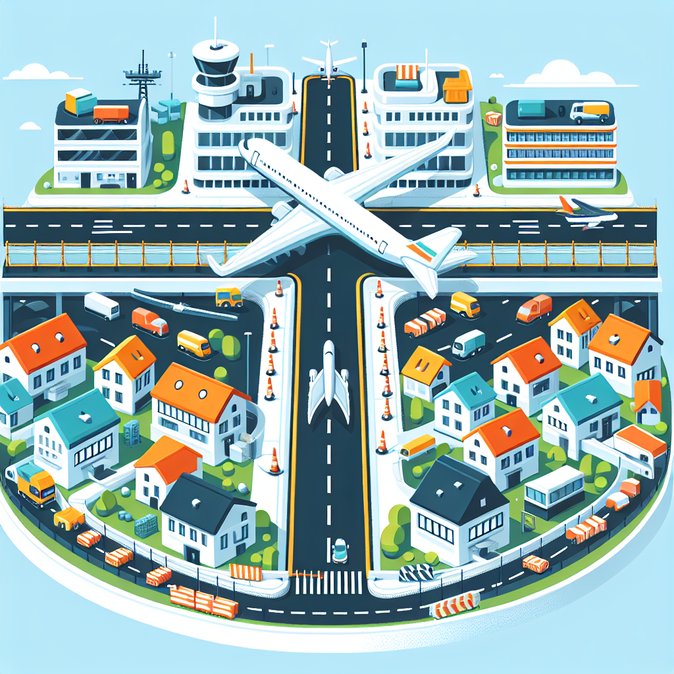
Prague’s Václav Havel Airport has confirmed that it will distribute CZK 13.3 million (about EUR 540,000) to districts and villages that are experiencing higher noise levels while the airport’s main 06/24 runway is closed for an extensive safety-upgrade project running from late March to 14 August 2026. The compensation, announced on 10 May 2026, will be shared among communities such as Nebušice, Přední Kopanina, Tuchoměřice and Hostivice, which are under the new flight paths created after traffic was shifted to the shorter 12/30 runway. Airport management emphasises that the runway refurbishment—including lighting, asphalt resurfacing and upgraded drainage—is essential to meet new EASA safety standards and to handle increasing wide-body traffic. Construction teams are working in round-the-clock shifts, but the partial closure has inevitably concentrated take-offs and landings over residential areas that normally enjoy quieter skies. The airport’s “Good Neighbour” fund, financed from passenger charges, is designed to offset such externalities. Municipal leaders say the one-off payments will finance practical, high-visibility projects—ranging from school-yard acoustic fencing to replacement of ageing windows in public buildings and the installation of green roofs on kindergartens. While residents welcome the gesture, several mayors have called for a longer-term noise-monitoring programme and a transparent formula for future payouts when similar infrastructure works take place.
![Prague Airport to pay CZK 13.3 million to nearby municipalities as main runway modernization diverts traffic]()
Travellers heading to the Czech Republic during this period may also need to update their paperwork as quickly as their flight plans. VisaHQ’s streamlined service (https://www.visahq.com/czech-republic/) lets individuals and corporate travel managers check the latest entry requirements and complete Czech visa applications online, ensuring that disruptions in the air don’t turn into complications at the border.
For employers and travel managers the runway closure means revised slot availability, occasional schedule retiming and a minor rise in evening noise-curfew violations that could cascade into missed connections. Airlines operating wide-body aircraft—particularly those on North-American and Gulf routes—have published updated NOTAMs and advise corporate travellers to monitor itineraries closely. Ground-handling providers also report that taxi times are about three minutes longer on average, which could influence minimum connection times during the peak summer season. Looking ahead, Prague Airport expects the renovation to increase the runway’s declared take-off distance by 120 metres and improve Category III ILS resilience, ultimately supporting the airport’s ambition to exceed 19 million passengers in 2027. The current disruption, while inconvenient, is therefore positioned as an investment in the long-term competitiveness of the Czech capital as a Central-European hub.
Travellers heading to the Czech Republic during this period may also need to update their paperwork as quickly as their flight plans. VisaHQ’s streamlined service (https://www.visahq.com/czech-republic/) lets individuals and corporate travel managers check the latest entry requirements and complete Czech visa applications online, ensuring that disruptions in the air don’t turn into complications at the border.
For employers and travel managers the runway closure means revised slot availability, occasional schedule retiming and a minor rise in evening noise-curfew violations that could cascade into missed connections. Airlines operating wide-body aircraft—particularly those on North-American and Gulf routes—have published updated NOTAMs and advise corporate travellers to monitor itineraries closely. Ground-handling providers also report that taxi times are about three minutes longer on average, which could influence minimum connection times during the peak summer season. Looking ahead, Prague Airport expects the renovation to increase the runway’s declared take-off distance by 120 metres and improve Category III ILS resilience, ultimately supporting the airport’s ambition to exceed 19 million passengers in 2027. The current disruption, while inconvenient, is therefore positioned as an investment in the long-term competitiveness of the Czech capital as a Central-European hub.