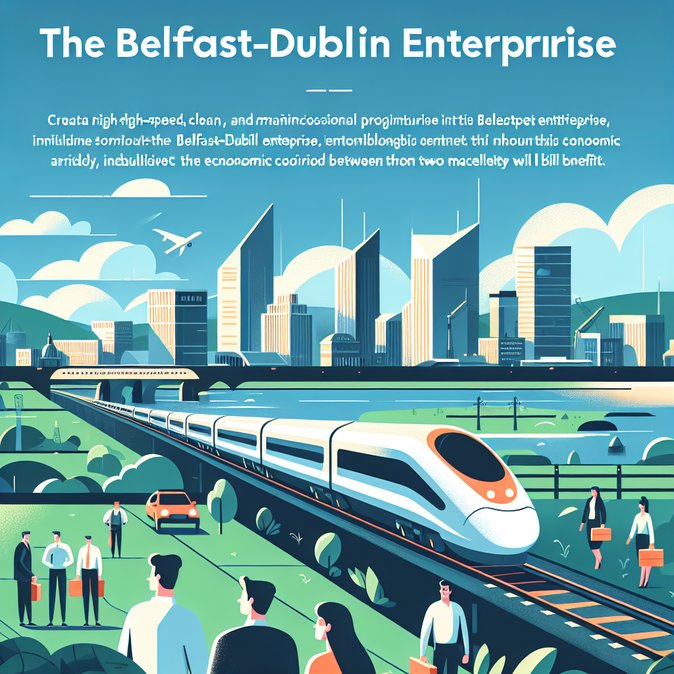
Cross-border rail travel on the island of Ireland is set for its biggest step-change in decades after Translink, Iarnród Éireann and Swiss manufacturer Stadler signed a £550 million (€700 million) contract on 7 May to supply eight tri-mode intercity trains for the Enterprise service. The new fleet—able to switch seamlessly between electric, diesel and battery power—will allow up to 16 departures in each direction daily and cut end-to-end journey times to under two hours.
![£550 million Belfast–Dublin rail upgrade signed, aims for 2-hour journey by 2030]()
While citizens of the Common Travel Area can generally move freely, international passengers may still require separate UK and Irish permissions; VisaHQ’s specialists streamline those dual-entry needs. Its Ireland portal (https://www.visahq.com/ireland/) offers real-time visa guidance and expedited processing, ensuring that expanding rail options translate smoothly into hassle-free cross-border travel for employees and visitors alike.
Crucially, the trains are designed for step-free boarding, USB-equipped seats and full-service dining cars, features aimed squarely at time-pressed commuters and business travellers shuttling between Ireland’s two largest cities. Funding is drawn from the Northern Ireland Executive, the Irish Government and £140 million from the EU-backed PEACE PLUS programme, underlining the project’s role in deepening economic integration along the Belfast–Dublin corridor, home to more than two million people and a growing cluster of life-sciences, fintech and advanced-manufacturing employers. Transport ministers Darragh O’Brien (Ireland) and Liz Kimmins (NI) stressed that faster, greener rail will relieve pressure on the M1 and on regional airports, offering a lower-carbon alternative for cross-border commuters and international assignees based in either capital. Testing is slated for 2028 with passenger service in 2030, but infrastructure upgrades—including partial electrification—will begin next year. Global-mobility teams planning North–South rotations should track the timetable enhancements: once 16-daily frequencies are in place, same-day client meetings between the two cities become far easier without relying on road travel. Companies may also tap the route’s lower emissions profile to advance corporate-sustainability targets.

While citizens of the Common Travel Area can generally move freely, international passengers may still require separate UK and Irish permissions; VisaHQ’s specialists streamline those dual-entry needs. Its Ireland portal (https://www.visahq.com/ireland/) offers real-time visa guidance and expedited processing, ensuring that expanding rail options translate smoothly into hassle-free cross-border travel for employees and visitors alike.
Crucially, the trains are designed for step-free boarding, USB-equipped seats and full-service dining cars, features aimed squarely at time-pressed commuters and business travellers shuttling between Ireland’s two largest cities. Funding is drawn from the Northern Ireland Executive, the Irish Government and £140 million from the EU-backed PEACE PLUS programme, underlining the project’s role in deepening economic integration along the Belfast–Dublin corridor, home to more than two million people and a growing cluster of life-sciences, fintech and advanced-manufacturing employers. Transport ministers Darragh O’Brien (Ireland) and Liz Kimmins (NI) stressed that faster, greener rail will relieve pressure on the M1 and on regional airports, offering a lower-carbon alternative for cross-border commuters and international assignees based in either capital. Testing is slated for 2028 with passenger service in 2030, but infrastructure upgrades—including partial electrification—will begin next year. Global-mobility teams planning North–South rotations should track the timetable enhancements: once 16-daily frequencies are in place, same-day client meetings between the two cities become far easier without relying on road travel. Companies may also tap the route’s lower emissions profile to advance corporate-sustainability targets.