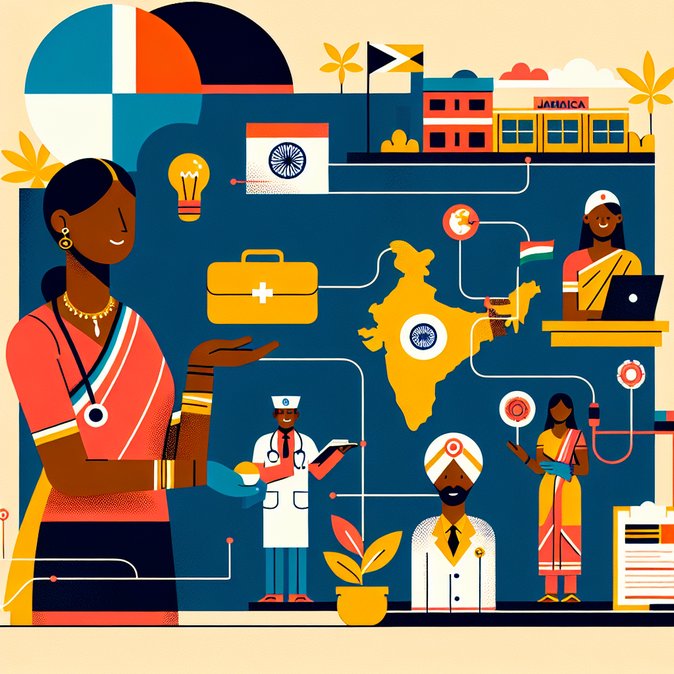
During External Affairs Minister S. Jaishankar’s visit to Kingston on 5 May, India and Jamaica inked three memorandums of understanding covering health, solar-energy projects and broadcasting. The joint statement, reported by The Economic Times, emphasised a new framework for the “recruitment and mobility of skilled professionals,” specifically nurses, healthcare workers and teachers. Jamaica’s booming tourism and BPO sectors face acute skill shortages, while India produces the world’s largest cohort of English-speaking nurses each year. Under the forthcoming mobility arrangement, Indian medical staff will be able to secure temporary work permits with streamlined credential recognition, an arrangement similar to India’s nursing-pipeline agreements with Japan and Germany.
![India and Jamaica Sign MoUs to Expand Skilled-Worker Mobility in Healthcare and Education]()
To help employers and individual practitioners navigate the paperwork that will underpin these new corridors, VisaHQ offers an online platform tailored for Indian nationals traveling abroad. Its Jamaica section (https://www.visahq.com/india/) provides up-to-date visa requirements, digital document checklists and concierge support, giving HR teams a head start before the bilateral procedures are finalised.
The two governments also discussed using India’s e-Vidyabharati tele-education platform to train Caribbean professionals remotely before deployment, reducing onboarding time for Jamaican employers. For Indian universities, the deal opens a niche market for hybrid nursing degrees that include clinical rotations in Kingston’s public hospitals. From a corporate-mobility standpoint, the MoUs illustrate India’s broader strategy of pairing trade deals with targeted talent corridors. Companies in the healthcare outsourcing, ed-tech and hospitality sectors may soon find it easier to send staff to Jamaica under employer-sponsored permits instead of lengthier individual work-visa routes. Both sides aim to finalise detailed visa procedures by Q4 2026. Until then, HR teams should map potential project timelines against Jamaica’s existing work-permit quotas and monitor the High Commission’s updates for pilot-programme launch dates.

To help employers and individual practitioners navigate the paperwork that will underpin these new corridors, VisaHQ offers an online platform tailored for Indian nationals traveling abroad. Its Jamaica section (https://www.visahq.com/india/) provides up-to-date visa requirements, digital document checklists and concierge support, giving HR teams a head start before the bilateral procedures are finalised.
The two governments also discussed using India’s e-Vidyabharati tele-education platform to train Caribbean professionals remotely before deployment, reducing onboarding time for Jamaican employers. For Indian universities, the deal opens a niche market for hybrid nursing degrees that include clinical rotations in Kingston’s public hospitals. From a corporate-mobility standpoint, the MoUs illustrate India’s broader strategy of pairing trade deals with targeted talent corridors. Companies in the healthcare outsourcing, ed-tech and hospitality sectors may soon find it easier to send staff to Jamaica under employer-sponsored permits instead of lengthier individual work-visa routes. Both sides aim to finalise detailed visa procedures by Q4 2026. Until then, HR teams should map potential project timelines against Jamaica’s existing work-permit quotas and monitor the High Commission’s updates for pilot-programme launch dates.