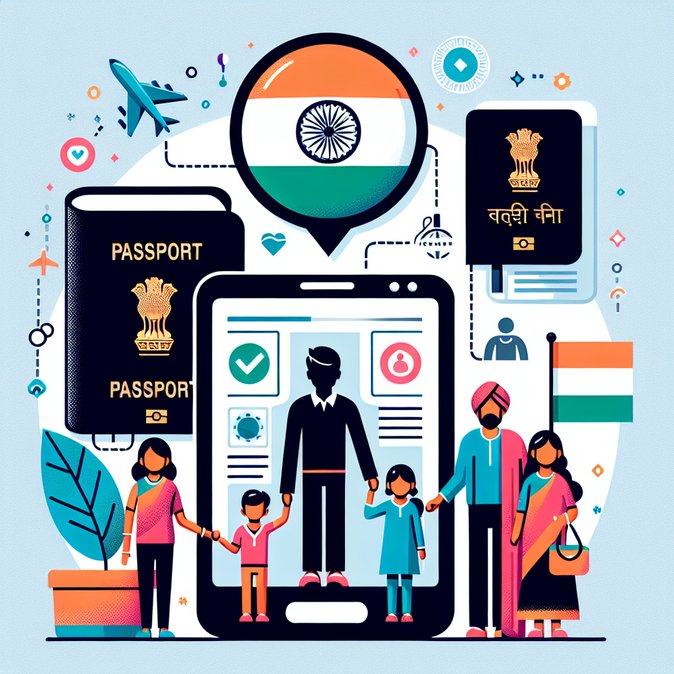
India’s Ministry of Home Affairs (MHA) has completed the biggest overhaul of the Overseas Citizen of India (OCI) regime since the card was introduced in 2006. The Citizenship (Amendment) Rules 2026—notified on 30 April and operational from 1 May—shift every stage of the OCI life-cycle to a new online portal that issues an electronic OCI (e-OCI) credential alongside (or instead of) the familiar blue booklet. All registrations, renewals, transfers after passport re-issue and even renunciations must now be filed electronically, eliminating couriered forms and in-person submission of photocopies at Indian missions. The digital pivot is more than cosmetic. A central, real-time database will allow immigration officers to verify e-OCI status instantly at airports and seaports, and the Bureau of Immigration has confirmed that e-OCI will be accepted at automated fast-track gates once those lanes come online at Delhi and Bengaluru later this year. Processing times for straightforward applications are expected to drop from six-to-eight weeks to about 15 working days, a welcome change for global mobility teams that routinely juggle tight deployment timetables.
A headline addition is the “single-passport rule” for children. Newly inserted language in Rule 3 makes it explicit that a minor who holds an Indian passport may not simultaneously possess the passport of another country. Families who obtained a foreign passport for convenience—common among business expatriates whose children are born abroad—must now choose: keep the Indian passport or wait until the child turns 18 to apply for OCI. HR managers planning long-term assignments will need to flag this early, as dual-passport minors risk being ruled ineligible or having their OCI cancelled.
![India Goes Fully Digital on OCI: Citizenship (Amendment) Rules 2026 Bring e-OCI and One-Passport-for-Minors Policy]()
The rules also strengthen government powers to revoke OCI electronically. Under revised Rule 35, an e-OCI can be deemed cancelled even if the physical card is not surrendered—closing a previous loophole that let some overstayers retain proof of status. A new digital appeals workflow routes challenges to an officer one rank higher than the original decision-maker, promising faster resolution but demanding meticulous document management by assignees and counsel.
Navigating the new online-only OCI framework can feel daunting, especially for first-time applicants and busy HR departments. VisaHQ’s dedicated India desk (https://www.visahq.com/india/) can guide users through the e-OCI portal, verify documents against the latest Rule 3 and Rule 35 requirements, and monitor application progress—helping companies and families avoid delays or inadvertent non-compliance.
For multinational employers the impact is immediate: document checklists, employee handbooks and relocation vendor templates must all be updated to reference e-OCI numbers, biometric consent forms and the one-passport rule. Companies running group moves this summer should schedule employee briefings to avoid last-minute surprises at the boarding gate and ensure that dependent minors carry only the travel document that aligns with the family’s immigration strategy.
A headline addition is the “single-passport rule” for children. Newly inserted language in Rule 3 makes it explicit that a minor who holds an Indian passport may not simultaneously possess the passport of another country. Families who obtained a foreign passport for convenience—common among business expatriates whose children are born abroad—must now choose: keep the Indian passport or wait until the child turns 18 to apply for OCI. HR managers planning long-term assignments will need to flag this early, as dual-passport minors risk being ruled ineligible or having their OCI cancelled.

The rules also strengthen government powers to revoke OCI electronically. Under revised Rule 35, an e-OCI can be deemed cancelled even if the physical card is not surrendered—closing a previous loophole that let some overstayers retain proof of status. A new digital appeals workflow routes challenges to an officer one rank higher than the original decision-maker, promising faster resolution but demanding meticulous document management by assignees and counsel.
Navigating the new online-only OCI framework can feel daunting, especially for first-time applicants and busy HR departments. VisaHQ’s dedicated India desk (https://www.visahq.com/india/) can guide users through the e-OCI portal, verify documents against the latest Rule 3 and Rule 35 requirements, and monitor application progress—helping companies and families avoid delays or inadvertent non-compliance.
For multinational employers the impact is immediate: document checklists, employee handbooks and relocation vendor templates must all be updated to reference e-OCI numbers, biometric consent forms and the one-passport rule. Companies running group moves this summer should schedule employee briefings to avoid last-minute surprises at the boarding gate and ensure that dependent minors carry only the travel document that aligns with the family’s immigration strategy.