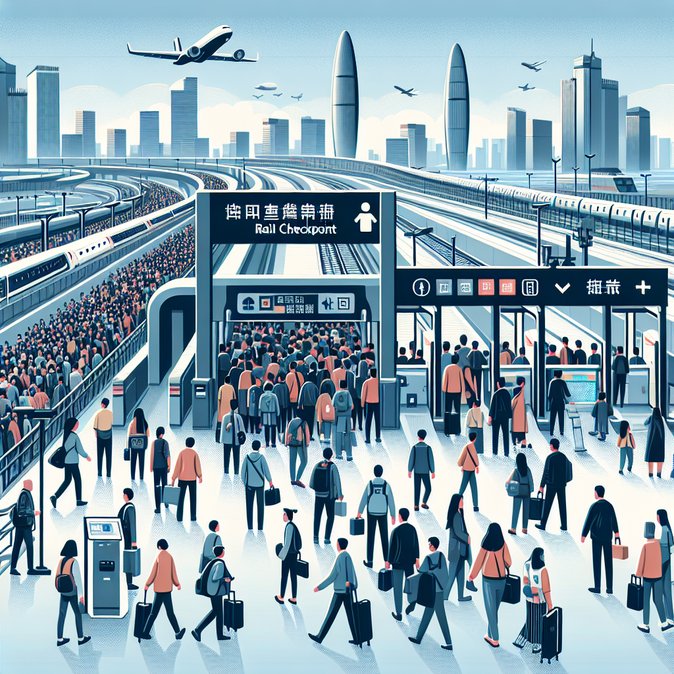
Passenger records continue to tumble at Shenzhen’s Luohu land port – the busiest rail gateway between mainland China and Hong Kong. On 4 May the Luohu Border Inspection Station announced that cumulative crossings for 2026 had already exceeded 25 million, 9.6 percent higher than the comparable period last year and achieved 12 days earlier.
![Shenzhen’s Luohu checkpoint tops 25 million crossings four months into 2026]()
For travelers wondering whether they still need a formal visa, transit permit or nothing at all under the evolving visa-free policies, VisaHQ can simplify the process. Its easy-to-use portal (https://www.visahq.com/china/) walks applicants through the latest Chinese entry rules, offers real-time status updates and provides expert support, helping cross-border commuters and tourists alike cut through red tape.
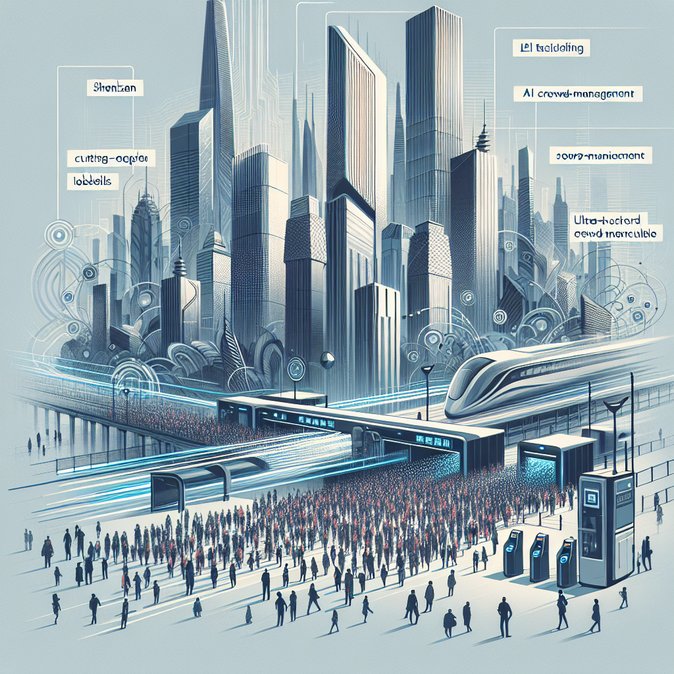
Foreign nationals represent the fastest-growing segment, with 440,000 clearances so far this year – up 21 percent – as leisure visitors piggy-back on the visa-free scheme and business travellers shuttle between the twin financial centres. Single-day throughput peaked at 282,000 passengers, a post-pandemic record. Technological upgrades are at the heart of Luohu’s resilience. An AI-driven crowd-forecasting platform pre-positions officers and switches counters from mainland ID to foreign passport mode in real time, while a new biometric kiosk lets arrivals submit fingerprints and facial data without presenting a paper form. The port’s renaissance also reflects lifestyle convergence within the Greater Bay Area: morning dim-sum in Shenzhen, lunchtime markets in Kowloon and back for a concert in Futian is now a commonplace itinerary. For employers, the implication is a looser definition of ‘expatriate commute’ – staff may legally reside on one side of the boundary while working on the other, raising questions about payroll location and permanent-establishment risk. Immigration counsel warn that while same-day multiple crossings are permitted, cumulative days-in-China could still trigger individual income-tax exposure; tracking solutions and clear policies are therefore advised.
For travelers wondering whether they still need a formal visa, transit permit or nothing at all under the evolving visa-free policies, VisaHQ can simplify the process. Its easy-to-use portal (https://www.visahq.com/china/) walks applicants through the latest Chinese entry rules, offers real-time status updates and provides expert support, helping cross-border commuters and tourists alike cut through red tape.
Foreign nationals represent the fastest-growing segment, with 440,000 clearances so far this year – up 21 percent – as leisure visitors piggy-back on the visa-free scheme and business travellers shuttle between the twin financial centres. Single-day throughput peaked at 282,000 passengers, a post-pandemic record. Technological upgrades are at the heart of Luohu’s resilience. An AI-driven crowd-forecasting platform pre-positions officers and switches counters from mainland ID to foreign passport mode in real time, while a new biometric kiosk lets arrivals submit fingerprints and facial data without presenting a paper form. The port’s renaissance also reflects lifestyle convergence within the Greater Bay Area: morning dim-sum in Shenzhen, lunchtime markets in Kowloon and back for a concert in Futian is now a commonplace itinerary. For employers, the implication is a looser definition of ‘expatriate commute’ – staff may legally reside on one side of the boundary while working on the other, raising questions about payroll location and permanent-establishment risk. Immigration counsel warn that while same-day multiple crossings are permitted, cumulative days-in-China could still trigger individual income-tax exposure; tracking solutions and clear policies are therefore advised.