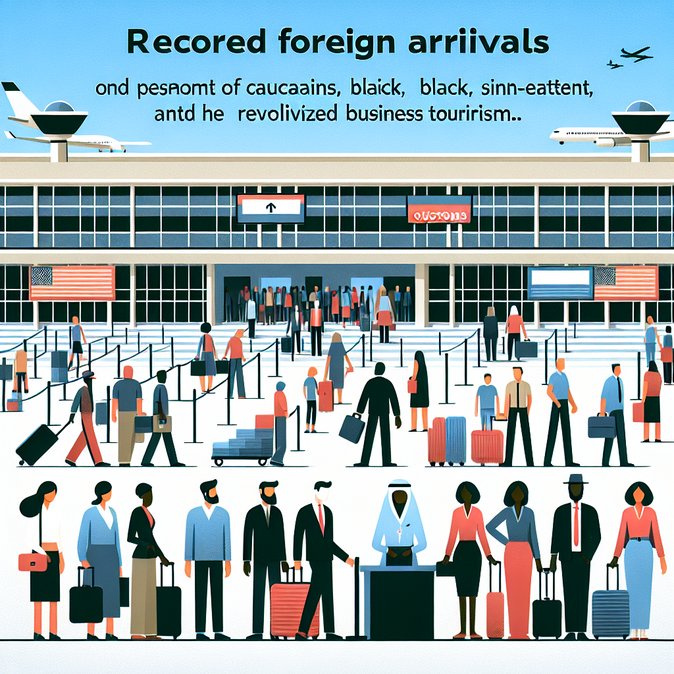
China’s experiment with unilateral visa-free entry hit a new milestone over the May Day holiday as inbound visitor numbers surged to their highest level since the pandemic, according to data released on 4 May by Xinhua and the National Immigration Administration (NIA). Visa-exemption for citizens of 45 countries – recently expanded to Canada and the United Kingdom and extended through 31 December 2026 – meant that most short-haul travellers from Europe and Asia could enter with nothing more than a passport and a return ticket. Officials reported that land crossings at Hekou on the Vietnamese border handled more than 100,000 passenger movements between 30 April and 5 May, while Hunchun, Jilin Province’s only land port to Russia, logged its busiest week since 2019.
![Visa-free policies drive record-high foreign arrivals during China’s May Day break]()
Needless to say, even with visa-free entry on the rise, questions about eligibility, documentation and last-minute policy shifts still surface. VisaHQ’s China portal (https://www.visahq.com/china/) gives travellers and mobility teams a real-time check on whether a passport qualifies for the waiver, provides invitation-letter support when it doesn’t, and can secure conventional visas for staff whose itineraries fall outside the permitted categories—all in one dashboard.
Major airports told a similar story: Beijing Capital cleared an average of 49,000 inbound passengers a day and Shanghai Pudong topped 56,000. Hotel platform Trip.com said foreign bookings for 4- and 5-star properties were up 60 per cent year-on-year. Industry insiders credit the pickup to a series of pro-business moves unveiled since late 2025: a streamlined e-arrival card, digital customs declaration, and the abolition of mandatory PCR tests. Airlines have followed by reinstating or adding more than 150 international frequencies for the summer schedule, led by China Eastern, Air China and Spring Airlines. The Ministry of Commerce says the easier entry regime is already feeding into trade figures, with on-site orders at last week’s Canton Fair up 18 per cent over 2025. For corporate mobility managers the message is clear: China’s door is open again, and travel lead times are shrinking fast. Companies that paused short-term assignments or technical visits during the pandemic are dusting off programmes knowing that employees from most of Europe, much of Asia-Pacific and now Canada and the UK no longer face consular appointments. Multinationals are advised, however, to keep copies of invitation letters and itineraries on hand; border officials still conduct random inspections to verify that travellers’ stated purpose matches the visa-free categories of business meetings, tourism, transit and family visits. Looking ahead, officials hinted that the scheme could become permanent if security risks remain manageable. Analysts expect additional countries – potentially the United States and New Zealand – to be considered after the summer peak, provided bilateral talks on reciprocity make progress.

Needless to say, even with visa-free entry on the rise, questions about eligibility, documentation and last-minute policy shifts still surface. VisaHQ’s China portal (https://www.visahq.com/china/) gives travellers and mobility teams a real-time check on whether a passport qualifies for the waiver, provides invitation-letter support when it doesn’t, and can secure conventional visas for staff whose itineraries fall outside the permitted categories—all in one dashboard.
Major airports told a similar story: Beijing Capital cleared an average of 49,000 inbound passengers a day and Shanghai Pudong topped 56,000. Hotel platform Trip.com said foreign bookings for 4- and 5-star properties were up 60 per cent year-on-year. Industry insiders credit the pickup to a series of pro-business moves unveiled since late 2025: a streamlined e-arrival card, digital customs declaration, and the abolition of mandatory PCR tests. Airlines have followed by reinstating or adding more than 150 international frequencies for the summer schedule, led by China Eastern, Air China and Spring Airlines. The Ministry of Commerce says the easier entry regime is already feeding into trade figures, with on-site orders at last week’s Canton Fair up 18 per cent over 2025. For corporate mobility managers the message is clear: China’s door is open again, and travel lead times are shrinking fast. Companies that paused short-term assignments or technical visits during the pandemic are dusting off programmes knowing that employees from most of Europe, much of Asia-Pacific and now Canada and the UK no longer face consular appointments. Multinationals are advised, however, to keep copies of invitation letters and itineraries on hand; border officials still conduct random inspections to verify that travellers’ stated purpose matches the visa-free categories of business meetings, tourism, transit and family visits. Looking ahead, officials hinted that the scheme could become permanent if security risks remain manageable. Analysts expect additional countries – potentially the United States and New Zealand – to be considered after the summer peak, provided bilateral talks on reciprocity make progress.