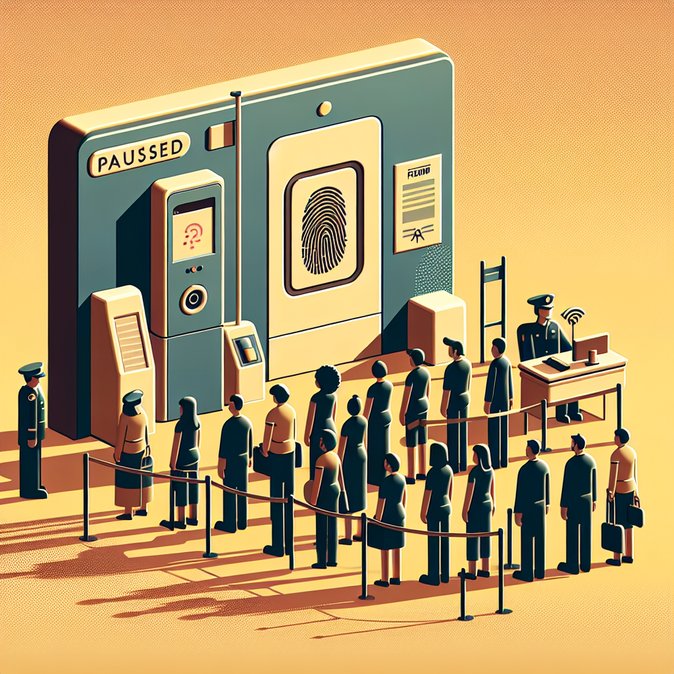
In an unexpected move late on 4 May, the European Commission authorised Schengen states to suspend mandatory fingerprint and facial-recognition checks at air and land borders during peak periods. The decision follows mounting complaints from airlines and hub airports, including Madrid-Barajas and Barcelona-El Prat, that the Entry/Exit System (EES) introduced on 10 April was creating hour-long queues and missed connections for transit passengers.
![EU pauses biometric Entry/Exit checks, giving Spanish airports breathing room]()
For businesses and travellers needing clarity amid these rapid changes, VisaHQ’s Spain portal (https://www.visahq.com/spain/) provides real-time updates on Schengen entry rules and handles visa and passport services end-to-end, helping companies keep employees compliant and itineraries on track.
Under the temporary derogation, border guards may revert to manual passport stamping while still logging crossings in the central EES database. Airlines must continue to transmit Advance Passenger Information, but corporate travel managers are being advised to pad itineraries by at least 30 minutes until choke-points stabilise. Non-EU assignees should pay close attention to passport stamps: manual processing can affect the 90/180-day Schengen calculation and overstay risk. For Spain the breathing room is critical. AENA expects 57 million passengers through its top five airports this summer and had warned of congestion if additional police were not hired. The interior ministry says it will use the hiatus to install 120 more automated e-gates and train staff, aiming to resume full biometric checks before the October launch of the digital EU visa system. Companies should update traveler briefing notes immediately, remind staff to keep boarding passes as proof of exit, and monitor weekly Commission reviews that could re-impose biometric capture with 72 hours’ notice. Longer-term, the episode highlights the operational importance of the forthcoming ETIAS authorisation, now due in Q4 2026.

For businesses and travellers needing clarity amid these rapid changes, VisaHQ’s Spain portal (https://www.visahq.com/spain/) provides real-time updates on Schengen entry rules and handles visa and passport services end-to-end, helping companies keep employees compliant and itineraries on track.
Under the temporary derogation, border guards may revert to manual passport stamping while still logging crossings in the central EES database. Airlines must continue to transmit Advance Passenger Information, but corporate travel managers are being advised to pad itineraries by at least 30 minutes until choke-points stabilise. Non-EU assignees should pay close attention to passport stamps: manual processing can affect the 90/180-day Schengen calculation and overstay risk. For Spain the breathing room is critical. AENA expects 57 million passengers through its top five airports this summer and had warned of congestion if additional police were not hired. The interior ministry says it will use the hiatus to install 120 more automated e-gates and train staff, aiming to resume full biometric checks before the October launch of the digital EU visa system. Companies should update traveler briefing notes immediately, remind staff to keep boarding passes as proof of exit, and monitor weekly Commission reviews that could re-impose biometric capture with 72 hours’ notice. Longer-term, the episode highlights the operational importance of the forthcoming ETIAS authorisation, now due in Q4 2026.