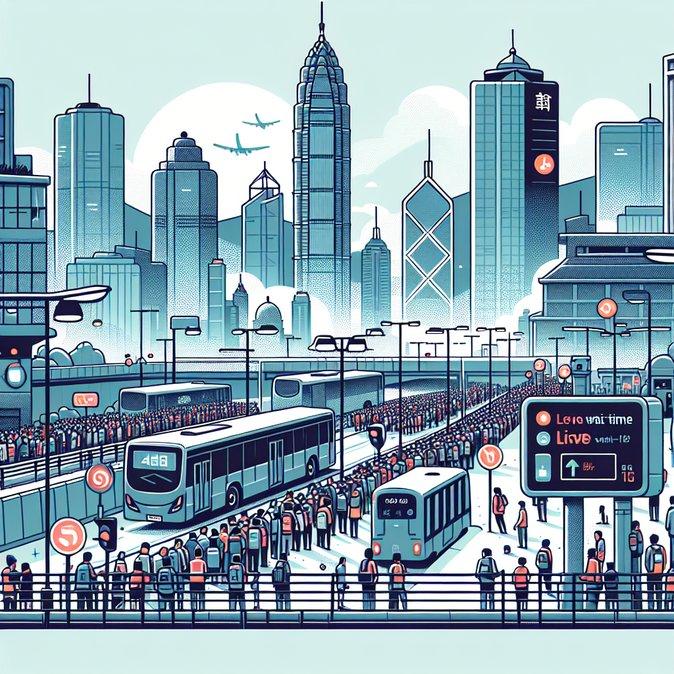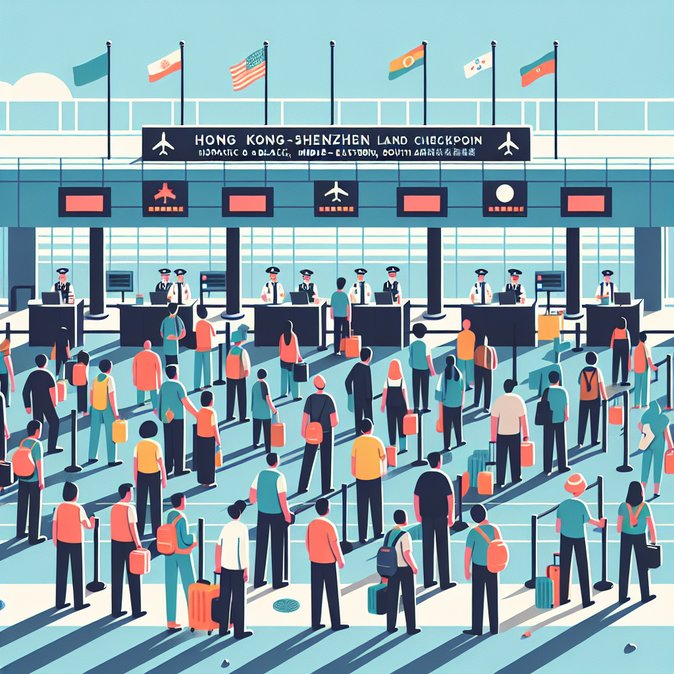
Record-breaking crowds are pouring through Hong Kong’s land borders as the Chinese mainland’s five-day Labour-Day Golden Week holiday reaches its midpoint. The Immigration Department projected that 6 million passenger movements would be logged between 1 and 5 May and, by lunchtime on 2 May, traffic was already building well above weekday norms. Long queues snaked outside Liantang/Heung Yuen Wai, Futian–Lok Ma Chau and Shenzhen Bay control points, with travellers reporting waits of 30 minutes or more even at the automated e-Channel gates.
![Labour-Day Golden Week pushes Hong Kong–Shenzhen checkpoints to capacity]()
If you want to make sure your travel documentation is flawless before braving those queues, VisaHQ’s Hong Kong portal (https://www.visahq.com/hong-kong/) offers quick online visa checks, real-time application tracking and optional courier pick-up, helping travellers and corporate mobility teams sidestep last-minute surprises at the border.
Checkpoint managers have redeployed staff from quieter posts, opened overflow counters and extended operating hours where possible. Shenzhen’s frontier inspection authority is sharing live throughput data with its Hong Kong opposite numbers so that coaches can be re-routed in real time, while Hong Kong has switched several kiosks to “flexi-lane” mode that can process either arrivals or departures depending on pressure. Despite the crowding, border-crossing times are still well below the 90-minute peaks seen pre-pandemic in 2019. Officials attribute the improvement to biometric “Face Easy” e-Channels rolled out last year and to the wider resumption of high-speed-rail services, which has siphoned some of the coach traffic away from land ports. For mobility and travel-management teams the message is clear: allow at least 45–60 minutes of buffer when scheduling cross-boundary meetings this weekend, warn assignees not to rely on last-bus timetables, and remind them that same-day PCR testing is no longer required but random baggage checks remain stringent. The surge underlines Hong Kong’s growing dependence on the Greater Bay Area visitor economy—and the urgency of planned capacity upgrades such as joint-inspection halls at the Lok Ma Chau Spur Line and the Qianhai railway checkpoint, both slated for 2027.

If you want to make sure your travel documentation is flawless before braving those queues, VisaHQ’s Hong Kong portal (https://www.visahq.com/hong-kong/) offers quick online visa checks, real-time application tracking and optional courier pick-up, helping travellers and corporate mobility teams sidestep last-minute surprises at the border.
Checkpoint managers have redeployed staff from quieter posts, opened overflow counters and extended operating hours where possible. Shenzhen’s frontier inspection authority is sharing live throughput data with its Hong Kong opposite numbers so that coaches can be re-routed in real time, while Hong Kong has switched several kiosks to “flexi-lane” mode that can process either arrivals or departures depending on pressure. Despite the crowding, border-crossing times are still well below the 90-minute peaks seen pre-pandemic in 2019. Officials attribute the improvement to biometric “Face Easy” e-Channels rolled out last year and to the wider resumption of high-speed-rail services, which has siphoned some of the coach traffic away from land ports. For mobility and travel-management teams the message is clear: allow at least 45–60 minutes of buffer when scheduling cross-boundary meetings this weekend, warn assignees not to rely on last-bus timetables, and remind them that same-day PCR testing is no longer required but random baggage checks remain stringent. The surge underlines Hong Kong’s growing dependence on the Greater Bay Area visitor economy—and the urgency of planned capacity upgrades such as joint-inspection halls at the Lok Ma Chau Spur Line and the Qianhai railway checkpoint, both slated for 2027.