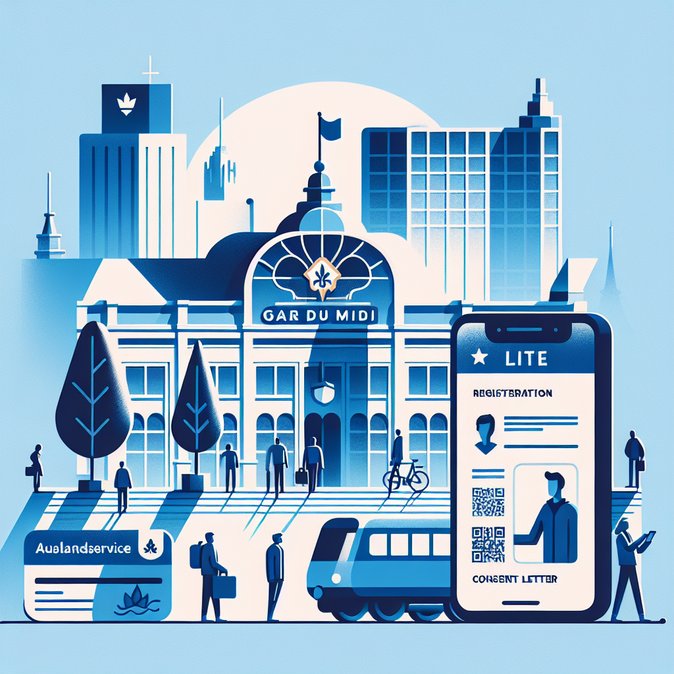
The Austrian Foreign Ministry (BMEIA) quietly refreshed its country page for Belgium on 2 May, retaining Security Level 2 but adding detailed warnings about a surge of firearm incidents in Brussels and Antwerp. The notice points in particular to the area around the Clemenceau Metro station near the Gare du Midi, where daily shootings have occurred in recent weeks. Travellers are urged to remain vigilant, follow police instructions during anti-terror operations and use the ministry’s Auslandsservice-App for real-time alerts. For Austrian companies with posted workers or project staff in Belgium, the advisory has practical implications. Employers must confirm that emergency numbers (112 for general emergencies, 101 for police) are integrated into travel-risk policies and that employees have downloaded the free “Reiseregistrierung” app so they can be located quickly in a crisis. The guidance also highlights an uptick in theft and car break-ins around Brussels main stations; mobility managers should therefore remind travellers to keep laptops and travel documents in sight at all times and to carry photocopies of passports or store them in Austria’s Digital ID app. Entry requirements remain unchanged – Austrians may enter Belgium visa-free with a passport or national ID – but the ministry recommends using a valid travel document even though Belgian rules technically accept passports that expired within the past five years.
![Austrian Foreign Ministry issues updated security advice for Belgium after spike in metro shootings]()
For any traveller who is unsure whether their passport meets Belgium’s validity rules—or who needs expedited renewals, ancillary visas for onward trips, or assistance gathering parental consent documents—VisaHQ can streamline the process. The firm’s Austria portal (https://www.visahq.com/austria/) offers real-time entry requirement checks, digital application tools and door-to-door courier options, giving mobility managers an extra layer of assurance alongside BMEIA’s official advice.
For minors travelling without both parents, officials now explicitly request a notarised consent letter and supporting documents such as marriage certificates if surnames differ. The update underscores how quickly local security dynamics can shift and why routine country-page checks matter for global mobility managers. While Belgium is unlikely to introduce formal entry restrictions, the heightened threat environment could lead to random bag checks or temporary station closures that disrupt commuter flows between EU institutions and Vienna-based multinationals.

For any traveller who is unsure whether their passport meets Belgium’s validity rules—or who needs expedited renewals, ancillary visas for onward trips, or assistance gathering parental consent documents—VisaHQ can streamline the process. The firm’s Austria portal (https://www.visahq.com/austria/) offers real-time entry requirement checks, digital application tools and door-to-door courier options, giving mobility managers an extra layer of assurance alongside BMEIA’s official advice.
For minors travelling without both parents, officials now explicitly request a notarised consent letter and supporting documents such as marriage certificates if surnames differ. The update underscores how quickly local security dynamics can shift and why routine country-page checks matter for global mobility managers. While Belgium is unlikely to introduce formal entry restrictions, the heightened threat environment could lead to random bag checks or temporary station closures that disrupt commuter flows between EU institutions and Vienna-based multinationals.