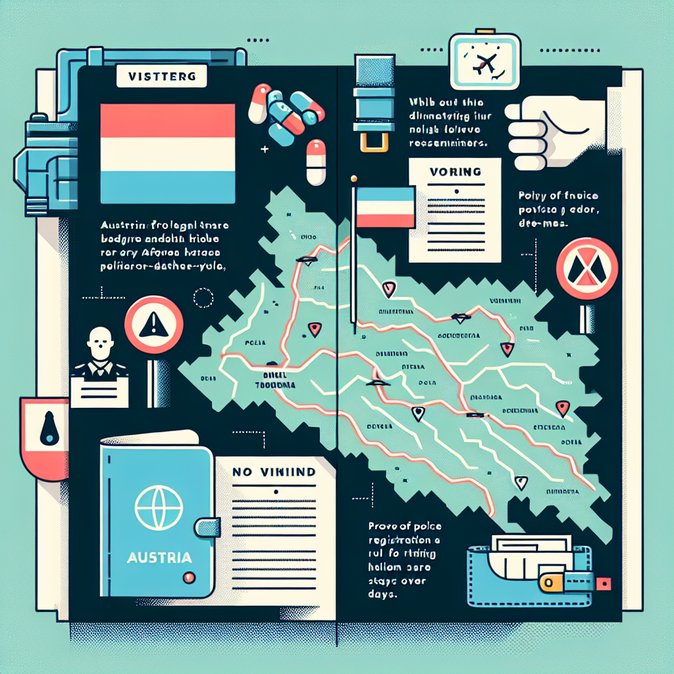
The Austrian Foreign Ministry (BMEIA) quietly refreshed its travel advisory for Bosnia and Herzegovina on 24 April 2026, maintaining Security Level 2 ("heightened caution") but adding sharper language about unexploded landmines and tighter registration rules for short-term visitors. The notice reminds travellers that landmine contamination is still present even along some main transit corridors and urges **strict avoidance of unpaved roads**, echoing recent reports from the EU Mine Action Service. It also clarifies that tourists staying more than three days must register with local police within 48 hours—a formality usually handled by hotels but often overlooked during private Airbnb-style stays. Failure to comply can result in on-the-spot fines of about €5.
![Austrian Foreign Ministry Updates Travel Advice for Bosnia and Herzegovina]()
For travellers who prefer to tick off every regulatory box before departure, VisaHQ’s Austria portal (https://www.visahq.com/austria/) offers a convenient one-stop dashboard that summarises BMEIA advisories, police-registration rules and mine-risk bulletins for Bosnia and Herzegovina. The platform can send email reminders for the 48-hour check-in window, help collate proof-of-funds documents, and even bundle travel-insurance options—handy for both leisure visitors and corporate mobility teams planning multi-city Balkans itineraries.
For Austrian corporates sending staff to Sarajevo or industrial hubs such as Banja Luka, the update has practical implications. Mobility managers should verify that accommodation providers complete the police registration and that assignees know emergency numbers (122 police, 123 fire, 124 ambulance). Insurers may also require written confirmation that employees have been briefed on mine-risk areas to ensure cover. Visa-wise there is no change: Austrian and other EU nationals may enter visa-free for up to 90 days in a 6-month period, provided their passport is valid for at least three months beyond departure. Travellers must, however, be prepared to show proof of sufficient funds—about €75 per day—either in cash or via credit card, a requirement border guards have begun enforcing more rigorously since April’s rule clarification. With summer tourist season approaching and road-trip itineraries through the Western Balkans gaining popularity, employers should circulate the revised guidance and encourage staff to download the Foreign Ministry’s *Auslandsservice* app for real-time alerts.
For travellers who prefer to tick off every regulatory box before departure, VisaHQ’s Austria portal (https://www.visahq.com/austria/) offers a convenient one-stop dashboard that summarises BMEIA advisories, police-registration rules and mine-risk bulletins for Bosnia and Herzegovina. The platform can send email reminders for the 48-hour check-in window, help collate proof-of-funds documents, and even bundle travel-insurance options—handy for both leisure visitors and corporate mobility teams planning multi-city Balkans itineraries.
For Austrian corporates sending staff to Sarajevo or industrial hubs such as Banja Luka, the update has practical implications. Mobility managers should verify that accommodation providers complete the police registration and that assignees know emergency numbers (122 police, 123 fire, 124 ambulance). Insurers may also require written confirmation that employees have been briefed on mine-risk areas to ensure cover. Visa-wise there is no change: Austrian and other EU nationals may enter visa-free for up to 90 days in a 6-month period, provided their passport is valid for at least three months beyond departure. Travellers must, however, be prepared to show proof of sufficient funds—about €75 per day—either in cash or via credit card, a requirement border guards have begun enforcing more rigorously since April’s rule clarification. With summer tourist season approaching and road-trip itineraries through the Western Balkans gaining popularity, employers should circulate the revised guidance and encourage staff to download the Foreign Ministry’s *Auslandsservice* app for real-time alerts.