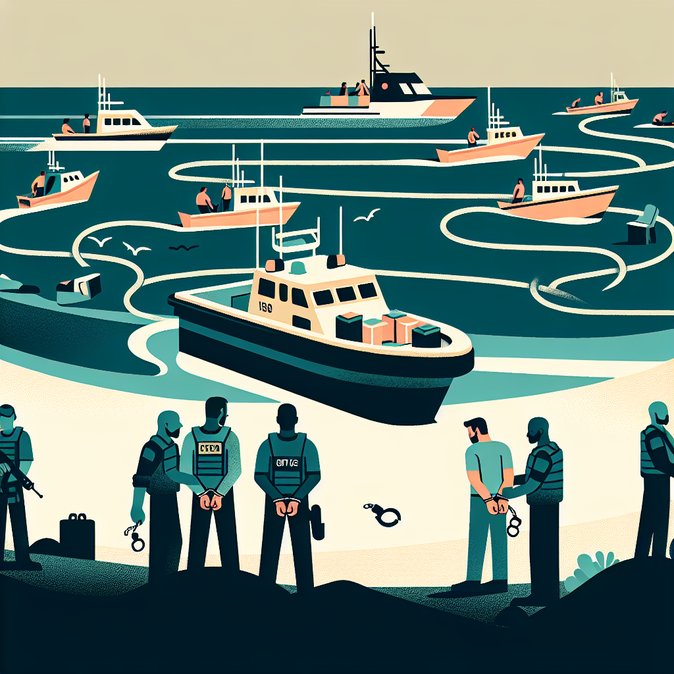
The Department of Homeland Security on 27 April quietly launched HSTF.gov, a dedicated website detailing the structure and mission of the year-old Homeland Security Task Force (HSTF), created by Executive Order 14159 to coordinate the fight against transnational criminal organisations. The portal lists 30 regional task forces and 29 satellite offices that pair Homeland Security Investigations (HSI) and FBI special agents to pursue narcotics, weapons, human-trafficking, and money-laundering cases across all 50 states and Puerto Rico.
The portal lists 30 regional task forces and 29 satellite offices that pair Homeland Security Investigations (HSI) and FBI special agents to pursue narcotics, weapons, human-trafficking, and money-laundering cases across all 50 states and Puerto Rico.
For organisations or individuals navigating the heightened scrutiny around travel documentation, services such as VisaHQ can streamline the process of securing visas and understanding new entry requirements triggered by HSTF initiatives. With up-to-date guidance for U.S. travellers and corporations alike, VisaHQ (https://www.visahq.com/united-states/) offers real-time alerts, application management tools, and expert review that reduce the risk of document discrepancies which might otherwise draw unwanted attention from enforcement teams.
![Homeland Security unveils public portal for new inter-agency task force targeting cartels and human-smuggling rings]()
Unlike the Joint Terrorism Task Forces, HSTF’s mandate centres on border-adjacent crime that directly fuels irregular migration. According to the new site, priority cases include child-exploitation networks that use forged travel documents, and smuggling groups that offer “pay-to-fly” packages routing migrants through Caribbean hubs to evade land-border controls.
For companies, the most immediate impact will be faster information-sharing requests and supply-chain subpoenas as HSTF analysts trace financial transactions that fund smuggling logistics. Mobility teams moving high-value cargo or relocating staff through Mexico and Central America should review trade-compliance programmes to ensure they can respond quickly to law-enforcement inquiries.
The portal’s debut also signals DHS intent to seek additional FY 2027 funding for data-fusion platforms that will feed intelligence to frontline CBP officers, potentially expanding algorithmic traveller-risk scoring at ports of entry.
The portal lists 30 regional task forces and 29 satellite offices that pair Homeland Security Investigations (HSI) and FBI special agents to pursue narcotics, weapons, human-trafficking, and money-laundering cases across all 50 states and Puerto Rico.
For organisations or individuals navigating the heightened scrutiny around travel documentation, services such as VisaHQ can streamline the process of securing visas and understanding new entry requirements triggered by HSTF initiatives. With up-to-date guidance for U.S. travellers and corporations alike, VisaHQ (https://www.visahq.com/united-states/) offers real-time alerts, application management tools, and expert review that reduce the risk of document discrepancies which might otherwise draw unwanted attention from enforcement teams.
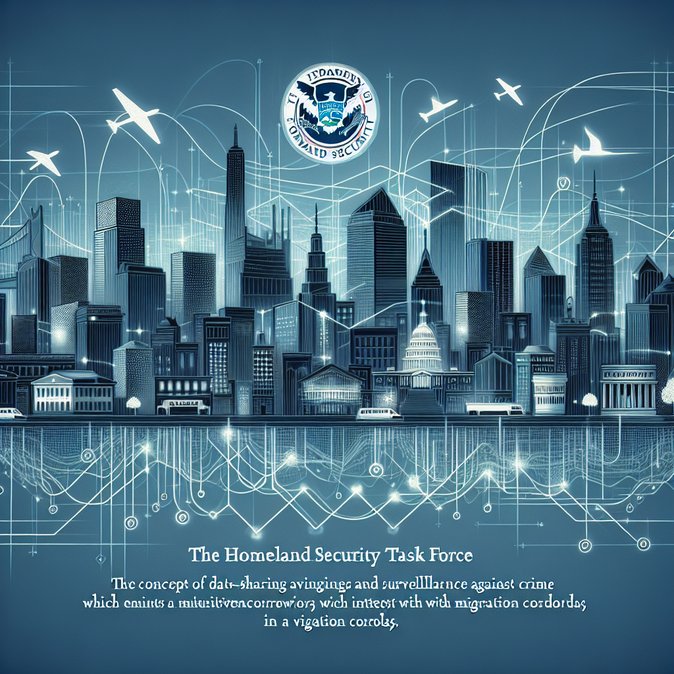
Unlike the Joint Terrorism Task Forces, HSTF’s mandate centres on border-adjacent crime that directly fuels irregular migration. According to the new site, priority cases include child-exploitation networks that use forged travel documents, and smuggling groups that offer “pay-to-fly” packages routing migrants through Caribbean hubs to evade land-border controls.
For companies, the most immediate impact will be faster information-sharing requests and supply-chain subpoenas as HSTF analysts trace financial transactions that fund smuggling logistics. Mobility teams moving high-value cargo or relocating staff through Mexico and Central America should review trade-compliance programmes to ensure they can respond quickly to law-enforcement inquiries.
The portal’s debut also signals DHS intent to seek additional FY 2027 funding for data-fusion platforms that will feed intelligence to frontline CBP officers, potentially expanding algorithmic traveller-risk scoring at ports of entry.