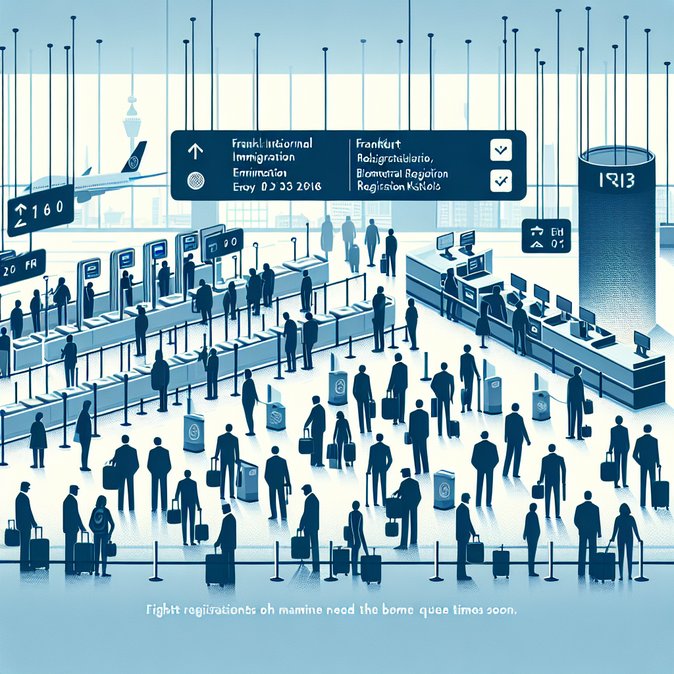
Real-time analytics firm Qsensor published a deep-dive on April 26 quantifying the first two weeks of the EU’s new biometric Entry/Exit System (EES). While average passport-control times at Frankfurt Airport actually fell slightly, the study found that peak waits for non-EU passengers surged from 90 to 120 minutes, with similar spikes recorded in Munich and Berlin. Qsensor attributes the paradox to highly uneven passenger flows: when only one or two wide-body arrivals land, the new kiosks are efficient, but simultaneous wave-bank arrivals can overwhelm the system. The report is an early warning for corporate travel planners. German hubs have installed more than 600 e-gates and mobile kiosks, but those assets are clustered in Terminal 1 at FRA and Terminal 2 at MUC. Travellers connecting through older satellite concourses still face longer walks and limited equipment.
![Data Show Frankfurt’s EES Peak Waits Hit 120 Minutes Despite Lower Averages]()
For organisations seeking hands-on assistance with the documentation and pre-travel steps now required, VisaHQ’s Germany portal (https://www.visahq.com/germany/) offers a one-stop dashboard for EES-related guidance, visa applications and passport services. Their specialists can pre-screen travellers based on citizenship, flag biometric enrolment obligations and even arrange courier pick-up for last-minute paperwork, saving mobility teams time while reducing the risk of costly airport delays.
The consultancy recommends building a three-hour minimum lay-over into Schengen-entry itineraries until at least mid-summer, when additional kiosks on order from Secunet are due to arrive. From a compliance perspective, the data reinforce the need to brief assignees from visa-waiver countries. First-time arrivals must complete fingerprint and face capture even if they hold a German residence permit card. Failure to do so triggers a manual referral that can add 30–40 minutes. Mobility teams should circulate the EU’s "Travel to Europe" pre-registration app and encourage employees to enrol biometrics before departure to shave valuable seconds off processing. Travel-risk managers should also note that airport operators may vary queue-prioritisation rules. Frankfurt’s Fraport told Qsensor it will redeploy security staff to immigration during the afternoon Asia-arrival peak, while Berlin BER plans to open temporary manual booths in June if average waits exceed 45 minutes. Organisations with time-critical cargo crews or VIPs should liaise with handling agents now to secure fast-track slots. Looking ahead, Qsensor projects that average waits will stabilise once repeat EES travellers dominate, but warns of "rolling bottlenecks" whenever a kiosk goes offline. Firms should keep contingency plans—such as ticketing employees on itineraries that avoid first-point-of-entry obligations—until the system proves resilient under full summer demand.

For organisations seeking hands-on assistance with the documentation and pre-travel steps now required, VisaHQ’s Germany portal (https://www.visahq.com/germany/) offers a one-stop dashboard for EES-related guidance, visa applications and passport services. Their specialists can pre-screen travellers based on citizenship, flag biometric enrolment obligations and even arrange courier pick-up for last-minute paperwork, saving mobility teams time while reducing the risk of costly airport delays.
The consultancy recommends building a three-hour minimum lay-over into Schengen-entry itineraries until at least mid-summer, when additional kiosks on order from Secunet are due to arrive. From a compliance perspective, the data reinforce the need to brief assignees from visa-waiver countries. First-time arrivals must complete fingerprint and face capture even if they hold a German residence permit card. Failure to do so triggers a manual referral that can add 30–40 minutes. Mobility teams should circulate the EU’s "Travel to Europe" pre-registration app and encourage employees to enrol biometrics before departure to shave valuable seconds off processing. Travel-risk managers should also note that airport operators may vary queue-prioritisation rules. Frankfurt’s Fraport told Qsensor it will redeploy security staff to immigration during the afternoon Asia-arrival peak, while Berlin BER plans to open temporary manual booths in June if average waits exceed 45 minutes. Organisations with time-critical cargo crews or VIPs should liaise with handling agents now to secure fast-track slots. Looking ahead, Qsensor projects that average waits will stabilise once repeat EES travellers dominate, but warns of "rolling bottlenecks" whenever a kiosk goes offline. Firms should keep contingency plans—such as ticketing employees on itineraries that avoid first-point-of-entry obligations—until the system proves resilient under full summer demand.