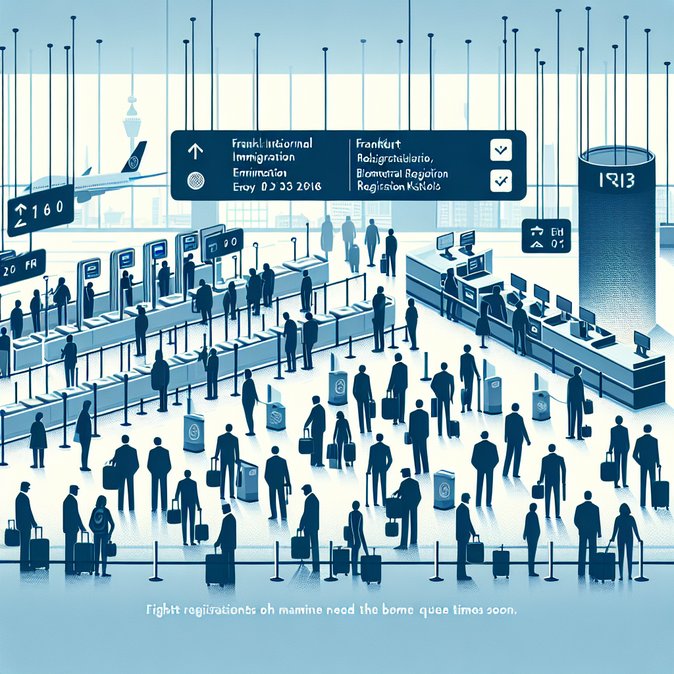
Only 17 days after Europe’s biometric Entry/Exit System went live, criticism is mounting in Berlin. In comments reported by Biometric Update on April 27, Die Linke MP Clara Buenger branded the EES an "unconstitutional merger of databases" that treats ordinary travellers as suspects. Her remarks follow Greece’s decision to suspend biometric capture for British tourists and come amid reports of extended queues and missed flights across German airports.
![German Lawmaker Calls EU Entry/Exit System ‘Mass Surveillance’ as Delays Persist]()
Amid this uncertainty, VisaHQ can streamline the administrative side of travel by handling German visa and entry documentation in advance, freeing travellers from last-minute surprises. Its online platform (https://www.visahq.com/germany/) offers real-time updates on evolving EES requirements, personalised document checklists and concierge support—making it easier for corporate mobility teams and individual passengers to stay compliant even as rules shift.
Buenger, a former human-rights lawyer on the Bundestag’s interior committee, argues that once fingerprints and facial images are stored in the shared Biometric Matching Service (sBMS), they become permanently available for law-enforcement queries unrelated to border management—breaching EU proportionality principles established in the Digital Rights Ireland and Schrems II rulings. The political backlash raises the prospect of parliamentary motions to tighten data-retention limits or to demand exemptions for low-risk traveller cohorts such as frequent business visitors. For mobility managers, any German move to carve out waivers could materially change processing times and compliance steps in early summer. Conversely, if Berlin doubles down on rigorous enforcement to rebut surveillance critiques, corporate travellers may face even more thorough secondary inspections. Companies should monitor forthcoming hearings in the Bundestag’s internal-affairs committee and consider adding privacy briefings to pre-trip trainings—particularly for executives concerned about the downstream use of their biometric templates. Travel suppliers, meanwhile, may wish to lobby for a fast-track lane for passengers enrolled in the EU’s Registered Traveller Programme (RTP), which officials say could be piloted in Frankfurt later this year.

Amid this uncertainty, VisaHQ can streamline the administrative side of travel by handling German visa and entry documentation in advance, freeing travellers from last-minute surprises. Its online platform (https://www.visahq.com/germany/) offers real-time updates on evolving EES requirements, personalised document checklists and concierge support—making it easier for corporate mobility teams and individual passengers to stay compliant even as rules shift.
Buenger, a former human-rights lawyer on the Bundestag’s interior committee, argues that once fingerprints and facial images are stored in the shared Biometric Matching Service (sBMS), they become permanently available for law-enforcement queries unrelated to border management—breaching EU proportionality principles established in the Digital Rights Ireland and Schrems II rulings. The political backlash raises the prospect of parliamentary motions to tighten data-retention limits or to demand exemptions for low-risk traveller cohorts such as frequent business visitors. For mobility managers, any German move to carve out waivers could materially change processing times and compliance steps in early summer. Conversely, if Berlin doubles down on rigorous enforcement to rebut surveillance critiques, corporate travellers may face even more thorough secondary inspections. Companies should monitor forthcoming hearings in the Bundestag’s internal-affairs committee and consider adding privacy briefings to pre-trip trainings—particularly for executives concerned about the downstream use of their biometric templates. Travel suppliers, meanwhile, may wish to lobby for a fast-track lane for passengers enrolled in the EU’s Registered Traveller Programme (RTP), which officials say could be piloted in Frankfurt later this year.