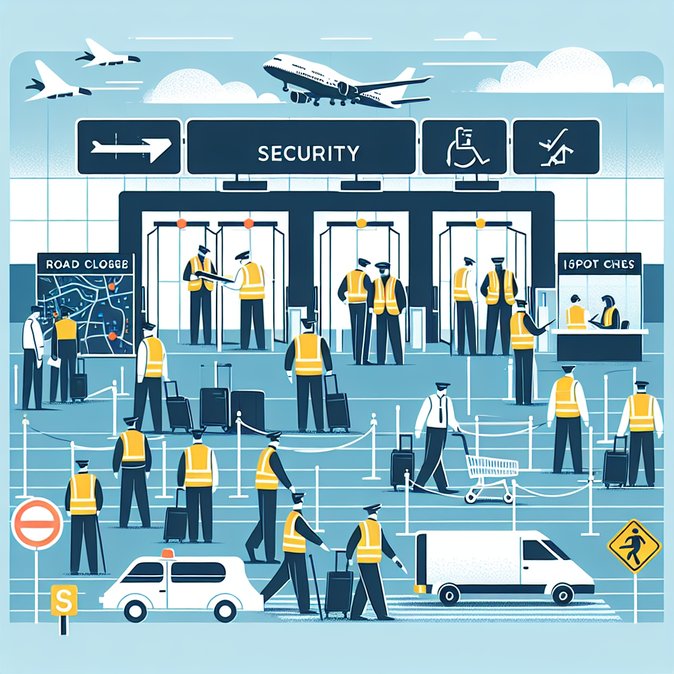
Organisers of the 2026 Eurovision Song Contest, to be held in Vienna’s Stadthalle from 19 to 23 May, confirmed on 27 April that spectators will pass through aviation-grade security. Fans will face metal detectors, random explosives swabs and RFID-enabled ticket checks modelled on Vienna-Schwechat Airport’s passenger flow. The scheme—jointly designed by the Interior Ministry, the city’s crisis-management team and Vienna Airport’s security unit—aims to process 18,000 arena visitors per show while keeping queues under 20 minutes. More than 200,000 overseas fans are expected in the city during contest week, triggering a 12 percent spike in hotel bookings and a projected €150 million boost to local tourism.
![Eurovision 2026: Vienna Plans Airport-Style Screening for 200,000 Visiting Fans]()
For travellers unsure about whether they need a Schengen visa or the new ETIAS waiver to enter Austria, VisaHQ provides quick, reliable guidance and application support; users can check requirements, submit documents and track status entirely online at https://www.visahq.com/austria/ streamlining the paperwork well before the first note is sung.
From a mobility standpoint, the temporary security footprint will reshape traffic patterns. Charter-bus drop-off zones are being relocated outside the Gürtel ring, and ride-hail vehicles must pre-register licence plates to enter the “Eurovision Green Zone”. Business travellers whose offices are near the Stadthalle are advised to carry photo ID, as police will run spot checks modeled on Schengen-internal border controls. Event planners say the contest will act as a live test bed for Austria’s newly operational EU Entry/Exit System kiosks, which will be showcased at fan-villages to familiarise third-country tourists with biometric border technology. Airlines have been asked to brief inbound passengers on carrying adequate travel authorisation, including ETIAS pre-clearance once the system goes live in November. While hoteliers cheer the influx, corporate-travel managers are bracing for elevated nightly rates and tight flight inventory between 17 and 25 May. Companies with mid-May meetings in Vienna are already shifting sessions online or to Bratislava to avoid peak congestion.

For travellers unsure about whether they need a Schengen visa or the new ETIAS waiver to enter Austria, VisaHQ provides quick, reliable guidance and application support; users can check requirements, submit documents and track status entirely online at https://www.visahq.com/austria/ streamlining the paperwork well before the first note is sung.
From a mobility standpoint, the temporary security footprint will reshape traffic patterns. Charter-bus drop-off zones are being relocated outside the Gürtel ring, and ride-hail vehicles must pre-register licence plates to enter the “Eurovision Green Zone”. Business travellers whose offices are near the Stadthalle are advised to carry photo ID, as police will run spot checks modeled on Schengen-internal border controls. Event planners say the contest will act as a live test bed for Austria’s newly operational EU Entry/Exit System kiosks, which will be showcased at fan-villages to familiarise third-country tourists with biometric border technology. Airlines have been asked to brief inbound passengers on carrying adequate travel authorisation, including ETIAS pre-clearance once the system goes live in November. While hoteliers cheer the influx, corporate-travel managers are bracing for elevated nightly rates and tight flight inventory between 17 and 25 May. Companies with mid-May meetings in Vienna are already shifting sessions online or to Bratislava to avoid peak congestion.