
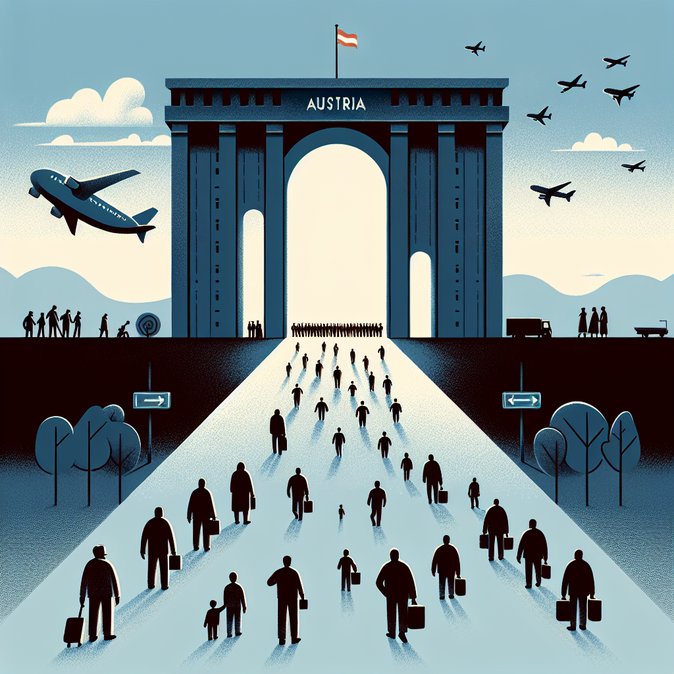
With the EU’s revamped Common European Asylum System (CEAS) due to take effect on 12 June 2026, an Upper-Austrian delegation led by Integration Councillor Christian Dörfel (ÖVP) travelled to Romania this weekend to assess how intensified border controls could work in practice. ORF reports that the visit focused on the Serbian-Romanian frontier, where biometric capture and vehicle-scanning technology have reduced irregular crossings by more than 80 % since 2023. The CEAS package will require asylum-seekers to undergo fast-track screening at the EU’s external borders, with negative decisions leading to swift returns. Member states that refuse to host their quota of recognised refugees must pay into a ‘solidarity pool’—a compromise Vienna lobbied for to avoid mandatory relocations.
![Countdown to New EU Asylum Pact: Austrian Delegation Studies Border Tech Ahead of 12 June Roll-Out]()
For employers and individual travellers seeking clarity on how these evolving entry rules intersect with standard visa or work-permit applications, VisaHQ offers step-by-step support and real-time updates on Austrian requirements; see https://www.visahq.com/austria/ for more information.
Austria hopes that tougher outer-border screening will curb secondary movements that currently see many migrants entering the EU in the Balkans before heading north-west to Austria and Germany. Officials argue that fewer arrivals will ease pressure on Austria’s labour offices, social-housing stock and education system. For companies that depend on non-EU talent, however, the measures introduce new planning variables. Third-country nationals who are refused at the external border will never reach Austrian consulates to file work-permit applications, potentially shrinking the talent pipeline. HR teams should keep abreast of upcoming implementing regulations and, where possible, use the Red-White-Red Card or intra-company-transfer routes that remain outside the asylum channel. The Interior Ministry is expected to publish national implementing legislation by mid-May; early drafts suggest expanded detention capacity at Vienna Airport and pilot use of the EU Entry/Exit System kiosks for asylum pre-registration.

For employers and individual travellers seeking clarity on how these evolving entry rules intersect with standard visa or work-permit applications, VisaHQ offers step-by-step support and real-time updates on Austrian requirements; see https://www.visahq.com/austria/ for more information.
Austria hopes that tougher outer-border screening will curb secondary movements that currently see many migrants entering the EU in the Balkans before heading north-west to Austria and Germany. Officials argue that fewer arrivals will ease pressure on Austria’s labour offices, social-housing stock and education system. For companies that depend on non-EU talent, however, the measures introduce new planning variables. Third-country nationals who are refused at the external border will never reach Austrian consulates to file work-permit applications, potentially shrinking the talent pipeline. HR teams should keep abreast of upcoming implementing regulations and, where possible, use the Red-White-Red Card or intra-company-transfer routes that remain outside the asylum channel. The Interior Ministry is expected to publish national implementing legislation by mid-May; early drafts suggest expanded detention capacity at Vienna Airport and pilot use of the EU Entry/Exit System kiosks for asylum pre-registration.
More From Austria
View all
Austria Removes Nearly 1,900 People in First-Quarter 2026 as Forced Departures Outpace New Asylum Requests
Austria’s Q1 Mobility Balance: Deportations and Voluntary Exits Top 3,500, Far Exceeding New Asylum Filings