Brazil’s National Civil Aviation Agency (ANAC) published new guidance on 26 April 2026 that immediately changes what travellers may carry in their hand-luggage when they board domestic or international flights. The updated Instruction revises the long-standing ban on lithium batteries in checked bags and introduces watt-hour limits, quantity caps and a flat prohibition on in-flight use of power banks.
![ANAC tightens rules for power banks on flights departing Brazil]()
While you are reviewing these new cabin rules, remember that travel documents are just as important: VisaHQ’s Brazil portal (https://www.visahq.com/brazil/) can fast-track visa applications, monitor entry regulations in real time and brief passengers on practical matters such as ANAC’s power-bank restrictions, helping you clear security without surprises.
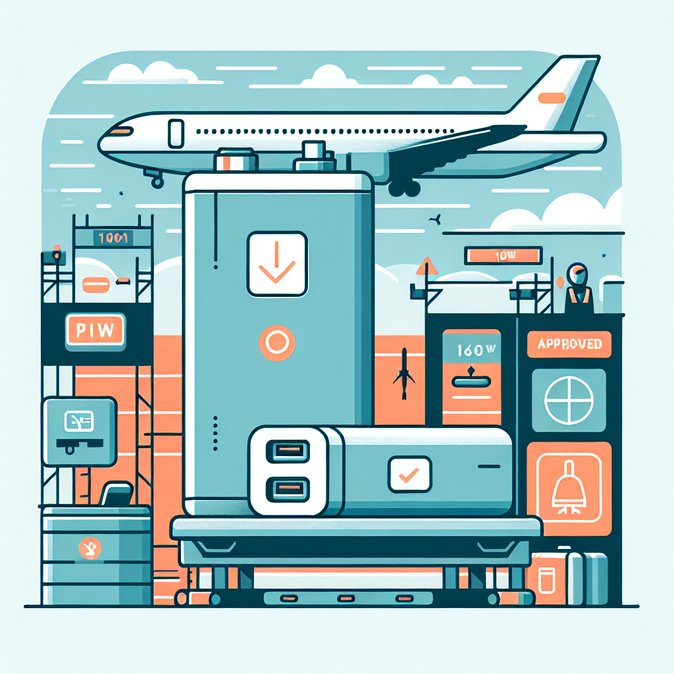
Under the new rules, passengers may carry only two portable chargers and each unit must be rated at no more than 100 Wh. Devices between 100 Wh and 160 Wh will still be aceepted, but only with written pre-authorisation from the airline; models above 160 Wh are barred altogether. All power banks must travel in the cabin, have their terminals protected against short-circuit, and remain switched off from the moment of boarding until the traveller leaves the aircraft. Using the battery to recharge a phone or tablet during the flight is now expressly proibited. ANAC says the overhaul aligns Brazil with ICAO recommendations after a string of international incidents in which damaged batteries caught fire mid-air. In its technical note the agency reminds carriers that they must update websites, check-in scripts and pre-boarding announcements within 30 days, while airport concessionaires will have 60 days to add new signage at security filters. Airlines that fail to adapt risk fines of up to R$150,000 and suspension of the offending flight. For corporate travel managers, the change means updating employee packing lists and revising approval workflows for staff who need high-capacity batteries—particularly field engineers, journalists and professional content creators. Multinationals with Brazilian operations should also ensure that travellers connecting through the country understand that rules may differ from those applied at the point of origin. Finally, frequent flyers are advised to check the watt-hour rating printed on the casing of older power banks; if the information is absent, the device may be confiscated at security. Complying now will avoid delays and possible re-booking costs when the Northern-hemisphere summer peak begins in June.
While you are reviewing these new cabin rules, remember that travel documents are just as important: VisaHQ’s Brazil portal (https://www.visahq.com/brazil/) can fast-track visa applications, monitor entry regulations in real time and brief passengers on practical matters such as ANAC’s power-bank restrictions, helping you clear security without surprises.
Under the new rules, passengers may carry only two portable chargers and each unit must be rated at no more than 100 Wh. Devices between 100 Wh and 160 Wh will still be aceepted, but only with written pre-authorisation from the airline; models above 160 Wh are barred altogether. All power banks must travel in the cabin, have their terminals protected against short-circuit, and remain switched off from the moment of boarding until the traveller leaves the aircraft. Using the battery to recharge a phone or tablet during the flight is now expressly proibited. ANAC says the overhaul aligns Brazil with ICAO recommendations after a string of international incidents in which damaged batteries caught fire mid-air. In its technical note the agency reminds carriers that they must update websites, check-in scripts and pre-boarding announcements within 30 days, while airport concessionaires will have 60 days to add new signage at security filters. Airlines that fail to adapt risk fines of up to R$150,000 and suspension of the offending flight. For corporate travel managers, the change means updating employee packing lists and revising approval workflows for staff who need high-capacity batteries—particularly field engineers, journalists and professional content creators. Multinationals with Brazilian operations should also ensure that travellers connecting through the country understand that rules may differ from those applied at the point of origin. Finally, frequent flyers are advised to check the watt-hour rating printed on the casing of older power banks; if the information is absent, the device may be confiscated at security. Complying now will avoid delays and possible re-booking costs when the Northern-hemisphere summer peak begins in June.