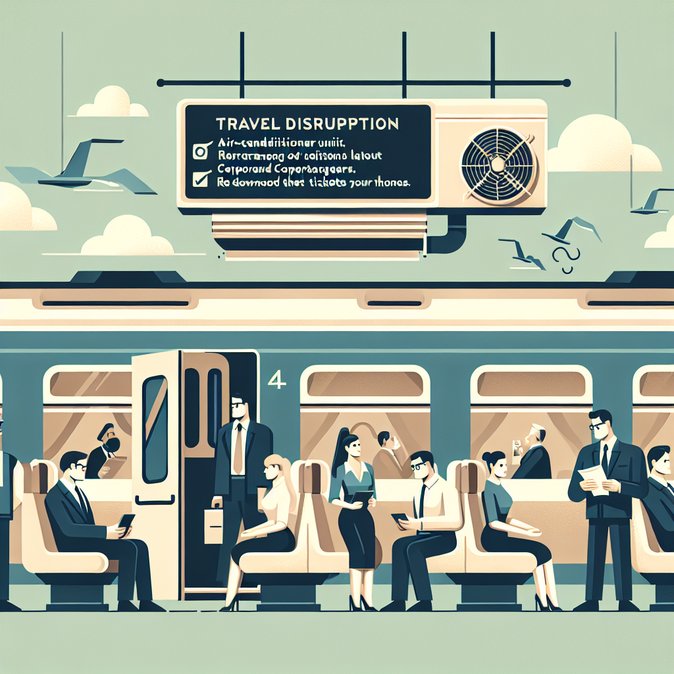
Eurostar has notified passengers booked on several early-morning services of a last-minute rolling-stock substitution that will take effect on 26 April. The operator is replacing an e320 set with an older e300 train because of an air-conditioning fault detected during overnight maintenance. While journey times remain unchanged, the seat map has been re-drawn— meaning pre-selected seats may shift rows or carriages.
![Eurostar rolling-stock swap triggers seat-plan change for 26 April departures]()
For cross-Channel travellers who suddenly find themselves rearranging itineraries, checking that visas and travel documents are still in order is just as important as confirming seat numbers. VisaHQ’s portal (https://www.visahq.com/belgium/) can quickly verify Schengen or UK entry requirements, guide users through any necessary applications, and offer courier pickup for supporting paperwork—helping business passengers avoid last-minute border hassles when operational changes like this occur.
Travellers were emailed QR codes to download updated mobile tickets, but corporate-travel managers report that some automated expense tools are flagging duplicate PNRs, potentially delaying reimbursement claims. The swap highlights the operational tightrope Eurostar is walking as demand rebounds to 96 % of pre-COVID levels while spare rolling stock remains limited. Until new Siemens Velaro sets enter service in 2028, the fleet will continue to operate with minimal redundancy, raising the likelihood of ad-hoc reallocations. Business passengers with accessibility needs should re-confirm assistance requests, as door widths and step heights differ slightly between train series. Eurostar says on-board Wi-Fi and power outlets are unaffected, but the buffet car will offer a reduced menu while staff adapt to the legacy galley layout. Industry analysts say the incident reinforces the value of dynamic traveller-tracking tools: companies that ingest real-time rail data into mobility dashboards can alert employees to seat changes and, if required, trigger alternative arrangements such as Thalys or Lufthansa ExpressRail connections.

For cross-Channel travellers who suddenly find themselves rearranging itineraries, checking that visas and travel documents are still in order is just as important as confirming seat numbers. VisaHQ’s portal (https://www.visahq.com/belgium/) can quickly verify Schengen or UK entry requirements, guide users through any necessary applications, and offer courier pickup for supporting paperwork—helping business passengers avoid last-minute border hassles when operational changes like this occur.
Travellers were emailed QR codes to download updated mobile tickets, but corporate-travel managers report that some automated expense tools are flagging duplicate PNRs, potentially delaying reimbursement claims. The swap highlights the operational tightrope Eurostar is walking as demand rebounds to 96 % of pre-COVID levels while spare rolling stock remains limited. Until new Siemens Velaro sets enter service in 2028, the fleet will continue to operate with minimal redundancy, raising the likelihood of ad-hoc reallocations. Business passengers with accessibility needs should re-confirm assistance requests, as door widths and step heights differ slightly between train series. Eurostar says on-board Wi-Fi and power outlets are unaffected, but the buffet car will offer a reduced menu while staff adapt to the legacy galley layout. Industry analysts say the incident reinforces the value of dynamic traveller-tracking tools: companies that ingest real-time rail data into mobility dashboards can alert employees to seat changes and, if required, trigger alternative arrangements such as Thalys or Lufthansa ExpressRail connections.