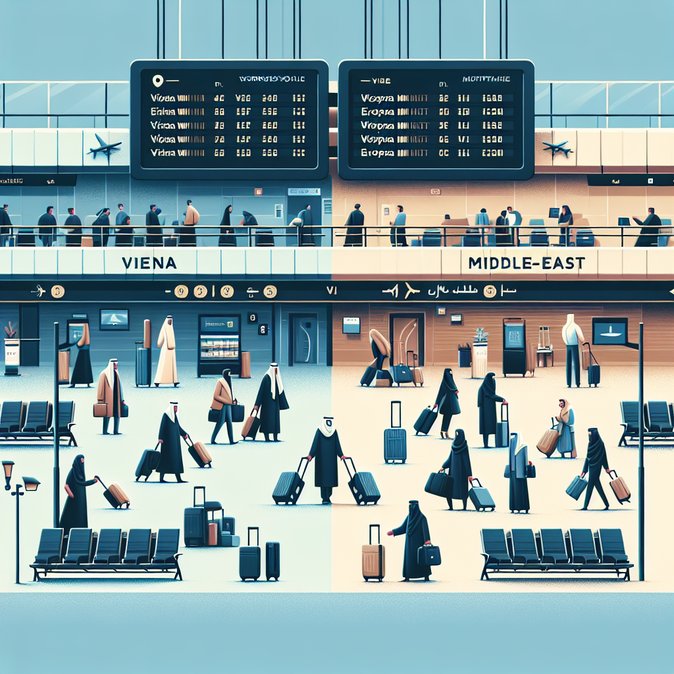
Austrian Airlines (AUA) passengers planning to fly to the Gulf or the Levant will have to keep rerouting for at least another six months. In a late-evening bulletin on 24 April, aviation-news portal Aviation-News reported that the Lufthansa Group—AUA’s parent—has prolonged its blanket suspension of flights to nine Middle-Eastern cities because of heightened regional instability. The decision means that AUA’s Vienna–Dubai and Vienna–Tel Aviv links will stay off the schedule until 31 May 2026, while services to Abu Dhabi, Amman, Beirut, Dammam, Erbil, Muscat, Riyadh and Tehran are frozen until at least 24 October 2026. For mobility and travel managers the announcement removes any hope that the airline might reinstate key routes for the peak summer assignment season. Around 12 percent of AUA’s corporate traffic normally connects via Dubai, while Tel Aviv is the carrier’s largest non-European destination by volume. Multinationals that rely on Vienna as a crew-change hub for energy projects in Saudi Arabia and Iraq must therefore continue funnelling assignees through Istanbul, Doha or Athens—options that add both cost and complexity. AUA says affected passengers are being re-protected on Star Alliance partners where operationally possible, but warns that inventory into high-demand Gulf markets is already tight. Exporters shipping time-sensitive components through Vienna’s freight terminal should likewise expect cascading knock-on effects, as AUA will redeploy wide-body aircraft to European trunk routes with higher belly-cargo potential. From a compliance standpoint, extended suspensions also complicate Schengen visa calculations: non-EU travellers forced to fly circuitous routings through Vienna may breach their 90/180-day allowance sooner than planned. Travel-management companies are advising corporates to refresh visa dashboards weekly and build in one-day buffers for missed connections, especially on itineraries touching the EES biometric kiosks now live at all Schengen external borders.
![Austrian Airlines keeps Middle East routes grounded through October 2026 as Lufthansa Group widens suspension]()
In that context, organisations and individual travellers can streamline their paperwork by tapping into VisaHQ’s Austria portal (https://www.visahq.com/austria/). The platform offers real-time entry-rule updates, Schengen-day balance tracking and expedited application services, easing the administrative burden that the prolonged Middle-East suspensions have created for both corporate mobility teams and independent flyers.
Looking ahead, AUA says it will publish a revised winter timetable by the end of June. Unless the security environment improves markedly, analysts expect the airline to keep its Middle-East footprint minimal well into 2027, focusing instead on reinforcing European frequencies and trans-Atlantic joint-venture services where demand is robust and operational risk lower.

In that context, organisations and individual travellers can streamline their paperwork by tapping into VisaHQ’s Austria portal (https://www.visahq.com/austria/). The platform offers real-time entry-rule updates, Schengen-day balance tracking and expedited application services, easing the administrative burden that the prolonged Middle-East suspensions have created for both corporate mobility teams and independent flyers.
Looking ahead, AUA says it will publish a revised winter timetable by the end of June. Unless the security environment improves markedly, analysts expect the airline to keep its Middle-East footprint minimal well into 2027, focusing instead on reinforcing European frequencies and trans-Atlantic joint-venture services where demand is robust and operational risk lower.