
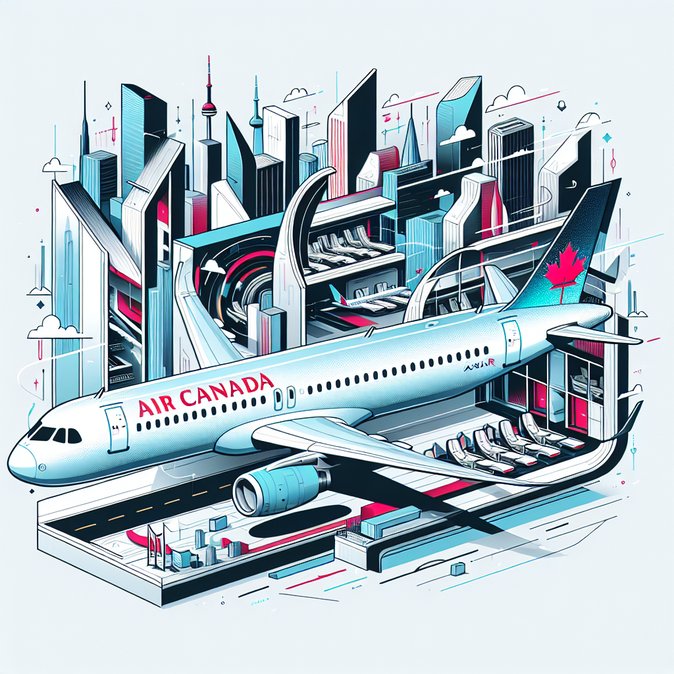
Unveiled at Aircraft Interiors Expo in Hamburg and detailed online on April 25, Air Canada’s new 30-strong Airbus A321XLR fleet will feature 14 fully lie-flat ‘Aurora Suites’ in business class—making the airline the first in North America to offer flat-bed seats on a narrow-body jet. Each suite boasts a 19-inch 4K screen, Bluetooth audio and multiple power options, while the economy cabin gains 13-inch displays and redesigned Meridian+ seats for improved personal space. The cabin revamp signals a strategic shift for Canada’s flag-carrier as it eyes long-thin markets that are uneconomical for wide-body aircraft. With a range of 4,700 nm, the A321XLR will operate nonstop routes such as Toronto–Berlin, Montreal–Toulouse and Toronto–Edinburgh, giving Canadian exporters and SMEs direct access to secondary European cities without a connecting hub.
![Air Canada reveals lie-flat ‘Aurora Suites’ on new Airbus A321XLR fleet, unlocking single-aisle transatlantic business travel]()
For travellers planning to take advantage of these new direct flights, ensuring you have the correct travel documentation remains essential. VisaHQ’s Canada portal (https://www.visahq.com/canada/) offers a quick visa check and application service for Germany, France, the U.K. and dozens of other destinations, allowing both business and leisure passengers to confirm requirements and submit forms online before departure.
For corporate travel buyers, the lie-flat option on a single-aisle jet offers a lower-cost upgrade path compared with wide-body business-class fares. The product also strengthens Air Canada’s competitive position against Icelandair and European low-cost carriers that funnel passengers through Reykjavik or Dublin. Fleet modernisation carries sustainability benefits. Pratt & Whitney GTF engines cut fuel burn per seat by 30 %, and the aircraft is certified for 50 % Sustainable Aviation Fuel. Air Canada expects the first XLR to enter service later in 2026, with roll-out timed ahead of the summer peak. Travel managers should update preferred-carrier programmes to reflect the new aircraft type and re-evaluate cabin-class booking thresholds on routes where the XLR replaces a wide-body or older A321ceo, as fare ladders and seat maps will change.
For travellers planning to take advantage of these new direct flights, ensuring you have the correct travel documentation remains essential. VisaHQ’s Canada portal (https://www.visahq.com/canada/) offers a quick visa check and application service for Germany, France, the U.K. and dozens of other destinations, allowing both business and leisure passengers to confirm requirements and submit forms online before departure.
For corporate travel buyers, the lie-flat option on a single-aisle jet offers a lower-cost upgrade path compared with wide-body business-class fares. The product also strengthens Air Canada’s competitive position against Icelandair and European low-cost carriers that funnel passengers through Reykjavik or Dublin. Fleet modernisation carries sustainability benefits. Pratt & Whitney GTF engines cut fuel burn per seat by 30 %, and the aircraft is certified for 50 % Sustainable Aviation Fuel. Air Canada expects the first XLR to enter service later in 2026, with roll-out timed ahead of the summer peak. Travel managers should update preferred-carrier programmes to reflect the new aircraft type and re-evaluate cabin-class booking thresholds on routes where the XLR replaces a wide-body or older A321ceo, as fare ladders and seat maps will change.
More From Canada
View all
Air Canada and WestJet raise checked-bag fees across Canadian domestic and U.S. transborder routes

IRCC’s April processing-time update shows faster citizenship grants but soaring delays for Quebec parent sponsorship