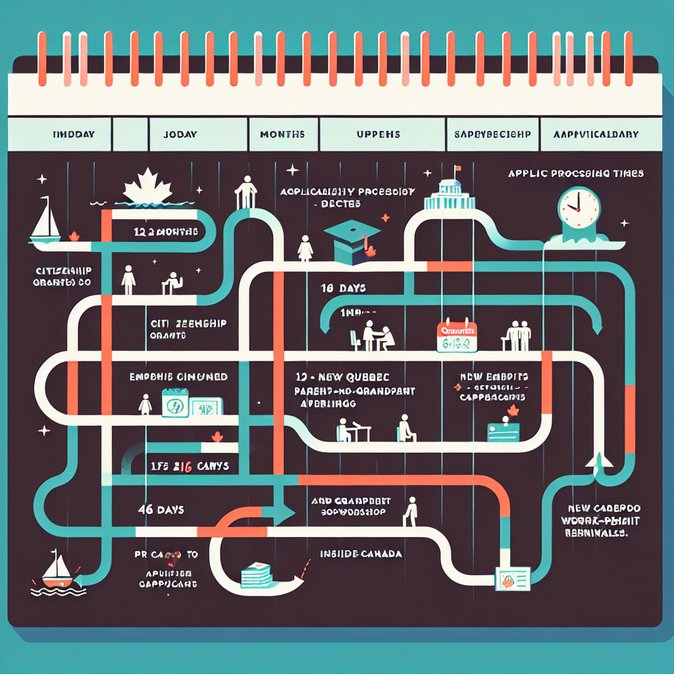
Immigration, Refugees and Citizenship Canada (IRCC) released its weekly processing-time dashboard on April 24, revealing an immigration system moving at dramatically different speeds. Citizenship grants are now being finalized in an average of 12 months—the quickest pace since late 2025—while the queue for new permanent-resident (PR) cards has dropped to just 46 days. By contrast, Quebec’s Parents & Grandparents sponsorship stream ballooned from 47 to 67 months in a single update, and visitor-record extensions have stretched to an eye-watering 315 days. The update matters for employers and mobility planners. Work-permit renewals filed inside Canada still take 227 days, complicating project staffing for multinational firms that rely on intra-company transferees.
![IRCC’s April processing-time update shows faster citizenship grants but soaring delays for Quebec parent sponsorship]()
Against that backdrop, many employers and individual travelers are turning to specialized platforms for extra support. VisaHQ’s digital interface (https://www.visahq.com/canada/) can help applicants assemble fully compliant, IRCC-ready files, arrange priority courier pickup, and monitor every stage of a work-permit renewal, visitor visa or PR card request in real time—services that can shave days off internal processing and give HR teams clearer visibility into workforce timelines.
Outside Canada, processing is uneven: visitor visas for India improved sharply to 25 days, yet Nigerian applicants now wait 44 days. The backlog in the Canadian Experience Class (CEC)—often a transition pathway for employer-sponsored permit holders—grew by more than 20,000 files, a red flag that Express Entry targets could tighten later this year. IRCC notes that its service-standard figures represent the time in which 80 % of applications are completed, not a guarantee for every case. Nonetheless, published times heavily influence relocation decisions and internal corporate mobility policies. Companies planning to convert key foreign workers to PR status via CEC or Atlantic Immigration should build contingency buffers of at least six months into talent roadmaps. For families, the data offer mixed news. Spousal sponsorship inside Canada (non-Quebec) ticked up to 24 months, while super-visa processing for parents from India now averages 169 days. Citizenship candidates, however, are benefiting from a 14 % reduction in inventory, allowing some to plan global assignments with the security of a Canadian passport sooner than expected. IRCC advises applicants to submit complete, digitized applications and to respond promptly to document requests to avoid further delays. Employers can speed up renewals by using the Employer Portal and ensuring LMIA-exempt codes are entered correctly. Immigration counsel recommend using premium courier services for any residual paper filings ahead of a system-wide push to retire paper by December 2026.

Against that backdrop, many employers and individual travelers are turning to specialized platforms for extra support. VisaHQ’s digital interface (https://www.visahq.com/canada/) can help applicants assemble fully compliant, IRCC-ready files, arrange priority courier pickup, and monitor every stage of a work-permit renewal, visitor visa or PR card request in real time—services that can shave days off internal processing and give HR teams clearer visibility into workforce timelines.
Outside Canada, processing is uneven: visitor visas for India improved sharply to 25 days, yet Nigerian applicants now wait 44 days. The backlog in the Canadian Experience Class (CEC)—often a transition pathway for employer-sponsored permit holders—grew by more than 20,000 files, a red flag that Express Entry targets could tighten later this year. IRCC notes that its service-standard figures represent the time in which 80 % of applications are completed, not a guarantee for every case. Nonetheless, published times heavily influence relocation decisions and internal corporate mobility policies. Companies planning to convert key foreign workers to PR status via CEC or Atlantic Immigration should build contingency buffers of at least six months into talent roadmaps. For families, the data offer mixed news. Spousal sponsorship inside Canada (non-Quebec) ticked up to 24 months, while super-visa processing for parents from India now averages 169 days. Citizenship candidates, however, are benefiting from a 14 % reduction in inventory, allowing some to plan global assignments with the security of a Canadian passport sooner than expected. IRCC advises applicants to submit complete, digitized applications and to respond promptly to document requests to avoid further delays. Employers can speed up renewals by using the Employer Portal and ensuring LMIA-exempt codes are entered correctly. Immigration counsel recommend using premium courier services for any residual paper filings ahead of a system-wide push to retire paper by December 2026.