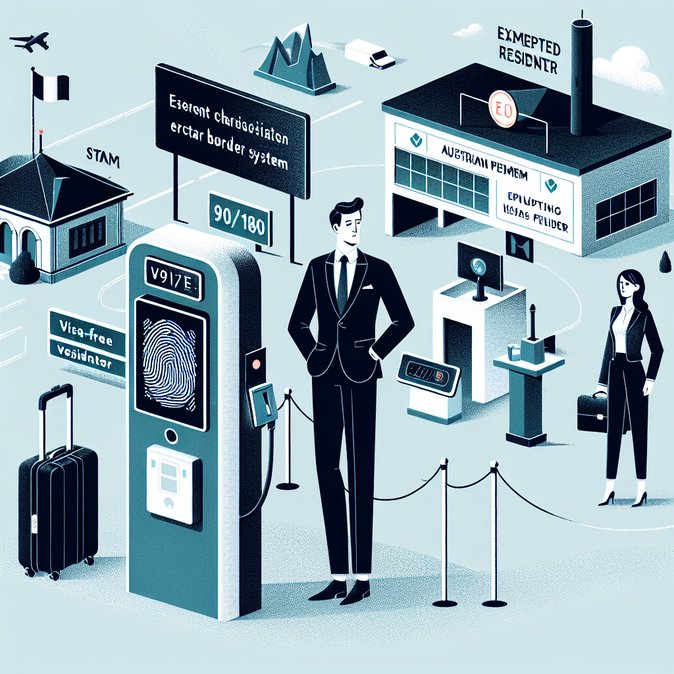
The organisers of the World Border Security Congress (WBSC) have published a 20 April update urging security agencies, airport authorities and mobility-programme leaders to register for the 14–16 April 2026 edition of the event, which takes place at the Austria Center Vienna. The congress, now in its 16th year, is one of the few forums where immigration-policy makers, technology vendors and corporate-travel risk managers meet under one roof. Although the conference officially opened last week, the final-call notice signals that on-site capacity has been expanded after a surge in demand driven by geopolitical tensions in the Middle East and renewed focus on the EU Entry/Exit System. Highlights include a dedicated workshop on “Traveller Verification Beyond the Border,” co-hosted by the European Association of Airport and Seaport Police, and a case-study panel on Austria’s three-layer border-control model, viewed by Brussels as a blueprint for other Schengen states.
![World Border Security Congress issues final call for delegates to Vienna 2026 forum]()
Whether you need a single-entry Schengen visa or guidance on Austria’s residence-permit extensions tied to the new EES rules, VisaHQ’s self-service portal can streamline the paperwork. The platform’s Austria hub (https://www.visahq.com/austria/) aggregates the latest consular fees, biometric requirements and processing timelines, letting WBSC attendees secure compliant travel documents while their security colleagues focus on the congress agenda.
For global-mobility professionals the WBSC is more than a law-enforcement gathering. Previous editions have previewed automated risk-assessment tools that later became staples of corporate-travel compliance, such as digital Advance Passenger Information (API) feeds and real-time visa-status APIs. This year’s agenda features product demos for mobile enrolment kiosks that can capture biometric data at work-site gates—technology that could speed up on-arrival registration for construction or energy-sector assignees. Delegates also gain early sight of regulatory trends. A closed briefing by Austria’s Interior Ministry will outline planned amendments to the Fremdenpolizei-Gesetz that will embed EES overstay alerts into the country’s residence-permit renewal workflow. Multinational employers operating rotational shifts should anticipate shorter grace periods and automate departure-tracking to avoid fines. Registration remains open until all remaining 500 seats are filled, with discounted rates for corporate participants. Mobility teams unable to attend in person can register for a livestream pass, but virtual slots are limited to 1,200 and will close once the technical cap is reached.

Whether you need a single-entry Schengen visa or guidance on Austria’s residence-permit extensions tied to the new EES rules, VisaHQ’s self-service portal can streamline the paperwork. The platform’s Austria hub (https://www.visahq.com/austria/) aggregates the latest consular fees, biometric requirements and processing timelines, letting WBSC attendees secure compliant travel documents while their security colleagues focus on the congress agenda.
For global-mobility professionals the WBSC is more than a law-enforcement gathering. Previous editions have previewed automated risk-assessment tools that later became staples of corporate-travel compliance, such as digital Advance Passenger Information (API) feeds and real-time visa-status APIs. This year’s agenda features product demos for mobile enrolment kiosks that can capture biometric data at work-site gates—technology that could speed up on-arrival registration for construction or energy-sector assignees. Delegates also gain early sight of regulatory trends. A closed briefing by Austria’s Interior Ministry will outline planned amendments to the Fremdenpolizei-Gesetz that will embed EES overstay alerts into the country’s residence-permit renewal workflow. Multinational employers operating rotational shifts should anticipate shorter grace periods and automate departure-tracking to avoid fines. Registration remains open until all remaining 500 seats are filled, with discounted rates for corporate participants. Mobility teams unable to attend in person can register for a livestream pass, but virtual slots are limited to 1,200 and will close once the technical cap is reached.