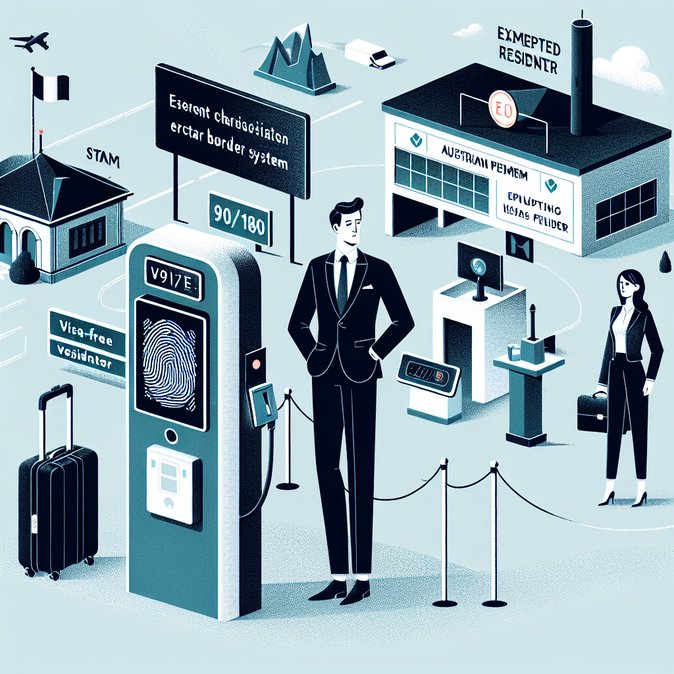
The European Union’s long-awaited Entry/Exit System (EES) quietly moved from pilot mode to full, mandatory operation at 00:00 CET on 18 April 2026. For the first time, every non-EU national arriving in—or departing from—the Schengen Area is having their passport scanned, four fingerprints taken and a high-resolution facial image captured. The biometric data are stored for three years (or five for visa-overstayers) and automatically matched against previous crossings to enforce the 90/180-day rule. Austria, which controls 14 external border posts—Vienna-Schwechat Airport, four regional airports and nine rail and motorway checkpoints—confirmed that all lanes are now equipped with eu-LISA-certified kiosks. According to the Interior Ministry, Vienna Airport processed 5 300 third-country passengers in the first 18 hours with an average additional processing time of 92 seconds per traveller. Business travellers with short connection windows reported the longest queues, as corporate itineraries often bunch around early-morning banks of flights. For mobility managers the change is significant. Employees entering on a business-visa waiver can no longer rely on an “unstamped” passport to mask past trips; the system counts every day spent inside the zone. Organisations that rotate specialists in and out of Austria must therefore track days with precision or risk refusals of entry and potential Schengen-wide bans. Permanent transferees holding Austrian D-visas or residence permits are exempt from EES registration but must carry documentary proof to use the resident lanes. The Interior Ministry has also warned that the separate European Travel Information and Authorisation System (ETIAS) will begin later this year. Visa-exempt visitors—including US, UK and Australian nationals—will need an approved ETIAS before boarding flights in mid-December. Companies are urged to audit travel-approval workflows now, build ETIAS lead-times into booking systems and budget for the €7 fee per traveller.
![Schengen Entry/Exit System Goes Fully Live: What Austrian Employers and Travelers Must Know]()
At this juncture, many organisations are turning to specialist visa facilitators to shoulder the administrative burden. VisaHQ, for example, provides an end-to-end tracking and application platform for Austrian visas, ETIAS pre-authorisations and residence permits, allowing HR teams to monitor each employee’s day count, receive expiry alerts and submit paperwork online. More information is available at https://www.visahq.com/austria/
Looking ahead to the summer peak, Austrian border police unions have asked the government to create a “rapid-response” staffing reserve should kiosks break down. Airports Council International Europe is already pressing Brussels for contingency plans if lines exceed two hours. For now, however, the government insists the 2026 tourist season will be the most secure—and eventually the fastest—ever experienced at Austrian borders.

At this juncture, many organisations are turning to specialist visa facilitators to shoulder the administrative burden. VisaHQ, for example, provides an end-to-end tracking and application platform for Austrian visas, ETIAS pre-authorisations and residence permits, allowing HR teams to monitor each employee’s day count, receive expiry alerts and submit paperwork online. More information is available at https://www.visahq.com/austria/
Looking ahead to the summer peak, Austrian border police unions have asked the government to create a “rapid-response” staffing reserve should kiosks break down. Airports Council International Europe is already pressing Brussels for contingency plans if lines exceed two hours. For now, however, the government insists the 2026 tourist season will be the most secure—and eventually the fastest—ever experienced at Austrian borders.