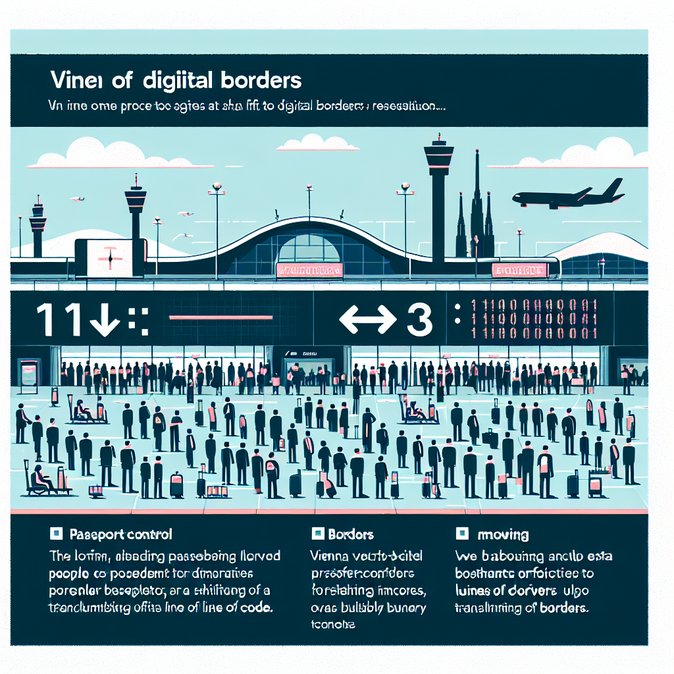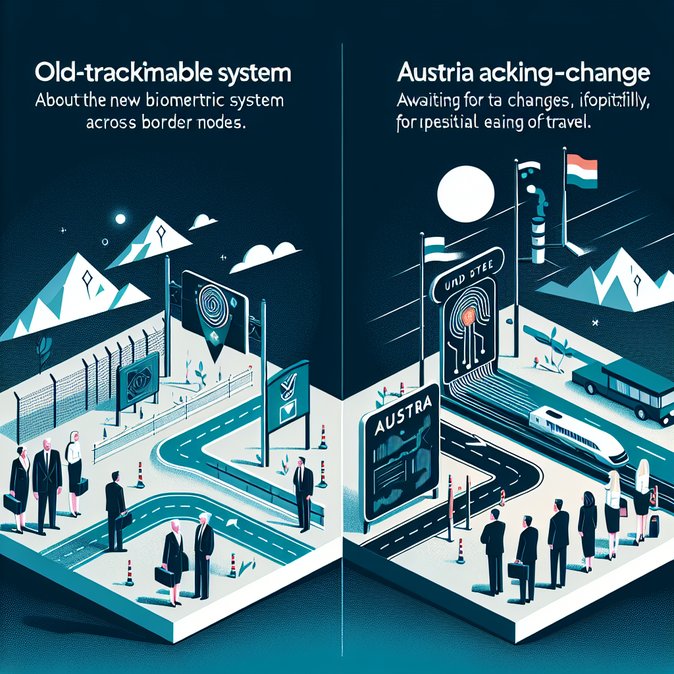
A fresh communique issued on 16 April confirms that Austria is one of eight early-adopter states spearheading the European Entry/Exit System (EES) roll-out across all 29 Schengen members this spring. Alongside France, Germany, Italy, Spain, the Netherlands, Greece and Portugal, Austria has committed to reach full operational readiness—covering airports, land crossings and rail terminals—by the end of May, ahead of the EU-wide June checkpoint for compliance. The joint statement highlights lessons learned from Austria’s early airport deployment: additional staffing for peak waves, mobile enrolment kits for coach tours and a “queue-busting” pre-registration app due to enter beta testing in Vienna next month. The group will share metrics weekly with eu-LISA, the EU agency supervising the vast biometric database.
![Austria among core group leading next phase of Schengen biometric border revolution]()
For anyone unsure how their specific visa situation might interact with the new biometric regime, VisaHQ offers a one-stop hub that tracks Austria’s EES implementation in real time, provides step-by-step guidance on required documents and even manages visa applications on a traveller’s behalf. Check out the dedicated resource at https://www.visahq.com/austria/ to minimise paperwork and avoid costly border surprises.
For business travellers, the immediate implication is that more Schengen frontiers will look and feel like Vienna’s this Easter—fingerprint scanners, facial cameras and automatic overstaying alerts replacing the quick passport stamp. Holders of Austrian type-D visas or residence permits remain exempt from EES, but their accompanying family on short-stay visas must register. The early-adopter push is also politically significant. By accelerating compliance, Vienna aims to bolster its argument in Brussels that internal Schengen border checks with Slovakia and Hungary—re-introduced in December 2025—can be lifted once external controls are watertight. The Interior Ministry says a review of those internal controls is pencilled in for July. Companies rotating staff into Central Europe should therefore plan for a patchwork of EES readiness in April and May but a more harmonised, data-driven border regime by the summer. Travel-policy updates to include extra airport dwell time and employee privacy guidance on biometric capture are strongly advised.

For anyone unsure how their specific visa situation might interact with the new biometric regime, VisaHQ offers a one-stop hub that tracks Austria’s EES implementation in real time, provides step-by-step guidance on required documents and even manages visa applications on a traveller’s behalf. Check out the dedicated resource at https://www.visahq.com/austria/ to minimise paperwork and avoid costly border surprises.
For business travellers, the immediate implication is that more Schengen frontiers will look and feel like Vienna’s this Easter—fingerprint scanners, facial cameras and automatic overstaying alerts replacing the quick passport stamp. Holders of Austrian type-D visas or residence permits remain exempt from EES, but their accompanying family on short-stay visas must register. The early-adopter push is also politically significant. By accelerating compliance, Vienna aims to bolster its argument in Brussels that internal Schengen border checks with Slovakia and Hungary—re-introduced in December 2025—can be lifted once external controls are watertight. The Interior Ministry says a review of those internal controls is pencilled in for July. Companies rotating staff into Central Europe should therefore plan for a patchwork of EES readiness in April and May but a more harmonised, data-driven border regime by the summer. Travel-policy updates to include extra airport dwell time and employee privacy guidance on biometric capture are strongly advised.