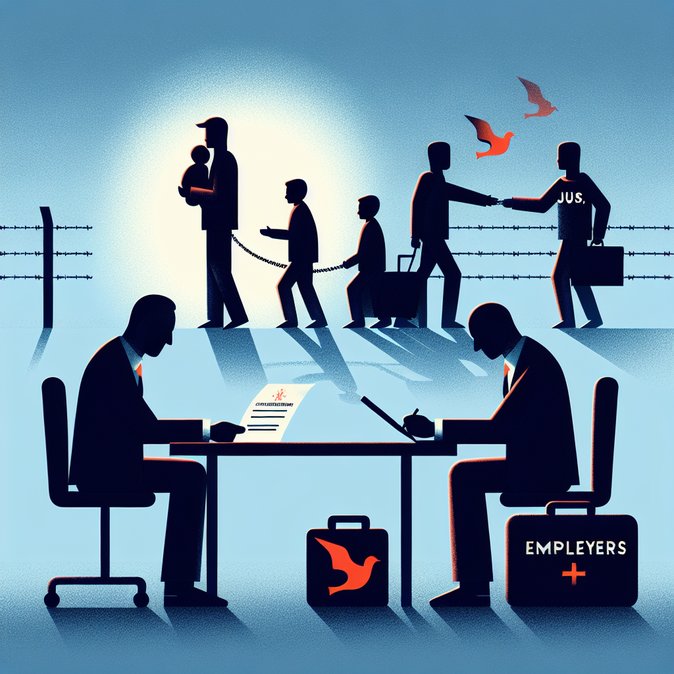
A day after letters began landing in claimants’ inboxes, Immigration Minister Lena Metlege Diab’s office went on the offensive, arguing that strict new timelines introduced under Bill C-12 are essential to restore "order and credibility" to Canada’s asylum system. The Strengthening Canada’s Immigration System and Borders Act, which received Royal Assent on 26 March 2026, requires refugee claims to be filed within 12 months of a person’s first arrival in Canada – a rule applied retroactively to 24 June 2020.
![Ottawa defends new one-year deadline that could void 30,000 refugee claims]()
If you need help navigating these new immigration timelines, VisaHQ’s online platform can simplify the process. Through its Canada-focused portal (https://www.visahq.com/canada/), the service provides step-by-step guidance, deadline reminders, and access to specialists who can advise on alternative visa or work-permit strategies—resources that can prove invaluable for claimants and employers alike as they adapt to Bill C-12.
Internal estimates suggest about 30,000 people now fall outside the window, including temporary workers, students and visitors who later sought refuge. Those who miss the cut-off will have their claims deemed ineligible for a full Immigration and Refugee Board (IRB) hearing unless they can provide additional evidence within 21 days showing that exceptional circumstances prevented a timely filing. The government insists the measure is necessary to tackle a backlog that topped 300,000 cases at the end of 2025 and was growing faster than the IRB’s annual capacity of roughly 90,000 decisions. Critics – including NDP immigration critic Jenny Kwan and several refugee-advocacy lawyers – call the rule arbitrary, warning it could violate Canada’s obligations under the 1951 UN Refugee Convention and spark constitutional challenges. For employers, the policy has immediate implications. Foreign nationals whose claims become ineligible will lose the right to an open work permit tied to the refugee process. HR departments should identify employees on a claim filed more than a year after first entry and advise them to seek legal counsel quickly. Companies planning to hire foreign students or visitors should also ensure prospective hires understand the tightened timeline to avoid future disruptions. Logistically, CBSA removals to certain high-risk destinations remain paused, but affected individuals may transition to precarious status, complicating payroll and benefits compliance. Immigration counsel recommend proactive contingency planning, including exploring employer-specific work permits or provincial nominee pathways for high-skilled workers whose refugee files could be closed. With litigation almost certain, the legal landscape may shift again, but organizations cannot assume automatic grandfathering; they must track employee status on a case-by-case basis.

If you need help navigating these new immigration timelines, VisaHQ’s online platform can simplify the process. Through its Canada-focused portal (https://www.visahq.com/canada/), the service provides step-by-step guidance, deadline reminders, and access to specialists who can advise on alternative visa or work-permit strategies—resources that can prove invaluable for claimants and employers alike as they adapt to Bill C-12.
Internal estimates suggest about 30,000 people now fall outside the window, including temporary workers, students and visitors who later sought refuge. Those who miss the cut-off will have their claims deemed ineligible for a full Immigration and Refugee Board (IRB) hearing unless they can provide additional evidence within 21 days showing that exceptional circumstances prevented a timely filing. The government insists the measure is necessary to tackle a backlog that topped 300,000 cases at the end of 2025 and was growing faster than the IRB’s annual capacity of roughly 90,000 decisions. Critics – including NDP immigration critic Jenny Kwan and several refugee-advocacy lawyers – call the rule arbitrary, warning it could violate Canada’s obligations under the 1951 UN Refugee Convention and spark constitutional challenges. For employers, the policy has immediate implications. Foreign nationals whose claims become ineligible will lose the right to an open work permit tied to the refugee process. HR departments should identify employees on a claim filed more than a year after first entry and advise them to seek legal counsel quickly. Companies planning to hire foreign students or visitors should also ensure prospective hires understand the tightened timeline to avoid future disruptions. Logistically, CBSA removals to certain high-risk destinations remain paused, but affected individuals may transition to precarious status, complicating payroll and benefits compliance. Immigration counsel recommend proactive contingency planning, including exploring employer-specific work permits or provincial nominee pathways for high-skilled workers whose refugee files could be closed. With litigation almost certain, the legal landscape may shift again, but organizations cannot assume automatic grandfathering; they must track employee status on a case-by-case basis.