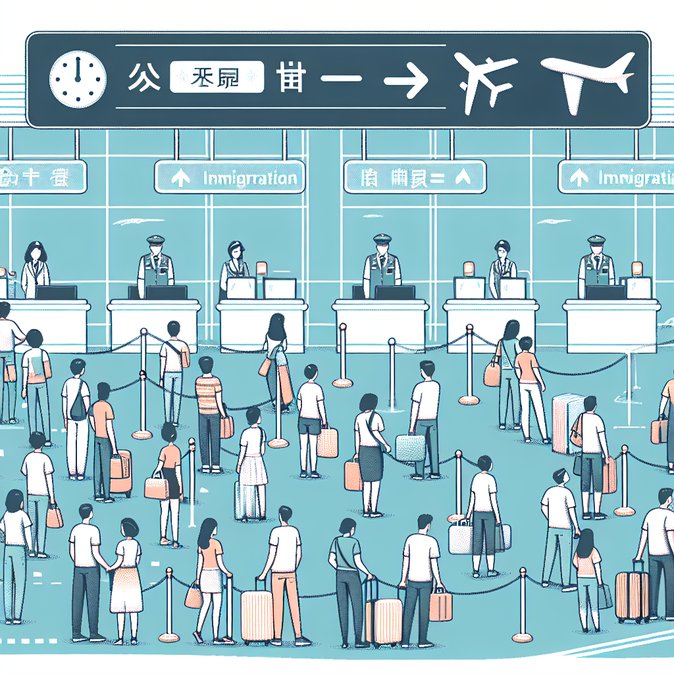
The 139th China Import and Export Fair—better known as the Canton Fair—kicked off in Guangzhou today, and the effect on neighbouring border crossings was immediate. Shenzhen’s 24-hour Huanggang and metro-linked Futian land ports processed more than 8,000 foreign passenger entries between 9 and 14 April, up 60 percent year-on-year; almost 40 percent of those travellers entered under China’s expanded unilateral visa-free scheme. Border police say the midnight-to-6 a.m. window is now peak time for business travellers: overnight flights touch down in Hong Kong, and exhibitors hop on cross-border coaches to clear Chinese immigration before daybreak. To cope, Huanggang deployed multilingual “rapid-assist” squads and introduced an 95 percent adoption rate for pre-arrival mobile entry cards, cutting form-filling time by 80 percent.
![Canton Fair Opens as Visa-Free Policies Drive 60 % Surge in Foreign Arrivals via Shenzhen Ports]()
Travellers who want extra peace of mind can lean on VisaHQ, whose dedicated China portal (https://www.visahq.com/china/) lets users confirm their passport’s visa-free eligibility, fill out the digital entry card in advance, or secure an expedited consular appointment when a visa is still required—all in one place that corporate mobility teams can monitor.
The visa-free uptick is broad-based. Buyers from Italy, Brazil, Canada and Thailand—newly eligible since February—account for much of the growth, though long-standing ASEAN and Belt-and-Road markets remain strong. Shenzhen authorities have seized the chance to showcase the Greater Bay Area’s connectivity: Futian offers a one-hour high-speed-rail hop to Guangzhou’s Pazhou exhibition grounds, while Huanggang’s 24/7 clearance targets late-night arrivals. For corporate mobility managers, the message is twofold. First, advise travellers to complete China’s digital entry card before arrival and to avoid expected spikes on 18-19 April and 26-27 April, when fair and weekend traffic overlaps. Second, check that staff passports qualify for the 30-day visa waiver; those who still need visas can use the Canton Fair invitation letter to secure express appointments at Chinese consulates. On the ground, Guangzhou and Shenzhen hotels report occupancy above 85 percent, so companies should lock in bookings early.

Travellers who want extra peace of mind can lean on VisaHQ, whose dedicated China portal (https://www.visahq.com/china/) lets users confirm their passport’s visa-free eligibility, fill out the digital entry card in advance, or secure an expedited consular appointment when a visa is still required—all in one place that corporate mobility teams can monitor.
The visa-free uptick is broad-based. Buyers from Italy, Brazil, Canada and Thailand—newly eligible since February—account for much of the growth, though long-standing ASEAN and Belt-and-Road markets remain strong. Shenzhen authorities have seized the chance to showcase the Greater Bay Area’s connectivity: Futian offers a one-hour high-speed-rail hop to Guangzhou’s Pazhou exhibition grounds, while Huanggang’s 24/7 clearance targets late-night arrivals. For corporate mobility managers, the message is twofold. First, advise travellers to complete China’s digital entry card before arrival and to avoid expected spikes on 18-19 April and 26-27 April, when fair and weekend traffic overlaps. Second, check that staff passports qualify for the 30-day visa waiver; those who still need visas can use the Canton Fair invitation letter to secure express appointments at Chinese consulates. On the ground, Guangzhou and Shenzhen hotels report occupancy above 85 percent, so companies should lock in bookings early.