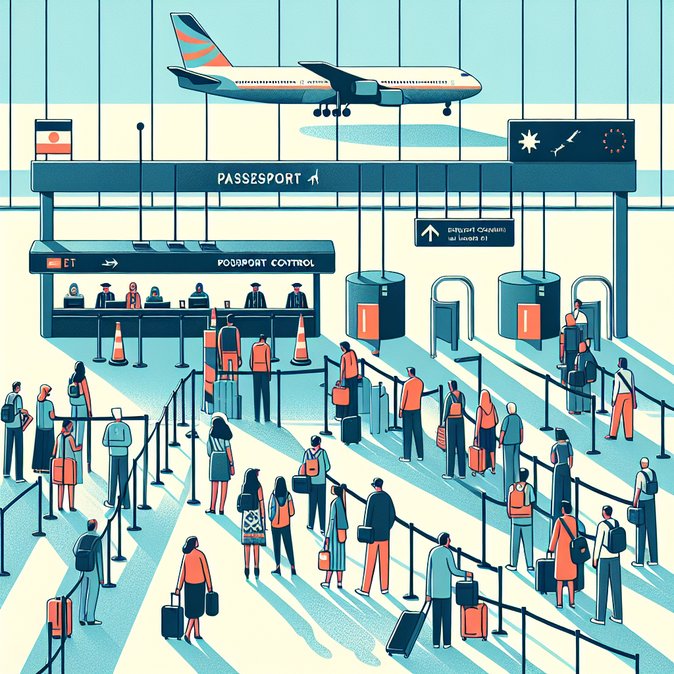
Italy’s long-awaited roll-out of the EU Entry/Exit System (EES) hit an early crisis on Sunday, 12 April, when EasyJet flight EJU5420 to Manchester departed Milan-Linate with just 27 of the 148 ticketed travellers on board. According to eyewitness accounts reported by Corriere della Sera and Il Giorno, more than a hundred passengers — many British citizens returning after the Easter break — were still pinned in a sluggish passport-control queue when the aircraft finally pushed back an hour late. EES, which became fully operational across the Schengen Area on 10 April, replaces manual passport stamps with the collection of a facial image, four fingerprints and biographic data at every external border crossing. Italian border police are running the system at all airports and seaports.
![Biometric Border Chaos at Milan-Linate Leaves 120 Passengers Stranded]()
For travellers and mobility teams trying to decipher these new biometric formalities, VisaHQ’s Italy portal (https://www.visahq.com/italy/) offers real-time guidance on EES requirements, Schengen visas and passport validity. The platform can pre-screen documentation, book consular appointments and flag any potential overstay risks, giving both leisure passengers and corporate assignees an extra layer of confidence while the new system stabilises.
Technical glitches, however, forced officers in Milan to revert to manual processing; throughput collapsed and the queue stretched well beyond the immigration hall. EasyJet says it delayed departure as long as crew-duty limits allowed and has offered free re-booking, but passengers report out-of-pocket costs running into thousands of pounds for alternative flights. Industry bodies had warned Brussels and Rome that a “big-bang” switch-on before the peak summer season risked chaos unless fallback procedures were rehearsed. Airport operator SEA confirmed that manual stamping is still being used while engineers work with EU agency eu-LISA to stabilise the new platform. Similar slow-downs were reported at Rome Fiumicino and Venice Marco Polo, although no other flights left with such a drastic shortfall in passengers. For business travellers and global mobility managers the incident is a sharp reminder to build longer dwell times into itineraries, brief clients on first-time biometric enrolment and monitor airlines’ duty-of-care policies. Employers sending non-EU assignees through Italian hubs over the next two weeks should expect variable processing times until EES stabilises. Looking ahead, the European Commission insists the system will ultimately cut queues by eliminating repetitive stamping and calculating stays automatically — but the Milan episode shows that the transition period will require flexibility from both carriers and travellers.

For travellers and mobility teams trying to decipher these new biometric formalities, VisaHQ’s Italy portal (https://www.visahq.com/italy/) offers real-time guidance on EES requirements, Schengen visas and passport validity. The platform can pre-screen documentation, book consular appointments and flag any potential overstay risks, giving both leisure passengers and corporate assignees an extra layer of confidence while the new system stabilises.
Technical glitches, however, forced officers in Milan to revert to manual processing; throughput collapsed and the queue stretched well beyond the immigration hall. EasyJet says it delayed departure as long as crew-duty limits allowed and has offered free re-booking, but passengers report out-of-pocket costs running into thousands of pounds for alternative flights. Industry bodies had warned Brussels and Rome that a “big-bang” switch-on before the peak summer season risked chaos unless fallback procedures were rehearsed. Airport operator SEA confirmed that manual stamping is still being used while engineers work with EU agency eu-LISA to stabilise the new platform. Similar slow-downs were reported at Rome Fiumicino and Venice Marco Polo, although no other flights left with such a drastic shortfall in passengers. For business travellers and global mobility managers the incident is a sharp reminder to build longer dwell times into itineraries, brief clients on first-time biometric enrolment and monitor airlines’ duty-of-care policies. Employers sending non-EU assignees through Italian hubs over the next two weeks should expect variable processing times until EES stabilises. Looking ahead, the European Commission insists the system will ultimately cut queues by eliminating repetitive stamping and calculating stays automatically — but the Milan episode shows that the transition period will require flexibility from both carriers and travellers.