UK Government Signals Sharp Increases to Visa and Immigration Fees
Poland sets 27 April go-live for nationwide MOS e-residence-permit portal
Spanish Government Poised to Approve Mass Regularisation for 500,000 Migrants
Latest News
Biometric Border Chaos at Milan-Linate Leaves 120 Passengers Stranded
A software failure in the new EU Entry/Exit System caused severe passport-control delays at Milan-Linate on 12 April, forcing an EasyJet flight to leave 120 passengers behind. The incident exposes teething problems in Italy’s biometric border roll-out and signals that travellers will face longer airport dwell times until the system stabilises.

Hours-Long Queues at French Airports as EU Entry/Exit System Hits Teething Troubles
Paris-CDG, Eurostar and Eurotunnel passengers faced up to four-hour waits on 12-13 April after France activated the EU’s new biometric Entry/Exit System. Industry groups have asked Brussels to let French border police suspend biometric capture when lines exceed 45 minutes, warning of missed connections and cascading delays. The disruption underscores the need for business-traveller contingency planning as France serves as the primary stress-test for the system.

UAE moves to fully digital visa processing as entry-requirements portal goes live
The Ministry of Economy & Tourism has refreshed its “Entry Requirements” page (13 Apr 2026), confirming that every category of UAE entry visa must now be filed through federal e-government portals or integrated airline/hotel channels. Unified digital records replace paper forms, promising faster processing for corporates, while airports prepare for higher biometric-gate throughput. Businesses must pivot to the new online-only workflow or risk travel disruptions.
New EU Entry/Exit System causes hours-long queues—Vienna Airport urges non-EU travellers to arrive early
Six hours after reports of continent-wide disruption emerged, Vienna Airport confirmed that Austria is also experiencing prolonged EES queues. Non-EU passengers are advised to reach the airport at least three hours before departure to complete the new biometric checks. The delays risk missed flights, unexpected overnight stays and potential Schengen-day-limit issues for business travellers.
EU Reaches Deal on Phased Roll-out of Entry-Exit System, Belgian MEP Welcomes Safeguards
EU lawmakers agreed on 13 April to launch the new biometric Entry-Exit System over 180 days instead of in a single ‘big-bang’. Belgian MEP Assita Kanko said the phased timetable balances security with traveller convenience. For companies routing staff through Brussels Airport the deal means more predictable—but still longer—border procedures and time to adapt compliance processes.

Government Gives Final Green Light to EU ‘Single Permit’ for Foreign Workers
Rome has adopted a decree transposing the EU Single-Permit Directive, cutting the issuance time for combined work/residence permits to 30 days and obliging employers to notify applicants of every step. The reform should accelerate corporate hiring and assignments of non-EU nationals in Italy.
Nation-wide Fuel Protests Snarl Irish Transport Networks for Sixth Day
Rolling fuel-price demonstrations entered their sixth day on 13 April, closing stretches of Ireland’s motorway network, disrupting ports and rail links, and leaving 650 filling stations without fuel. The protests have led to widespread travel delays, jeopardised supply chains, and forced mobility managers to activate contingency plans. With organisers vowing to continue targeting ‘major infrastructure,’ businesses should expect intermittent disruption and build slack into travel and logistics schedules.

Germany Extends Temporary Protection for Ukrainian Refugees to 4 March 2027
Berlin has automatically prolonged all §24 Residence Act permits for displaced Ukrainians to 4 March 2027, preventing bureaucratic bottlenecks and guaranteeing uninterrupted work and study rights for more than one million people. The move gives employers, landlords and universities legal certainty and aligns Germany with the EU’s latest extension of temporary protection.
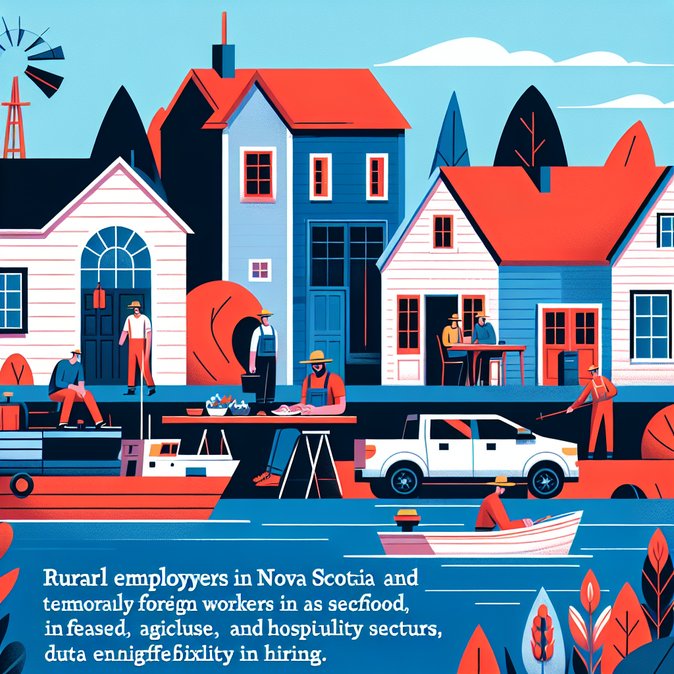
Nova Scotia and Quebec become first provinces to adopt Ottawa’s new rural TFW cap increase
Nova Scotia and Quebec are the first provinces to join Ottawa’s year-long pilot that lets rural employers keep or expand the share of low-wage temporary foreign workers to 15 %. The move gives seafood, agriculture and hospitality firms in remote areas more flexibility just as an LMIA freeze tightens hiring in many cities. Mobility teams should confirm provincial participation and rural definitions before filing applications.

48-Hour Lufthansa Pilot Strike Grounds Majority of Flights at German Hubs
VC-led pilots stopped work 13–14 April, forcing Lufthansa to cancel roughly 80–90 percent of flights from Frankfurt and Munich and stranding an estimated 50,000+ passengers. The walk-out—fourth this year—centres on pay and pensions and highlights growing labour unrest at Europe’s largest network airline. Business travellers face severe itinerary disruption, EU261 compensation claims and ripple effects on cargo flows and connecting traffic.

Opposition unveils plan to screen visitors’ social-media before granting Australian visas
Australia’s centre-right Coalition wants mandatory social-media disclosure for all visa applicants, part of a wider “values-based” immigration overhaul. The plan would restore temporary-protection visas, create a safe-country list and expand enforcement funding, potentially slowing visitor processing and raising compliance costs for multinationals. Businesses should track the proposal as the migration debate heats up.